Suzu Logo
  • Home
  • Products
  • Services
    • Offensive Security
    • Defensive Security
    • AI Advisory
    • AI Assessment
    • AI Integration
  • About
    • About Us
    • FAQ's
  • Resources
    • Blog
    • In The Media
    • Podcasts
    • All Resources
Contact Us
Back to Blog
Briefing Room

New Year, New Priorities - So, what to fix first?

Dahvid Schloss January 08, 2026 6 min read
Table of Contents

    The most common phrase we hear from our prospects is, “We are overwhelmed, and we aren’t sure what to tackle first.” It’s a tale as old as time when you work in security. Ultimately, everything is reported to the defensive team and executives as critical issues, and everything that’s reported must be prioritized. But when everything is a priority, nothing is a priority, which leaves teams feeling overwhelmed, underperforming, and dreading the work. The fix to this is simple, but the recognition of the issue is not. Why? Mainly because you, or more likely the vendors you hired, confuse theoretical severity on a spreadsheet or vulnerability scanner with what actually constitutes a critical risk for your organization in the real world.  As we enter 2026, which is likely to be another year of increased cyber and non-traditional crime, let's discuss how we tackle this so you can prioritize what's important.

    First, let's talk context. Context is by far the most important element in understanding risk. Why? The true danger of vulnerabilities only becomes clear when you account for how likely they are to be exploited, what your mitigating controls are, and how deeply the affected assets are connected to the rest of the environment. There is a reason we at EC often emphasize mitigating factors when discussing a particular vulnerability: they are critical to understanding the context and, therefore, the risk. The truth is, though, this is quite difficult to conceptualize, mainly because cyber is non-corporeal; psychologically we don’t associate the risks in the same way we do in the physical world. Let's look at it another way. It's safe to assume most of us lock our doors before we go to bed at night, not because we live in unsafe neighborhoods, but because it’s a “what if” and we don’t want to make it easy for someone to just enter.  The truth: locking the door is just a mitigating factor. Why? Because we have windows, which are easily breakable and usually large enough for an intruder to get through. Now think about having that offensive security vendor you hired last year run their “pentest” on your house. They would likely point out that your windows are a critical security risk and subsequently advise you to seal them or install “compliance”-spaced metal bars. You might find this advice silly, because you know your mitigating factors: you live on the third floor or near a police station, your alarm system would trigger, or the sound of glass breaking would give you enough time to enact an action plan. The point is that there are many other factors that typically give us the peace of mind to accept the risk of only locking the doors. Cyber is no different. Sometimes its acceptable to push off patching the Eternal Blue host on the network, not because it's not a risk, but because it doesn’t exist in the domain, there is no network login capability, and it's only connected to a CNC router that a guy named “Dale” uses for his personal projects, even though it’s a work system. You don’t have to prioritize that “critical” vulnerability, because context dictates it poses a relatively low risk. When reviewing a vulnerability or penetration testing report and seeing the many critical findings the vendor identified, the first question asked should be about the context of the risk in your environment, how it impacts the integrity of your security, and how it leads to business impact. Ask the hard questions they should be able to answer as the offensive security experts. That’s their job after all.

    Equally critical to prioritization is understanding the effectiveness of your mitigating factors and controls. Often, when we first evaluate a client, we find that the controls and tools in place are not operating at the level the trusted agent has communicated to us. Missed alerts, no alerts, no action, no boundaries, etc., etc. There are many reasons for these issues, but usually it comes down to the tools being sold as one-stop, no-setup products. If a product like that really existed, the world would see a decrease in crime, not an increase, and it would be the de facto go-to product across all environments. Ultimately, this means many tools are left in default configurations or are misconfigured for the environment in which they are installed. This isn’t to say you should prioritize configuration and pull away from other items; instead, it's to say that you shouldn’t trust a mitigating control just until you have confirmed its efficacy. Tools, controls, and processes should be tested to determine that they are working properly against the threats you would likely face. They are likely going to work at some level in default deployment mode, but not as well as they would if properly tuned for your environment. If you say you are safe from ransomware, but are running your EDR in its default deployment mode, which could be passive collection (we have seen it), you aren’t going to prevent it. Going back to the door example. Let's say the door is misaligned and the deadbolt doesn’t seem to fully seat. You are likely going to trust that control a bit less, right? At least until you re-seat the door so it's properly positioned or hire someone to fix it. The same should apply to cyber. You need to determine whether that door is installed correctly. You do that with good testing vendors who can help you properly configure and build trust in the tools and controls you use.

    Once you have a solid understanding of your mitigating controls and are translating the hypothetical risk into a real-world context, you are cooking with fire. Honestly, that’s it. You will find it much easier to prioritize and implement fixes, controls, policies, and updates, and you will be far less reactive to everything. You will also be able to implement initiatives you have wanted to do for years.  It's that simple, yet still quite complex without practice. If you are unsure about the risk, don’t be afraid to ask someone who can break it down in a way that makes sense to you. As we like to say, it doesn’t cost a dime to have a conversation with us, so if you need that second opinion, we are always happy to help.

    From our team to yours, Happy New Year, and we hope it's an uneventful year for you, at least security-wise.

    Share
    Tags: Briefing Room
    Dahvid Schloss

    Dahvid is our Emulated Mob Boss. He began his career journey as a Special Operations RTO/Communication operator before pivoting into Offensive Cyber Operations in the military. From there, he tormented a prominent Big 4 consulting firm with his red teaming prowess before moving into director-level offensive security roles at smaller organizations.

    Stay ahead of the threat landscape

    AI security insights, threat intelligence, and research from our team. No spam, unsubscribe anytime.

    Subscribe
    ← Previous UnderByte — A Ransomware experiment using Alternate Data Streams (ADS) Next → Seeing Everything, Understanding Nothing

    Latest Posts

    View All
    When Elite Cyber Teams Can't Crack Web Security
    Cybersecurity
    Apr 23, 2026 Jacob Krell

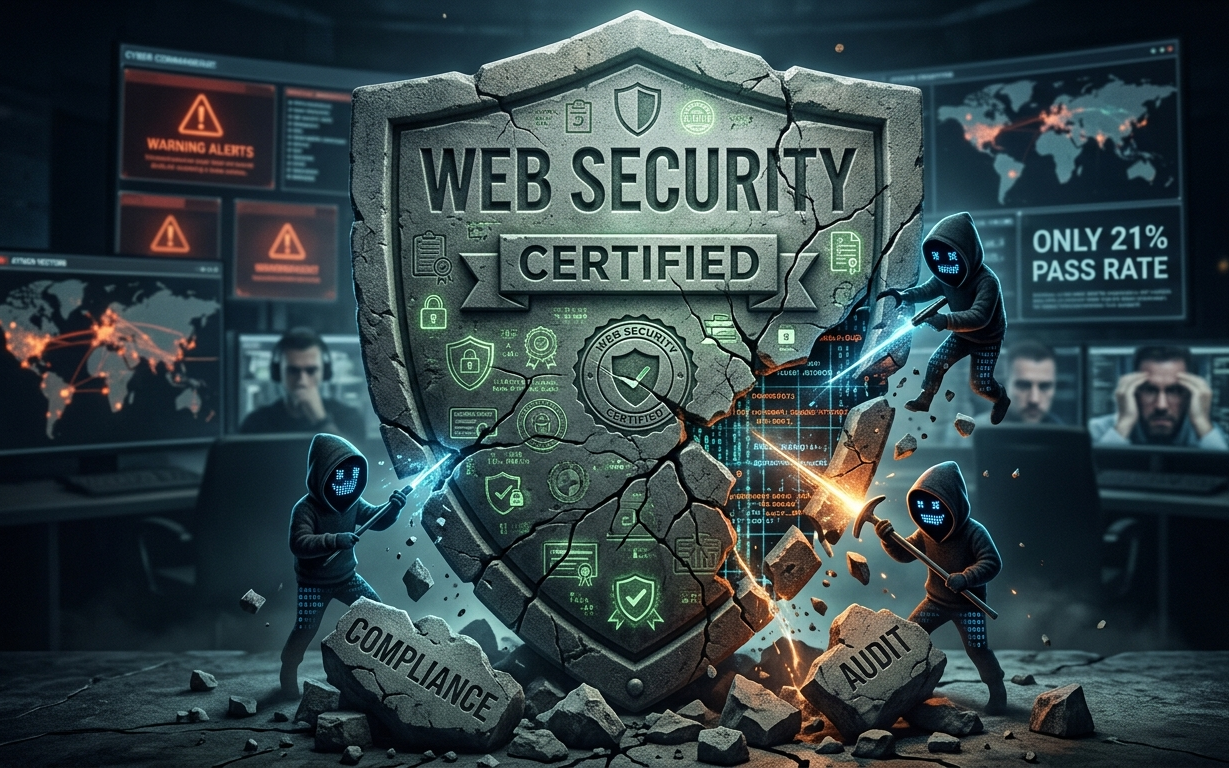
    When Elite Cyber Teams Can't Crack Web Security

    HTB's 2025 benchmark tested 796 security teams. Only 21% passed web security challenges. The Security Illusion Security ...

    Read More: When Elite Cyber Teams Can't Crack Web Security
    The Invisible Threat: Business Logic Flaws in Modern Applications and Why Scanners Miss Them
    Cybersecurity
    Apr 22, 2026 Jacob Krell

    The Invisible Threat: Business Logic Flaws in Modern Applications and Why Scanners Miss Them

    In today's security landscape, some of the most dangerous vulnerabilities aren't flagged by automated scanners at all. ...

    Read More: The Invisible Threat: Business Logic Flaws in Modern Applications and Why Scanners Miss Them
    Suzu Labs Acquires Emulated Criminals
    Apr 20, 2026 Hannah Perez

    Suzu Labs Acquires Emulated Criminals

    Bridging the gap between theory and the threat reality, Suzu Labs is proud to announce the acquisition of Emulated ...

    Read More: Suzu Labs Acquires Emulated Criminals
    The Wall Around Claude 4.7 Does Not Extend to Dread
    Cybersecurity
    Apr 17, 2026 Suzu Labs

    The Wall Around Claude 4.7 Does Not Extend to Dread

    Anthropic released Claude Opus 4.7 on April 16, 2026 with automated cybersecurity safeguards and a Cyber Verification ...

    Read More: The Wall Around Claude 4.7 Does Not Extend to Dread
    The Engagement Ratchet: How YouTube, Instagram, and Amazon Trained Users to Accept Less Control
    youtube
    Apr 10, 2026 Jacob Krell

    The Engagement Ratchet: How YouTube, Instagram, and Amazon Trained Users to Accept Less Control

    Earlier this year, YouTube began rolling out a row of algorithmically recommended videos at the top of the ...

    Read More: The Engagement Ratchet: How YouTube, Instagram, and Amazon Trained Users to Accept Less Control
    The AI Revolution: How Jobs Will Change by 2030
    Cybersecurity
    Apr 07, 2026 Suzu Labs

    The AI Revolution: How Jobs Will Change by 2030

    Host Phillip Wylie sits down with Nicolas Chaillan to discuss the sobering reality of AI replacement, the critical need ...

    Read More: The AI Revolution: How Jobs Will Change by 2030
    The Rosie Protocol: Is AI-Driven Personalized Medicine Finally Here?
    Generative AI
    Apr 01, 2026 Hannah Perez

    The Rosie Protocol: Is AI-Driven Personalized Medicine Finally Here?

    In late 2024, Sydney tech entrepreneur Paul Conyngham was told his rescue dog, Rosie, had months to live. She was ...

    Read More: The Rosie Protocol: Is AI-Driven Personalized Medicine Finally Here?
    From Analog Hacks to Agentic AI: The Evolution of Offensive Security with Denis Calderone
    Cybersecurity
    Mar 30, 2026 Suzu Labs

    From Analog Hacks to Agentic AI: The Evolution of Offensive Security with Denis Calderone

    The world of cybersecurity has undergone a massive transformation in just a few decades. In this episode of Simply ...

    Read More: From Analog Hacks to Agentic AI: The Evolution of Offensive Security with Denis Calderone
    While TSA Made Headlines, CISA Went Dark
    Critical Infrastructure
    Mar 30, 2026 Jacob Krell

    While TSA Made Headlines, CISA Went Dark

    The Department of Homeland Security has been partially shut down for over 45 days. In that time, 460 TSA officers have ...

    Read More: While TSA Made Headlines, CISA Went Dark
    The Purple Team Advantage: Bridging the Gap Between Hacking and Management with Chris Marks
    AI Security
    Mar 30, 2026 Suzu Labs

    The Purple Team Advantage: Bridging the Gap Between Hacking and Management with Chris Marks

    In cybersecurity, we often operate in silos. The red team breaks things, the blue team fixes them, and management ...

    Read More: The Purple Team Advantage: Bridging the Gap Between Hacking and Management with Chris Marks
    Claude Mythos and the Cybersecurity Risk That Was Already Here
    Threat Intelligence
    Mar 27, 2026 Jacob Krell

    Claude Mythos and the Cybersecurity Risk That Was Already Here

    On March 26, Anthropic confirmed the existence of Claude Mythos, an unreleased AI model described internally as "a step ...

    Read More: Claude Mythos and the Cybersecurity Risk That Was Already Here
    BPFdoor in Telecom Networks: The FCC Is Securing the Edge, but China's Hackers Are Already Past It
    Critical Infrastructure
    Mar 26, 2026 Mike Bell

    BPFdoor in Telecom Networks: The FCC Is Securing the Edge, but China's Hackers Are Already Past It

    Rapid7's research reveals China-linked kernel implants deep inside telecom signaling infrastructure. Here's what ...

    Read More: BPFdoor in Telecom Networks: The FCC Is Securing the Edge, but China's Hackers Are Already Past It
    Securing the AI Frontier: Suzu Labs Sweeps 4 Global InfoSec Awards 2026
    Cybersecurity
    Mar 23, 2026 Hannah Perez

    Securing the AI Frontier: Suzu Labs Sweeps 4 Global InfoSec Awards 2026

    We are incredibly proud to announce a monumental achievement. At this year’s Global InfoSec Awards 2026, hosted by ...

    Read More: Securing the AI Frontier: Suzu Labs Sweeps 4 Global InfoSec Awards 2026
    From Cockpits to Code: Josh Mason on Bridging the Gap Between Military and Cybersecurity
    Cybersecurity
    Mar 17, 2026 Suzu Labs

    From Cockpits to Code: Josh Mason on Bridging the Gap Between Military and Cybersecurity

    In the world of cybersecurity, we often talk about "gatekeeping" or the "skills gap," but rarely do we find individuals ...

    Read More: From Cockpits to Code: Josh Mason on Bridging the Gap Between Military and Cybersecurity
    Simply Offensive Podcast: The Future of Pentesting: AI, Automation, and Better Reporting with Dan DeCloss
    Cybersecurity
    Mar 16, 2026 Phillip Wylie

    Simply Offensive Podcast: The Future of Pentesting: AI, Automation, and Better Reporting with Dan DeCloss

    The Future of Pentesting: AI, Automation, and Better Reporting with Dan DeCloss In this episode of Simply Offensive, ...

    Read More: Simply Offensive Podcast: The Future of Pentesting: AI, Automation, and Better Reporting with Dan DeCloss
    From Silence to Strike: Tracking Iran's Cyber Escalation in Real Time
    Critical Infrastructure
    Mar 13, 2026 Denis Calderone

    From Silence to Strike: Tracking Iran's Cyber Escalation in Real Time

    On March 12, medical technology giant Stryker confirmed a cyberattack that wiped devices across 79 countries. The ...

    Read More: From Silence to Strike: Tracking Iran's Cyber Escalation in Real Time
    Internal Analysis: Even Realities G2 Smart Glasses Security & Privacy Investigation
    Social Engineering
    Mar 09, 2026 Suzu Labs Intelligence

    Internal Analysis: Even Realities G2 Smart Glasses Security & Privacy Investigation

    Executive Summary Even Realities markets its G2 smart glasses as the privacy-conscious alternative to Meta Ray-Bans. ...

    Read More: Internal Analysis: Even Realities G2 Smart Glasses Security & Privacy Investigation
    The Company Reviewing Your Meta Glasses Footage Has a Security Problem
    Threat Intelligence
    Mar 06, 2026 Mike Bell

    The Company Reviewing Your Meta Glasses Footage Has a Security Problem

    Last week, Swedish journalists revealed that Meta sends video footage from Meta Ray-Ban smart glasses to human data ...

    Read More: The Company Reviewing Your Meta Glasses Footage Has a Security Problem
    The Death of the CTF: How Agentic AI Is Reshaping Competitive Hacking
    CTF
    Mar 03, 2026 Jacob Krell

    The Death of the CTF: How Agentic AI Is Reshaping Competitive Hacking

    View White Paper Abstract: Agentic AI systems are compressing competitive hacking timelines faster than the ...

    Read More: The Death of the CTF: How Agentic AI Is Reshaping Competitive Hacking
    Simply Offensive Podcast: AI Killed the CTF Star with Jacob Krell
    Cybersecurity
    Mar 03, 2026 Phillip Wylie

    Simply Offensive Podcast: AI Killed the CTF Star with Jacob Krell

    In this thought-provoking episode of Simply Offensive, host Philip Wylie sits down with Jacob Krell, a penetration ...

    Read More: Simply Offensive Podcast: AI Killed the CTF Star with Jacob Krell
    Anthropic and Claude: 2026 AI Powerhouse
    Supply Chain Security
    Feb 26, 2026 Hannah Perez

    Anthropic and Claude: 2026 AI Powerhouse

    In early 2026, the image of Anthropic as a cautious, safety-oriented "research lab" has effectively been replaced by ...

    Read More: Anthropic and Claude: 2026 AI Powerhouse
    Simply Offensive Podcast: Navigating AI's Challenges in Problem Solving with Darius Houle
    Cybersecurity
    Feb 24, 2026 Phillip Wylie

    Simply Offensive Podcast: Navigating AI's Challenges in Problem Solving with Darius Houle

    In this episode of Simply Offensive, host Philip Wylie welcomes Darius Houle, an Application Security (AppSec) and ...

    Read More: Simply Offensive Podcast: Navigating AI's Challenges in Problem Solving with Darius Houle
    Simply Offensive Podcast: Exploring the World of Hardware Hacking with Matt Brown
    Cybersecurity
    Feb 17, 2026 Phillip Wylie

    Simply Offensive Podcast: Exploring the World of Hardware Hacking with Matt Brown

    In the latest episode of the Simply Offensive podcast, host Philip Wylie sat down with Matt Brown, a renowned hardware ...

    Read More: Simply Offensive Podcast: Exploring the World of Hardware Hacking with Matt Brown
    Simply Offensive Podcast: Exploring AI Vulnerabilities in Cybersecurity with Mike Bell of Suzu Labs
    Cybersecurity
    Feb 12, 2026 Phillip Wylie

    Simply Offensive Podcast: Exploring AI Vulnerabilities in Cybersecurity with Mike Bell of Suzu Labs

    In today’s rapidly evolving technological landscape, the convergence of artificial intelligence (AI) and cybersecurity ...

    Read More: Simply Offensive Podcast: Exploring AI Vulnerabilities in Cybersecurity with Mike Bell of Suzu Labs
    Simply Offensive Podcast: Emulated Cyber Crime with Dahvid Schloss
    Threat Intelligence
    Feb 10, 2026 Phillip Wylie

    Simply Offensive Podcast: Emulated Cyber Crime with Dahvid Schloss

    Beyond the Pentest: Why Adversarial Emulation is the Future of Defensive Training Many organizations operate under the ...

    Read More: Simply Offensive Podcast: Emulated Cyber Crime with Dahvid Schloss
    Under Armour Breach: What The Forum Data Actually Shows
    Threat Intelligence
    Jan 30, 2026 Mike Bell

    Under Armour Breach: What The Forum Data Actually Shows

    On January 18, 2026, the Everest ransomware group made good on their threat and released Under Armour customer data to ...

    Read More: Under Armour Breach: What The Forum Data Actually Shows
    SilentFrame: A Research POC on Post-Exploitation Credential Collection through Browsers
    Briefing Room
    Jan 29, 2026 Dahvid Schloss

    SilentFrame: A Research POC on Post-Exploitation Credential Collection through Browsers

    This article is in reference to our newest POC hosted on GitHub here: https://github.com/Emulated-Criminals/SilentFrame ...

    Read More: SilentFrame: A Research POC on Post-Exploitation Credential Collection through Browsers
    Brightspeed Breach: Crimson Collective and the Infostealer Problem
    Threat Intelligence
    Jan 20, 2026 Mike Bell

    Brightspeed Breach: Crimson Collective and the Infostealer Problem

    Recently Crimson Collective claimed they breached Brightspeed and grabbed 1 million+ customer records. The list of data ...

    Read More: Brightspeed Breach: Crimson Collective and the Infostealer Problem
    When Grid Data Goes Dark Web
    Power Grid
    Jan 19, 2026 Mike Bell

    When Grid Data Goes Dark Web

    Inside a threat actor's critical infrastructure targeting In January 2026, 139 gigabytes of engineering data from a ...

    Read More: When Grid Data Goes Dark Web
    The $150,000 Password
    Critical Infrastructure
    Jan 19, 2026 Mike Bell

    The $150,000 Password

    How one threat actor turned stolen credentials into a global breach portfolio Between December 2025 and January 2026, a ...

    Read More: The $150,000 Password
    Seeing Everything, Understanding Nothing
    Briefing Room
    Jan 16, 2026 Dahvid Schloss

    Seeing Everything, Understanding Nothing

    To help you get a head start on making your environment safer and in keeping with the theme of January’s “New Year, New ...

    Read More: Seeing Everything, Understanding Nothing
    New Year, New Priorities - So, what to fix first?
    Briefing Room
    Jan 08, 2026 Dahvid Schloss

    New Year, New Priorities - So, what to fix first?

    The most common phrase we hear from our prospects is, “We are overwhelmed, and we aren’t sure what to tackle first.” ...

    Read More: New Year, New Priorities - So, what to fix first?
    UnderByte — A Ransomware experiment using Alternate Data Streams (ADS)
    Briefing Room
    Nov 21, 2025 Dahvid Schloss

    UnderByte — A Ransomware experiment using Alternate Data Streams (ADS)

    Repository purpose: this research was to evaluate the feasiabilty of using Alternate Data Stream (ADS) in staging and ...

    Read More: UnderByte — A Ransomware experiment using Alternate Data Streams (ADS)
    Logo copy 3-1

    Fortified Security. Intelligent Innovation.

    +1 (702) 766-6257
    P.O. Box 750111
    Las Vegas, Nevada 89136

    Follow Us

    About

    • About Us
    • Contact
    • FAQ's

    Solutions

    • Products
    • AI Advisory
    • AI Assessment
    • Offensive Security
    • Defensive Security
    • Adversarial Operations
    • Social Engineering

    Resources

    • Blog
    • In The Media
    • Podcasts
    © 2026 All rights reserved.
    • Privacy Policy
    • Terms & Conditions