.png)

Recently Crimson Collective claimed they breached Brightspeed and grabbed 1 million+ customer records. The list of data they claim to have accessed includes names, billing addresses, partial payment data, and more. There was a class action filed three days later. Brightspeed says they're investigating. No confirmation of data exfiltration yet.
Most coverage stops there, but understanding who Crimson Collective is tells us more about what's actually at risk than the headline numbers.
Crimson Collective's Track Record
This group emerged in September 2025 and hit Red Hat's internal GitLab the following month. 570 GB from 28,000+ repositories. The alleged haul included Customer Engagement Reports with infrastructure designs, authentication tokens, and database connection strings. They've gone after Nintendo and Nissan with similar attacks.
Based on our research they target cloud-hosted environments and development infrastructure, not customer databases. They're after the systems that build and maintain applications, not the applications themselves.
If the Brightspeed claims are legitimate, Crimson Collective probably didn't limit themselves to exporting a customer table. The attack surface could extend into operational infrastructure. That's a different kind of problem than a standard PII breach.
The Infostealer Correlation Problem
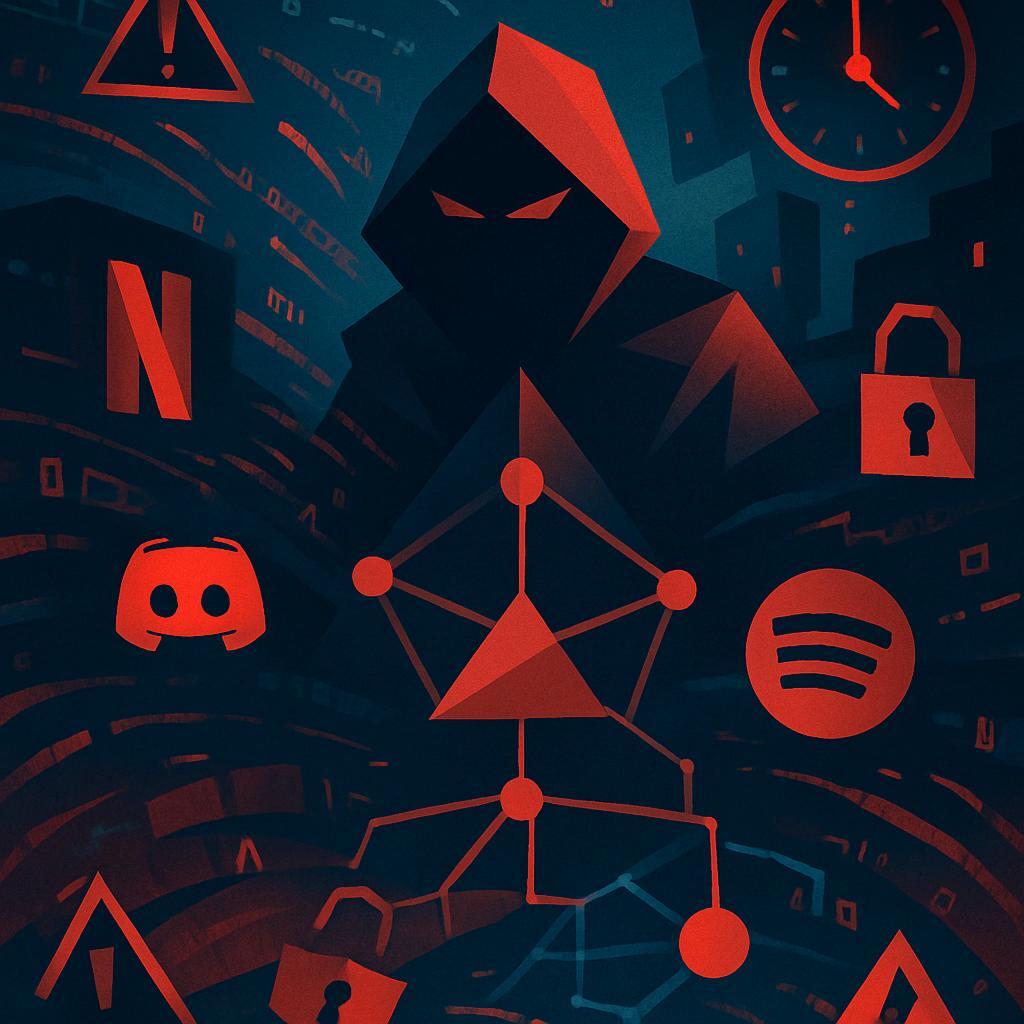
Vidar infostealer logs with Brightspeed customer credentials were already circulating on Russian Market before Crimson Collective posted anything. Discord logins, Netflix, Verizon Wireless, Spotify, Roblox. Credentials harvested from compromised customer devices over the past year.
Now those same people potentially have their billing addresses and service records exposed in a separate incident.
Cross-reference the two datasets and you've got everything needed for targeted phishing. The infostealer logs tell you what services someone uses. The breach data tells you where they live and how they pay. Attackers know how to combine data sources. Defenders often don't think about the correlation problem until it's too late.
This is the compounding effect that doesn't make headlines. A breach looks bad. A breach combined with existing credential leaks is worse. The people affected aren't just dealing with one exposure. They're dealing with a more complete picture of their digital lives being assembled from multiple sources.
Infrastructure Red Flags
Brightspeed IP addresses are appearing in active SOCKS proxy lists being sold on dark web forums.
This could mean a few things:
- Compromised customer devices being used as proxy nodes.
- Broader infrastructure compromise beyond customer data.
- Residential proxy networks leveraging Brightspeed's network for anonymization.
Any of these scenarios warrants investigation beyond standard breach response. If customer devices are being recruited into proxy networks, that's an ongoing problem that doesn't end when the breach investigation closes. Those devices stay compromised. The proxy operators keep using them.
The Investigation Trap
Brightspeed is stuck in a difficult position. They can't confirm or deny without completing forensics. But every day of silence lets the narrative build. Crimson Collective knows this. The Telegram posts and data samples are designed to create pressure.
The company has to balance thorough investigation against reputational damage from appearing unresponsive. There's no clean answer. Move too fast and you risk making statements you have to walk back. Move too slow and the court of public opinion renders its verdict without you.
The class action filing three days after unverified claims is aggressive. Brightspeed hasn't confirmed data exfiltration. The plaintiffs are either confident the breach is real or they're positioning early to lead the litigation when confirmation comes.
Either way, it puts pressure on Brightspeed to disclose faster than their forensics team might want or deserve.
Why Telecom Providers Are Targets
Telecom providers sit on valuable data by default. They have billing relationships with millions of customers. Names, addresses, payment methods, service records, appointment history. All in one place.
That data is useful for fraud. The customer base is large enough that even unverified breach claims generate headlines and regulatory attention. And unlike a retailer where customers might shop once and disappear, telecom customers have ongoing relationships. Monthly billing. Service calls. Equipment records. Years of data on each customer.
The attackers know this. The regulators know this. The class action lawyers know this. Telecom providers need breach response playbooks that account for all of these pressures simultaneously balancing threat actor tactics, legal exposure, regulatory requirements, and public perception. Technical forensics is one piece. Managing the other three is where most organizations struggle.
What Happens Next
If Crimson Collective's claims are legitimate, expect additional data samples to surface. That's their playbook. Pressure through incremental disclosure. Each new sample extends the news cycle and increases pressure on Brightspeed to respond.
Brightspeed customers should assume their data is compromised until proven otherwise. That means watching for phishing attempts that reference their service details. Being skeptical of calls claiming to be from Brightspeed support. Monitoring financial accounts for fraud.
For organizations watching this unfold, the lesson is about data correlation. Your customers' exposure doesn't exist in isolation. It exists alongside every other breach, every infostealer log, every credential dump they've been caught in. Defenders need to think about that aggregate picture, not just the breach in front of them.


.png)





.png)
-1.png)
.png)




.png)