.png)


Let’s be honest: we’ve all used "Girl Math" to justify a questionable financial decision.
If I buy a $300 jacket, but I return a $200 pair of shoes and wear the jacket 100 times, the jacket was actually free. If I use cash instead of a card, it didn't cost anything. If I pay for a concert ticket six months in advance, going to the show in June is a completely free night out.
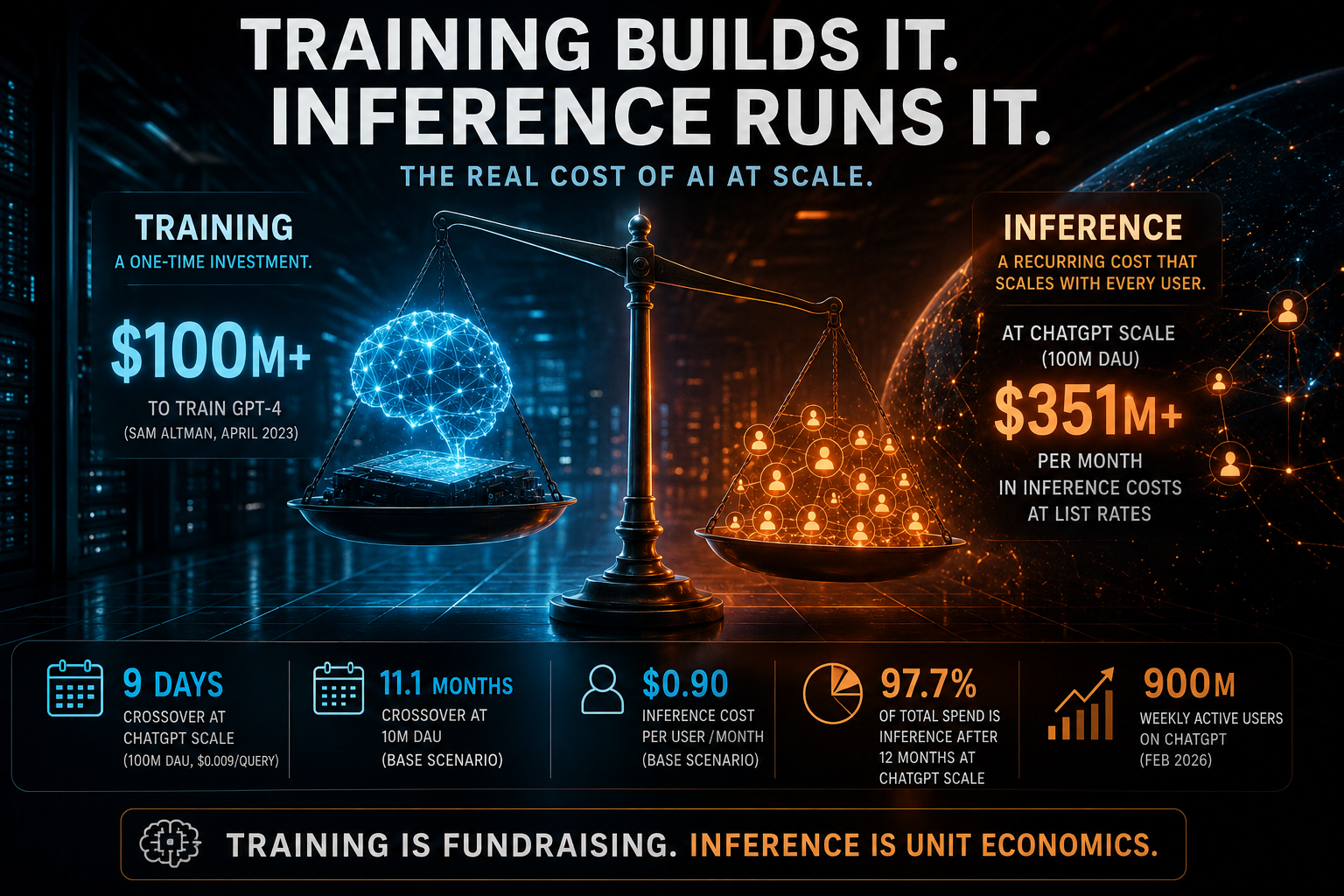
It’s fun, harmless logic when you're managing a personal wardrobe. It’s slightly more concerning when you’re a multi-billion-dollar artificial intelligence unicorn trying to convince Wall Street that your burning pit of compute costs is actually a profitable enterprise.
Welcome to Anthropic’s corporate accounting playbook, where traditional GAAP standards take a backseat, supply chain discounts are treated like "found money," and operating costs vanish into thin air just in time for a funding round.
Here is how the masters of AI financial engineering are using Girl Math to declare profitability.
"If It’s Discounted, I Actually Made Money"
The big narrative floating around the tech press recently is that Anthropic is on track to hit an operating profit, bragging about non-GAAP EBITDA profitability specifically timed around a massive quarter.
How did they do it? Did inference suddenly become cheap? Did algorithmic efficiency magically double overnight?
Not quite. Enter the SpaceX compute deal.
To power its massive hunger for GPUs, Anthropic inked a deal to take over Colossus capacity, carrying a run-rate price tag of 1.25 billion a month(15 billion a year). But thanks to a supplier "ramp-up period," SpaceX gave Anthropic a temporary, heavily discounted rate for the exact months being used to calculate their quarterly "profitability."
In Girl Math terms: If a pair of designer heels is normally $1,500, but you get them on sale for $300, you didn't spend $300, you saved $1,200. Therefore, you basically made a profit!
By suppressing compute expenses for a tiny two-month window, right before the full $1.25 billion/month bill kicks in, Anthropic can temporarily show an operating profit on paper. When the discount expires in July and compute costs scale right back up with revenue? Well, we’ll worry about that next quarter.
"Pre-paying for It Means It’s Free Later"
Another classic Girl Math staple is loading up your account balance early so future purchases don't feel like spending.
When large enterprise customers commit tens of millions of dollars upfront for token allocations or sign multi-year contracts, that cash gets booked right away. Meanwhile, the actual compute costs required to service those tokens haven't been incurred yet because the customer hasn't run the prompts.
Revenue goes up today, compute expenses stay low until tomorrow. To an outside observer, your margins look like a miracle. To anyone looking at the balance sheet, it’s just timing arbitrage.
It’s the corporate equivalent of buying a $500 Starbucks gift card in January and convincing yourself that every latte you drink for the rest of the year is free.
"If I Say a Number Loud Enough, It Counts as History"
The most fascinating part of the Anthropic profit narrative is the sheer fluidity of the numbers being thrown around.
Earlier this year, Anthropic reported hitting an Annual Recurring Revenue (ARR) run-rate of $14 billion, which quickly jumped to $19 billion, and then reportedly $30 billion. Run-rate, of course, is the ultimate startup math tool: taking your absolute best month, multiplying it by 12, and acting like that’s what you’ve had in the bank all along.
The problem? In March 2026 court filings, Anthropic's own CFO, Krishna Rao, stated under oath that the company’s total lifetime revenue was "exceeding $5 billion to date."
Reconciling a CFO's sworn testimony with leaked ARR figures requires some wild mental gymnastics:
- Either Anthropic made 90% of its entire lifetime revenue in a single three-month window...
- Or previous run-rate leaks were wildly optimistic projections treated as reality...
- Or we are witnessing a "shiatsu-grade massaging" of financial definitions.
If you tell your friends you're going to make $100k this year because you earned $8,000 in March, that’s Girl Math. When a tech giant does it with billions in venture capital on the line, it’s called financial storytelling.
The Reality Check
Look, financial engineering and PR control are fine arts in Silicon Valley, and Anthropic happens to be top of the class. But when you strip away the custom non-GAAP metrics, the temporary supplier discounts, and the pre-paid token revenue, the underlying core economics of generative AI haven't magically transformed overnight.
Running massive frontier models still carries staggering, linear compute costs. Masking those costs behind a temporary two-month ramp-up window doesn't mean the business model is fixed, it just means the marketing team knew exactly when to leak the spreadsheet.
Next time you hear an AI lab declare "profitability" without audited financials, ask which GAAP it’s using: Generally Accepted Accounting Principles or Girl-Adjusted Accounting Principles.





.png)











.png)

-1.png)
.png)








.png)