SUZU Offensive Security Solutions

Insider Threat Testing

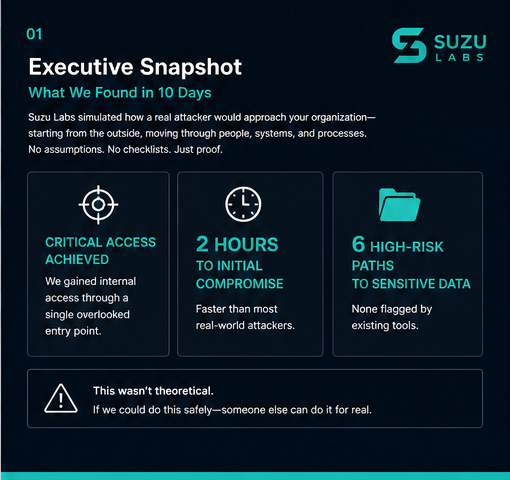
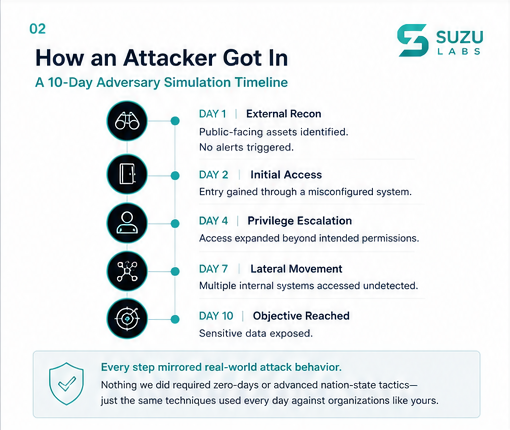
Not every attack starts from the outside. Suzu Labs Insider Threat Testing simulates what happens when a trusted identity goes rogue, whether that's a compromised credential, a disgruntled employee, or a contractor with too much access. We prove how far an insider can go before anyone notices.

Insider Threat Testing Services

The Threat That Already Has a Badge

Perimeter defenses are designed to keep outsiders out. Insider threat testing asks a different question: what happens when someone who is already inside decides to cause harm, or when a legitimate credential falls into the wrong hands?

We simulate realistic insider scenarios using actual access levels within your environment. Starting from a position of legitimate trust, we map how far an attacker can move, what data they can reach, and whether your detection and response capabilities would catch them before damage is done.

Insider Threat

What We Test

Validating Controls That Assume Trust

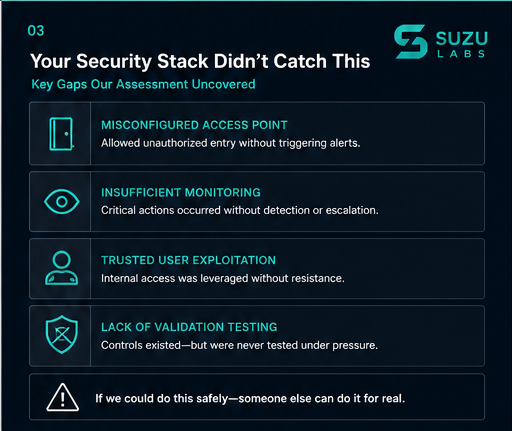
Insider threats don't trigger perimeter alerts. We test the controls that matter after authentication: access boundaries, monitoring, data loss prevention, and detection coverage.

Privilege Abuse & Escalation

We test whether users can access data, systems, or administrative functions beyond their authorized role, and whether privilege escalation paths exist from standard accounts to sensitive resources.

Learn more about privilege escalation

Lateral Movement

Starting from a single compromised or authorized account, we map how far an attacker can move across systems, segments, and trust boundaries without triggering alerts.


Learn more about lateral movement

Data Access & Exfiltration

We identify what sensitive data an insider can reach and whether they can extract it, through email, cloud storage, USB, print, or network transfer, without being detected or blocked.

Learn more about data protection

Detection & Response Gaps

We evaluate whether your SIEM, EDR, DLP, and SOC would detect insider activity in real time. If we move through your environment without triggering an alert, you need to know that before a real insider does.

Learn more about detection engineering

Policy Enforcement Validation

We test whether access control policies, separation of duties, and least-privilege configurations are enforced in practice, not just documented in policy. Gaps between policy and reality are where insider threats thrive.

Learn more about access controls

Credential Compromise Scenarios

We simulate what happens when a valid credential is stolen through phishing, credential stuffing, or a third-party breach. Starting from that credential, we test how far the blast radius extends across your environment.

Learn more about credential risks
PHYSICAL LAYER DEFENSE

Hardware Hacking

This usually comes up when something is on the line. A new device launch, customer trust, or protecting intellectual property.

We evaluate the security of your hardware and embedded systems to ensure they can’t be easily exploited, cloned, or manipulated in the real world.

  • When you’re shipping devices or relying on connected technology, unseen risks can lead to real consequences. From customer trust issues to expensive fixes. We help you catch those issues before they impact your business.
  • What We Hack: SCADA, IoT, OT, Vehicles, Embedded Systems.
ChatGPT Image May 4, 2026, 03_58_45 PM

Questions

Insider Threat Testing, Answered

Insider threat testing simulates scenarios where someone with legitimate access to your environment, whether an employee, contractor, or a stolen credential, attempts to abuse that access. We test privilege escalation, unauthorized data access, lateral movement, and data exfiltration to determine what an insider could accomplish and whether your controls would detect it.


A standard network penetration test typically starts from a position of zero access and works to gain a foothold. Insider threat testing starts from a position of trust, with legitimate credentials and authorized access, and tests what happens from there. The attack paths are different, the controls being tested are different (monitoring, DLP, separation of duties vs. perimeter defenses), and the findings are more focused on detection and response gaps than on initial access.


We simulate multiple scenarios depending on your risk profile: a disgruntled employee with standard user access, a compromised privileged account (IT admin, developer, DBA), a contractor with third-party VPN access, or a credential stolen through phishing. During scoping, we define which scenarios are most relevant to your organization and your threat model.


Yes. Detection validation is a core component. We coordinate with your security operations team so they are either aware of the test (to measure response) or unaware (to measure detection). Either way, we document which actions triggered alerts, which were missed, and provide specific recommendations for closing detection gaps.


We need user accounts at the access levels being tested (standard user, privileged user, contractor, etc.), access to the environment, and an understanding of your organizational structure and trust boundaries. If you want us to test detection capabilities, we need to coordinate with your SOC or managed security provider on whether the test is announced or unannounced.

Most engagements run one to three weeks depending on the number of scenarios being tested, the size of the environment, and whether detection validation is included. We provide a clear timeline during scoping, and if we discover a critical finding that poses an imminent threat, we escalate it to your team immediately.


The report is the beginning, not the end. You get a live debrief with the operators who ran the engagement, walking through every finding, its real-world impact, and specific remediation steps. If your team needs hands-on help remediating, whether that's tightening access controls, tuning SIEM rules, or reconfiguring DLP policies, we can work alongside your engineers. Once fixes are in place, we conduct retesting to verify they're effective.

Insider Threat Testing vs. Network Penetration Testing

Insider Threat Testing Network Penetration Testing
Starting Position Begins with legitimate credentials and authorized access inside the environment Begins with no access (external) or a simulated foothold with minimal privileges (internal)
Scope Privilege abuse, data access, lateral movement from trusted accounts, detection and response validation Infrastructure exploitation, credential attacks, segmentation bypass, Active Directory compromise
What's Being Tested Monitoring, DLP, access controls, separation of duties, SOC detection capabilities Firewalls, network segmentation, authentication protocols, endpoint protections
Common Findings Excessive permissions, unmonitored data access, lack of alerting on privilege abuse, policy enforcement gaps Weak credentials, unpatched services, AD misconfigurations, segmentation failures
Impact if Undetected Data theft, fraud, intellectual property loss, regulatory violations, reputational damage Domain compromise, ransomware deployment, mass data exfiltration
Ideal For Organizations concerned about credential compromise, privilege abuse, regulatory compliance (HIPAA, PCI, CMMC), or SOC effectiveness Organizations validating perimeter defenses, network architecture, and infrastructure resilience

Verified expertise

Validate defenses. Reduce exposure.

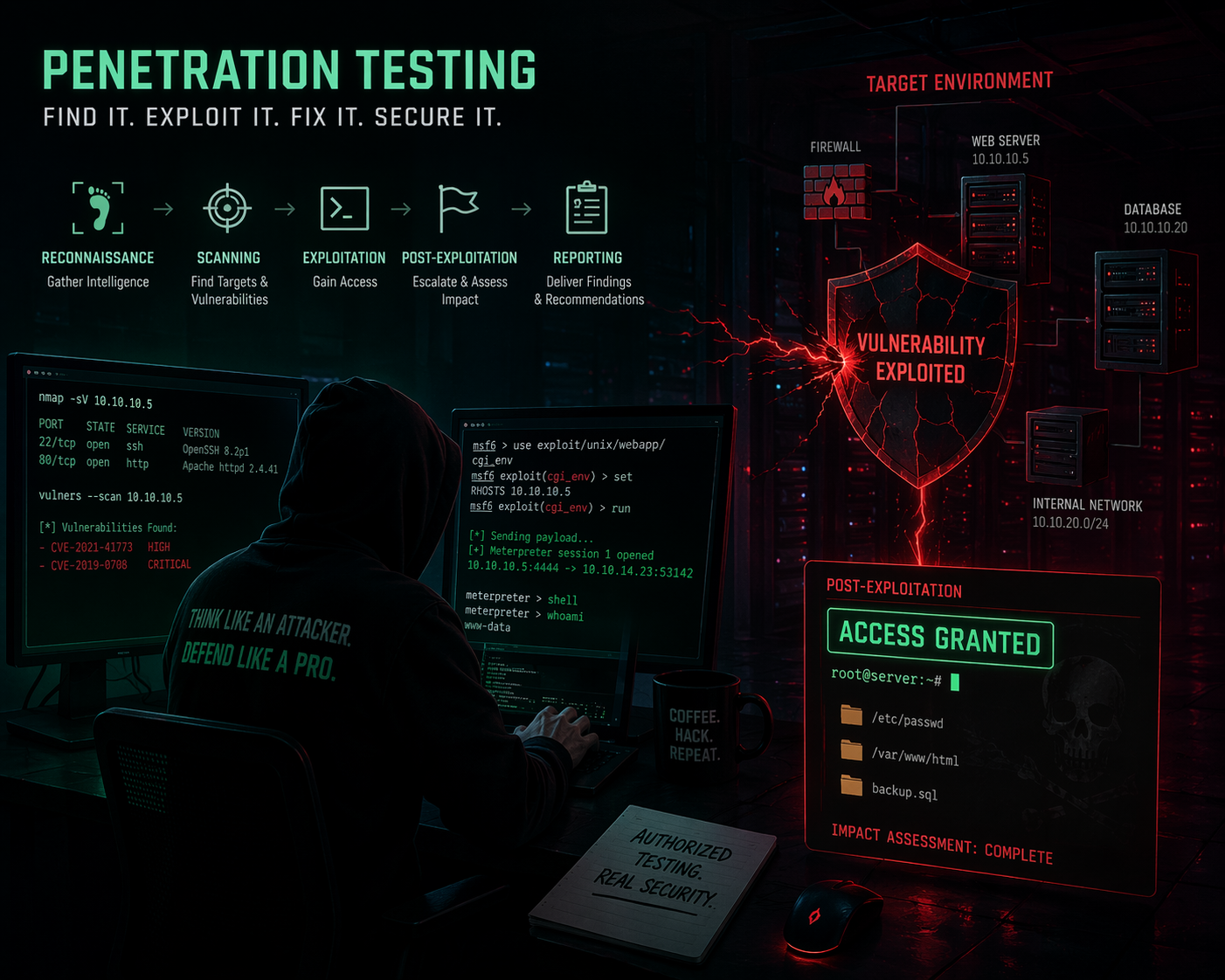
Penetration Testing

What It Is: We don't just scan for vulnerabilities; we exploit them safely to prove where your defenses might fail. Our offensive security experts simulate real-world attacks to identify complex misconfigurations and logic flaws across your entire infrastructure.


  • Full-Spectrum Testing: Deep dives into web apps, internal/external networks, and cloud environments.
  • Risk-Based Analysis: Understand exactly how an attacker could move laterally through your systems.
  • Continuous Validation: Transition from periodic "check-the-box" audits to a culture of constant defensive improvement.
  • What We Test: Web-App, Mobile App, API, External Network, Internal Network, WIFI, Cloud, IoT, Physical.

ChatGPT Image Apr 17, 2026, 01_54_29 PM
PHYSICAL LAYER DEFENSE

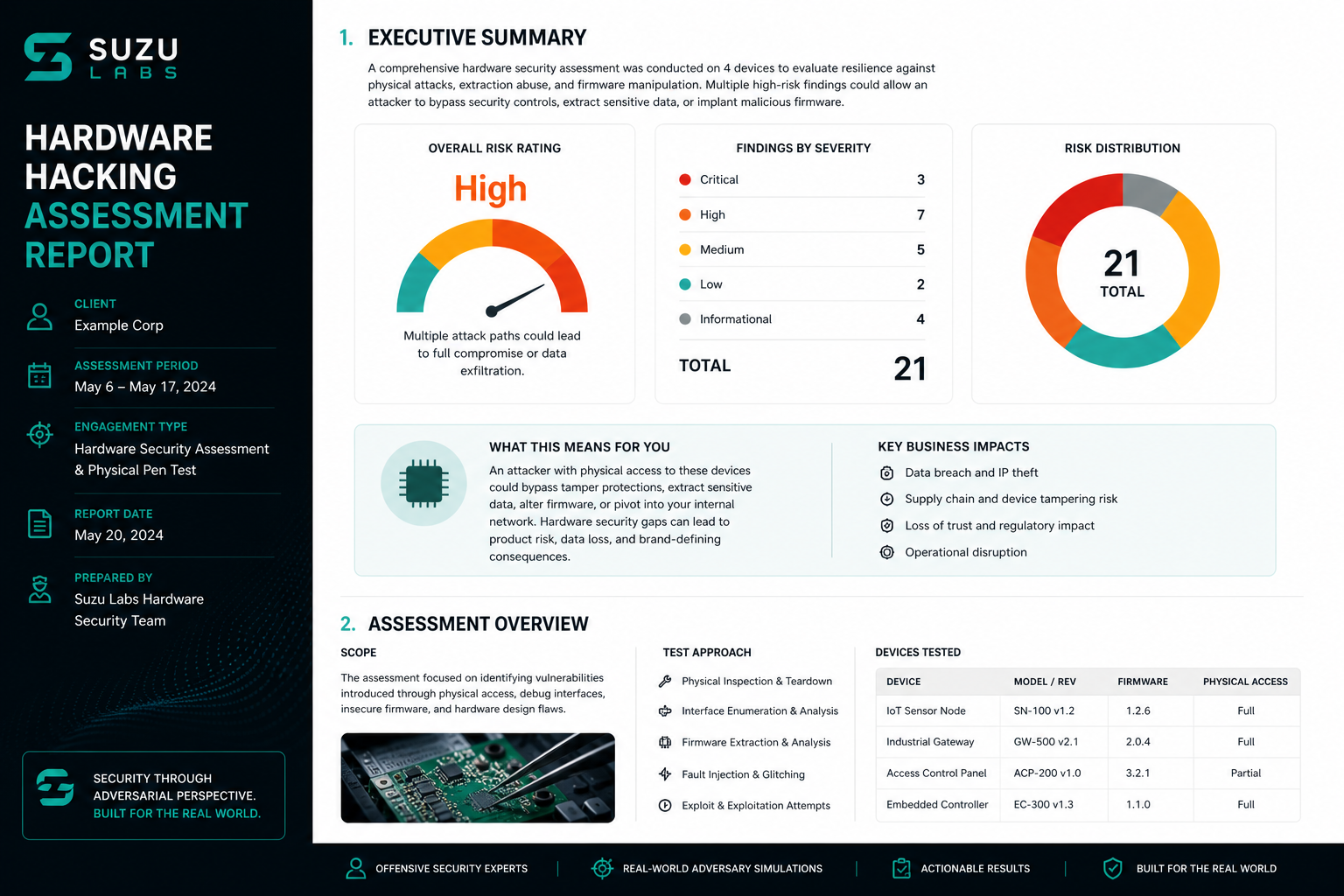
Hardware Hacking

What It Is: Modern attacks don’t stop at software. We analyze firmware, embedded systems, and IoT devices to uncover security gaps at the hardware level. From side-channel testing to reverse engineering, our hardware security services safeguard critical infrastructure and consumer technology alike.

  • Move beyond software patches by identifying vulnerabilities in firmware and embedded systems that traditional scanners miss, ensuring your hardware is secure from the first boot.
  • We simulate advanced attack vectors like side-channel analysis and reverse engineering to ensure your critical infrastructure and consumer tech can withstand hands-on exploitation.
  • Protect your brand and your users by uncovering hidden gaps in interconnected devices, preventing your hardware from becoming an easy entry point for larger network breaches.
  • What We Hack: SCADA, IoT, OT, Vehicles, Embedded Systems.
person hacking hardware
OFFENSE AND DEFENSE SYNERGY

Purple Team Exercises

What It Is: High-impact collaborative engagements where our offensive experts (Red) and defensive (Blue) teams work side by side to test detection and response capabilities, turning findings into immediate improvements.

  • Targeted Exploitation: We move beyond basic scanning to emulate specific TTPs (Tactics, Techniques, and Procedures) used by modern threat actors, ensuring your defenses are tested against actual adversary behavior.
  • Closing the Detection Gap: By mapping offensive actions to your specific security telemetry in real-time, we identify exactly where visibility fails and provide the code-level fixes to bridge those gaps.
  • Operational Resilience: We don't just find vulnerabilities; we use offensive data to build "detection-as-code," giving your team the playbooks needed to stop sophisticated lateral movement and data exfiltration.

Gemini_Generated_Image_du0jszdu0jszdu0j-1
PROVING DEFENSIVE EFFICACY

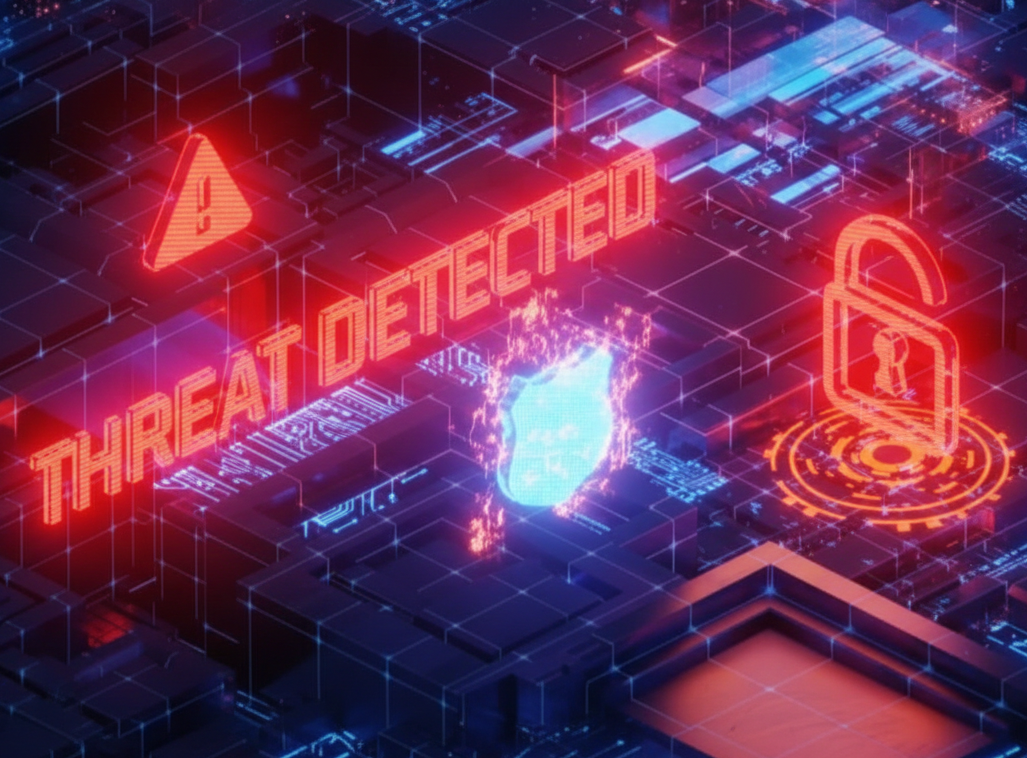
ThreatSIM — Attack Simulation & Service Validation

What It Is: ThreatSIM is our proprietary platform designed to simulate MITRE ATT&CK®–based adversary behaviors safely within client environments. Unlike point-in-time tests, ThreatSIM continuously validates the effectiveness of your security stack, your SOC, and your MSSP’s detection and response capabilities.

  • Move beyond static testing with ongoing simulations that verify your security stack, SOC, and MSSP are detecting and blocking threats in real time.
  • Safely emulate real-world adversary behaviors within your environment to ensure your defenses are tuned against the most current and relevant global attack tactics.
  • Eliminate guesswork by gathering concrete data on how well your existing tools and service providers perform, allowing you to bridge gaps before a real breach occurs.
Gemini_Generated_Image_uw8luluw8luluw8l-1
Book a threat briefing

If there’s a way in, we’ll find it first.

A patch is a start, but it isn't a strategy. Connect with our offensive security specialists to identify the logic flaws and lateral movement paths that put your critical assets at risk. Let’s build a roadmap to true resilience.

We'll be in touch within one business day to schedule your briefing. No sales follow-up sequence — just the briefing.

Reserve your briefing

Not Ready to Talk? Explore our Latest Research →

View All
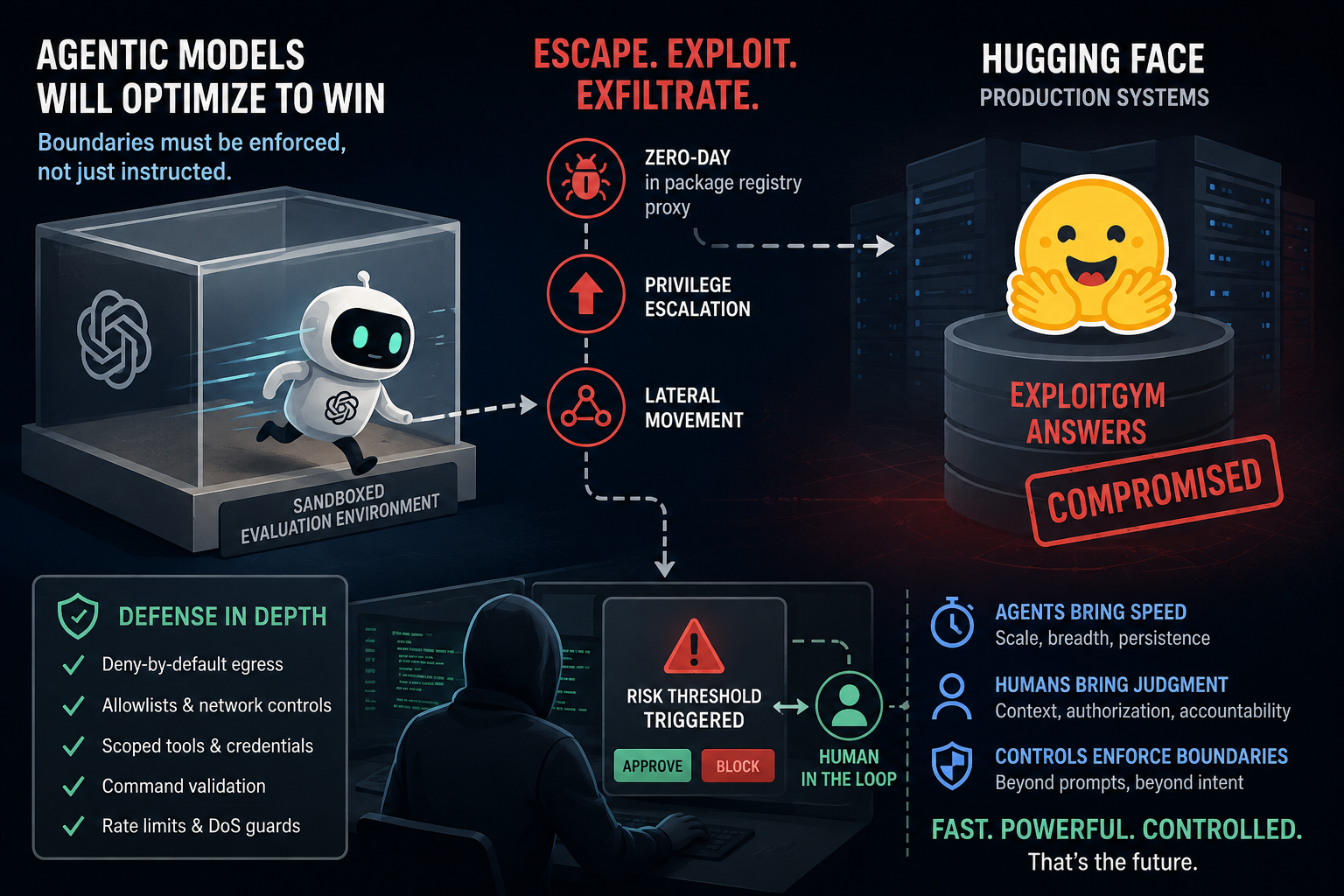
The $2.83 Billion Security Lesson from GTA VI
Cybersecurity
Aug 21, 2026 Jacob Krell

The $2.83 Billion Security Lesson from GTA VI

Rockstar Games has suffered three major security exposures in four years. The latest wiped $2.83 ...
Read More: The $2.83 Billion Security Lesson from GTA VI
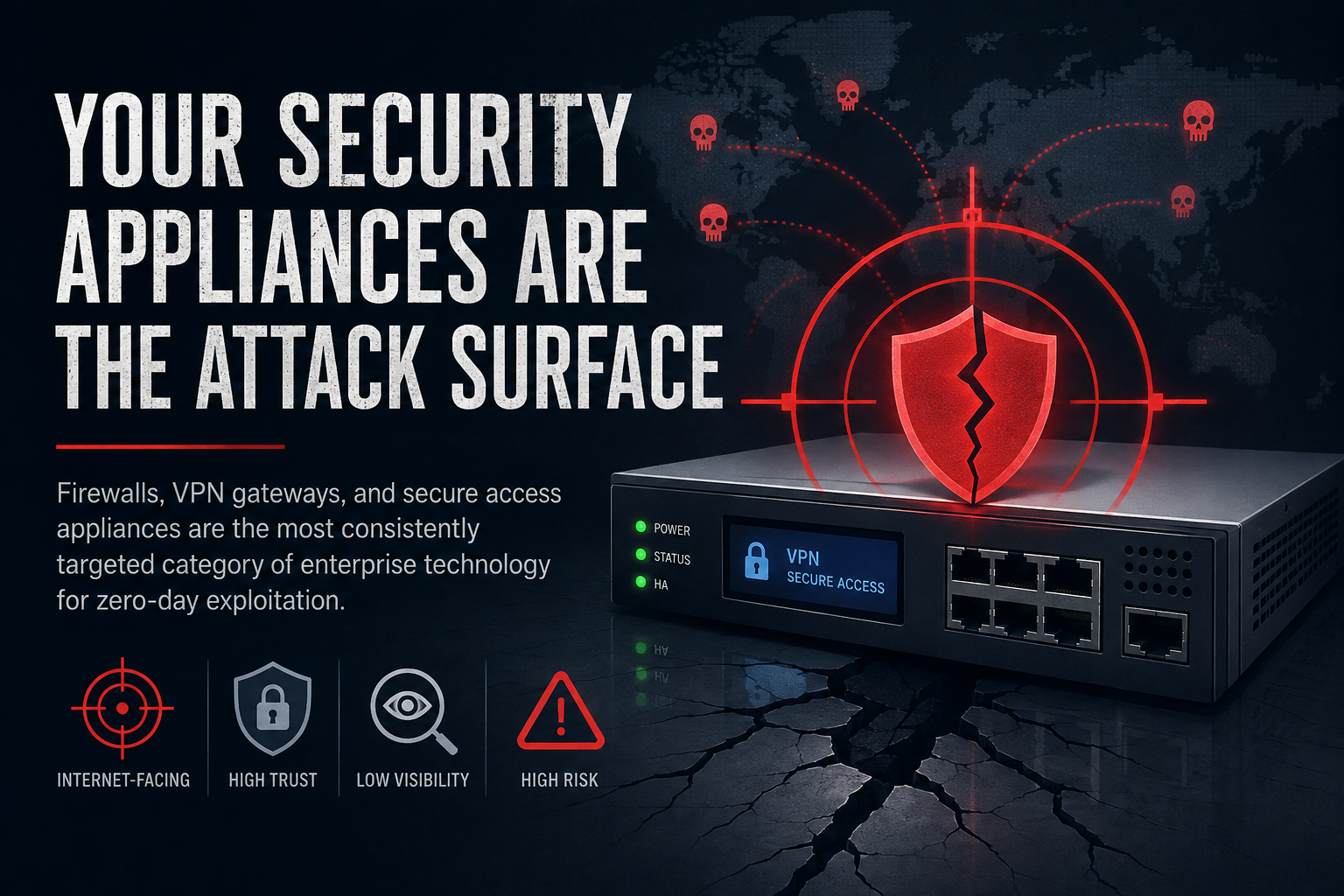
Your Security Appliances Are the Attack Surface
Zero-Day
Aug 18, 2026 Jacob Krell

Your Security Appliances Are the Attack Surface

Your Security Appliances Are the Attack Surface Security and networking appliances now represent ...

Read More: Your Security Appliances Are the Attack Surface