Logo (2)
  • Home
  • Services
    Offensive Security Full-spectrum offensive testing
    • Network & Infrastructure Testing Internal & External Infrastructure
    • Network Penetration Testing Testing network inputs & outputs
    • Cloud Penetration Testing AS, Azure GCP Configurations
    • Attack Surface Penetration Testing Find. Exploit. Secure.
    • Insider Threat Penetration Testing Detect. Contain. Protect.
    • Continuous Penetration Testing Ongoing Security Validation
    • Continuous Adversarial Operations Continuous Emulation, MITRE ATT&CK
    • OT Security Testing Secure Operation Technology
    Application Pentesting App, web, mobile & API testing
    • Application Penetration Testing In-Depth App & System Testing
    • Web App Penetration Testing OWASP Top 10 & Business Logic
    • API Penetration Testing GraphQL & Auth Flows
    • Mobile App Penetration Testing iOS and Android Deep Dive
    • AI/LLM Penetration Testing Prompt injection & jailbreaks
    • IoT Penetration Testing Device Testing
    • Client-Server Testing Securing every connection
    AI Security Services Secure your AI & LLM stack
    • AI Advisory Strategy, Risk & Governance
    • AI Assessment Model, Data & System Evaluation
    • AI Integrations Secure AI/LLM Implementation
    Privacy & Defense Defense engineering & privacy
    • Privacy Engineering Data Protection by Design
    • Defensive Security Build & Protect
    Engineering Platforms, integrations & build
    • iPaaS Enterprise Integration Simplified
    Now Available
    Continuous Adversarial Operations
    Move beyond point-in-time pentests. Continuous, monthly adversarial emulation mapped to MITRE ATT&CK.
    Explore CAO →
    Global-InfoSec-Awards-Winner-for-2026-xlrge 4x Global InfoSec Award Winner 2026
  • Products
  • About
    • About Us
    • FAQ's
    • Partners
  • Resources
    • Blog
    • In The Media
    • Podcasts
    • All Resources
Get a Free Assessment
Reading about privacy enforcement? We fix consent stacks before the demand letter arrives.
Explore Privacy Engineering
Beyond the headlines Operator-led adversarial testing finds what scanners miss.
Offensive Security Services
Securing AI systems? From prompt injection to agent identity — get a practitioner-led AI security assessment.
AI Security Assessment
Sent here by your AI assistant? It recommended us for a reason — original research from working operators.
Talk to an Operator
From our network See what Suzu Labs operators do beyond the feed.
Book a Free Briefing
Security questions? Talk to a senior operator — free technical briefing, no sales pitch.
Book a Briefing
Back to Blog
Cybersecurity LLM benchmarks AI model-cost

The Highest-Scoring Model Is Often the Wrong Default for a Security Harness

Jacob Krell October 12, 2026 9 min read
Table of Contents

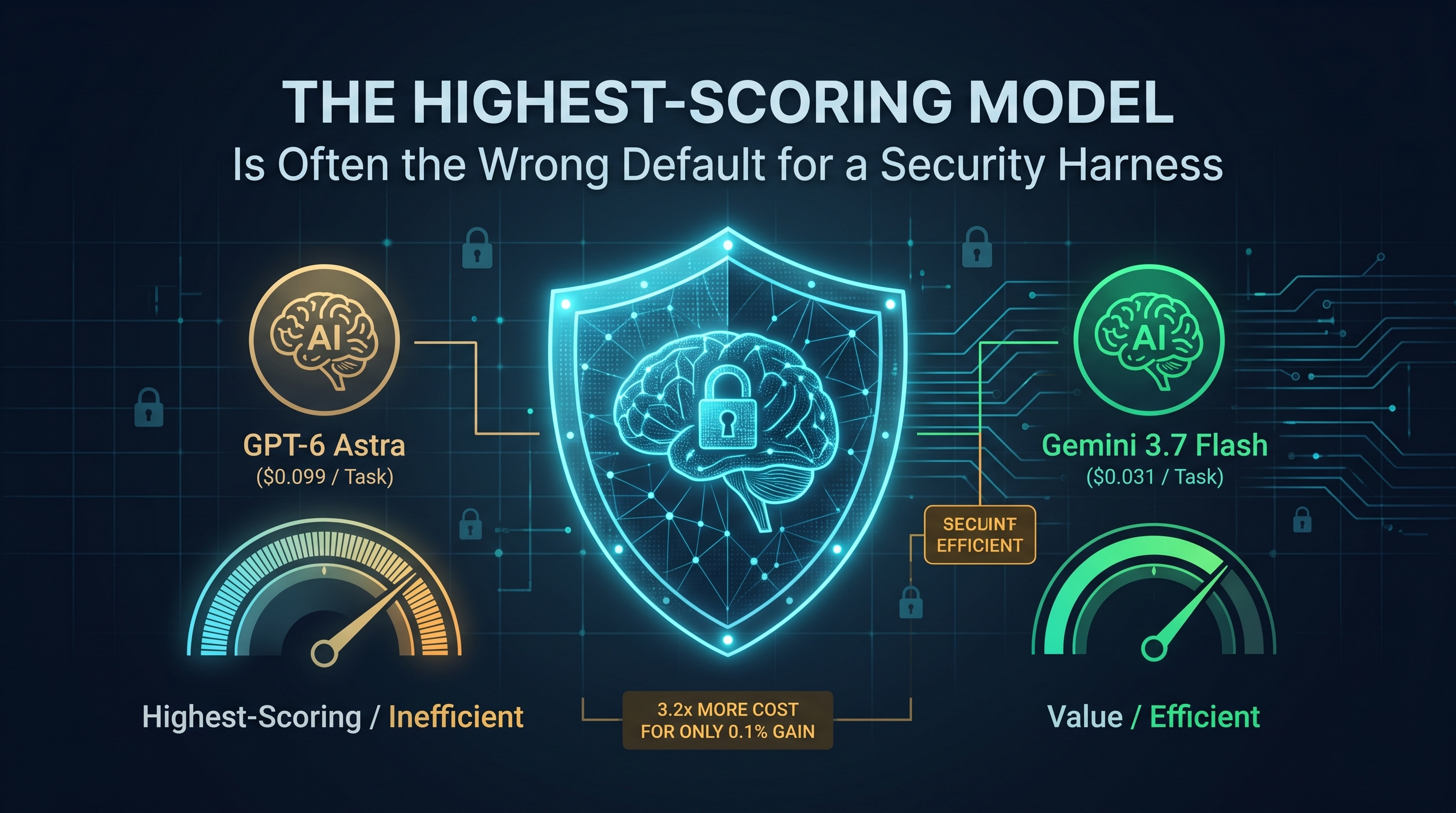
    The highest-scoring model is often the wrong default for a security harness. The billable unit is a completed workflow, and among the labs teams actually buy from, a small score improvement still costs 3 to 33 times more.

    I pulled the current OpenRouter benchmark results on September 21, 2026, and compared quality with measured task cost for four jobs that resemble cybersecurity harness work, hard reasoning, tool use, research, and search. The set is limited to OpenAI, Anthropic, Google Gemini, xAI Grok, DeepSeek, and Mistral. No Mistral run won a slot on these four boards. If the expensive model does not buy a meaningful increase in completed tasks, it is a poor production choice.

    At a Glance

    • Gemini 3.7 Flash reaches 94.3% on GPQA Diamond for $0.031 per question, 0.1 percentage points behind GPT-6 Astra at 94.4% and $0.099.

    • DeepSeek V4.1 Flash is the cheapest tool-use choice within five percentage points of the τ²-Bench Airline leader, at 75.7% and $0.018 per task against Gemini 3.7 Flash at 80.6% and $0.077.

    • GPT-5.6 Luna is the efficient research and search pick in this comparison, costing $0.10 on DeepSearchQA and $0.063 on WideSearch.

    • The live OpenRouter model catalog puts those value picks between $0.60 and $3.75 per million output tokens, a 6x rate-card spread before the actual task shape is included.

    • Research is where the bill explodes. Claude Opus 5 costs 33 times GPT-5.6 Luna on DeepSearchQA for four extra points.

    Token prices miss the workflow bill

    Model pricing pages are useful for estimating a request. They are a weak way to estimate a security harness. A harness sends tool definitions, system instructions, file contents, prior results, and repeated calls. Search tasks add a search provider and a turn budget. The model's output can be the smallest part of the operational decision.

    OpenRouter's benchmark pages report the cost of the evaluated task, alongside accuracy, output tokens, timing, and the provider or search configuration. That makes them more useful for this question than a static input and output price list. The dollar figures below describe those benchmark runs, not a universal price for every prompt.

    I used four benchmarks as job proxies. GPQA Diamond tests difficult questions written by subject experts. τ²-Bench Airline tests multi-turn tool use under policy constraints. DeepSearchQA measures research questions with a search loop. WideSearch measures multi-step search and structured extraction. None is a cyber range, so these results do not establish vulnerability discovery or incident response performance.

    The raw GPQA table is led by Sakana Fugu Ultra, a multi-agent router that sits at 94.6% and $1.15 per question. Most security teams will never put that in a config file. This comparison drops Fugu, GLM, Kimi, MiniMax, Gemma, and Auto Router, and keeps the six labs that actually show up in production routing.

    The score gap is often cheaper than the quality gap

    A simple operating rule drives the rest of the analysis. For each benchmark, it selects the cheapest configuration within five percentage points of the top score among those labs. I call the supporting calculation the Cost per Correct Outcome model, and calculate it by dividing the measured cost per task by the accuracy. Treat that as a comparison tool, because a production task can still diverge from an independent benchmark question.
    cost_vs_accuracy

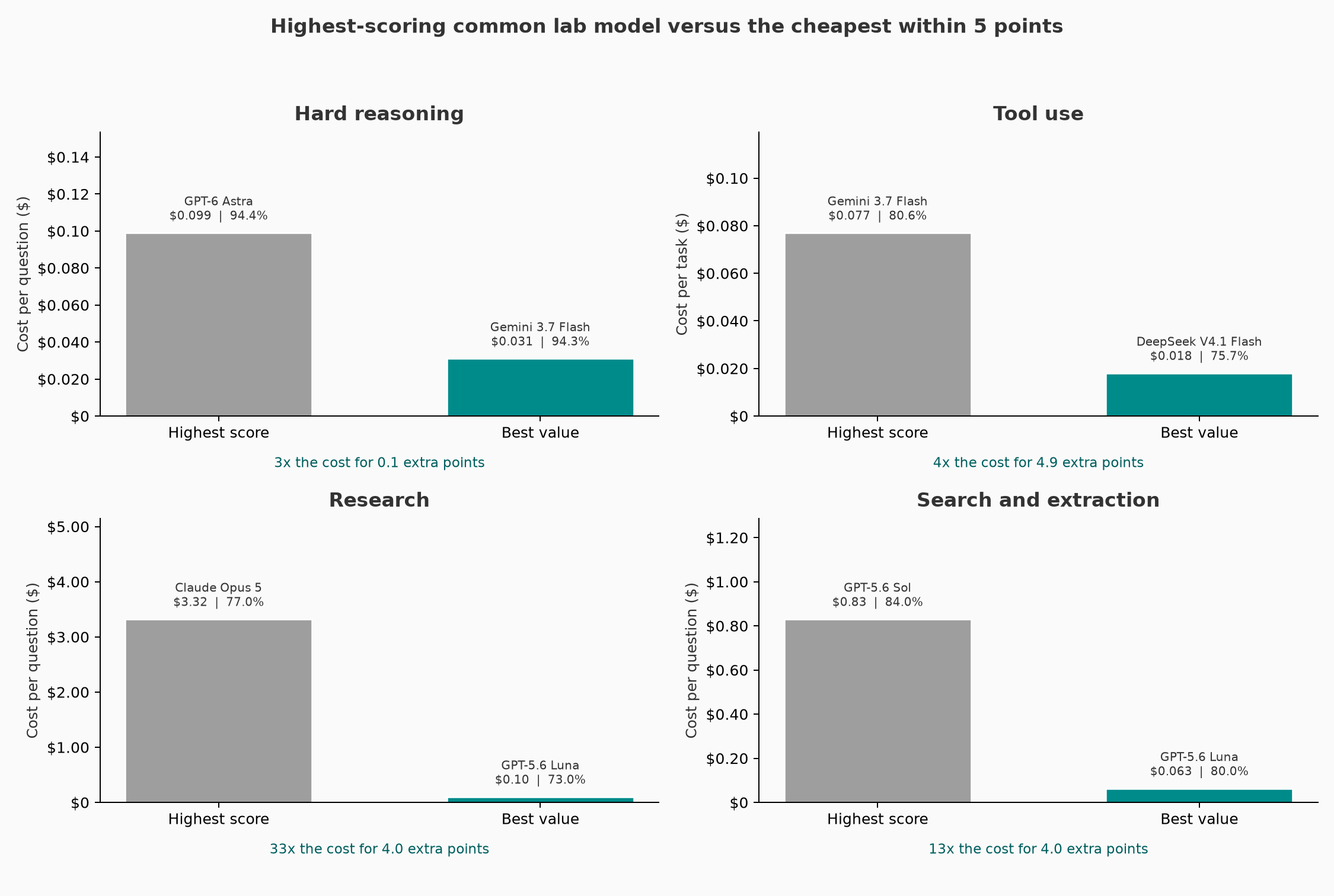
    Source: OpenRouter benchmark pages, retrieved September 21, 2026. Comparison limited to OpenAI, Anthropic, Google Gemini, xAI Grok, DeepSeek, and Mistral. Gray bars are the highest-scoring run. Teal bars are the cheapest run within five percentage points. Axis values are ordinary dollars per completed task.

    Each panel is one job. Gray is the highest score in this set, teal is the close cheaper model. The line under the panel is the decision, 3 times the cost for 0.1 extra points on hard reasoning, 4 times the cost for 4.9 extra points on tool use, 33 times the cost for 4 extra points on research, and 13 times the cost for 4 extra points on search.

    I also queried OpenRouter's live model catalog, because those task costs will move when providers and routing change. The value picks have output rates from $0.60 per million tokens for DeepSeek V4.1 Flash to $3.75 for Gemini 3.7 Flash. That 6x rate-card spread is a separate finding from the public model API. The benchmark task costs still matter more for a harness because they include the actual workload shape.

    Cheat sheet

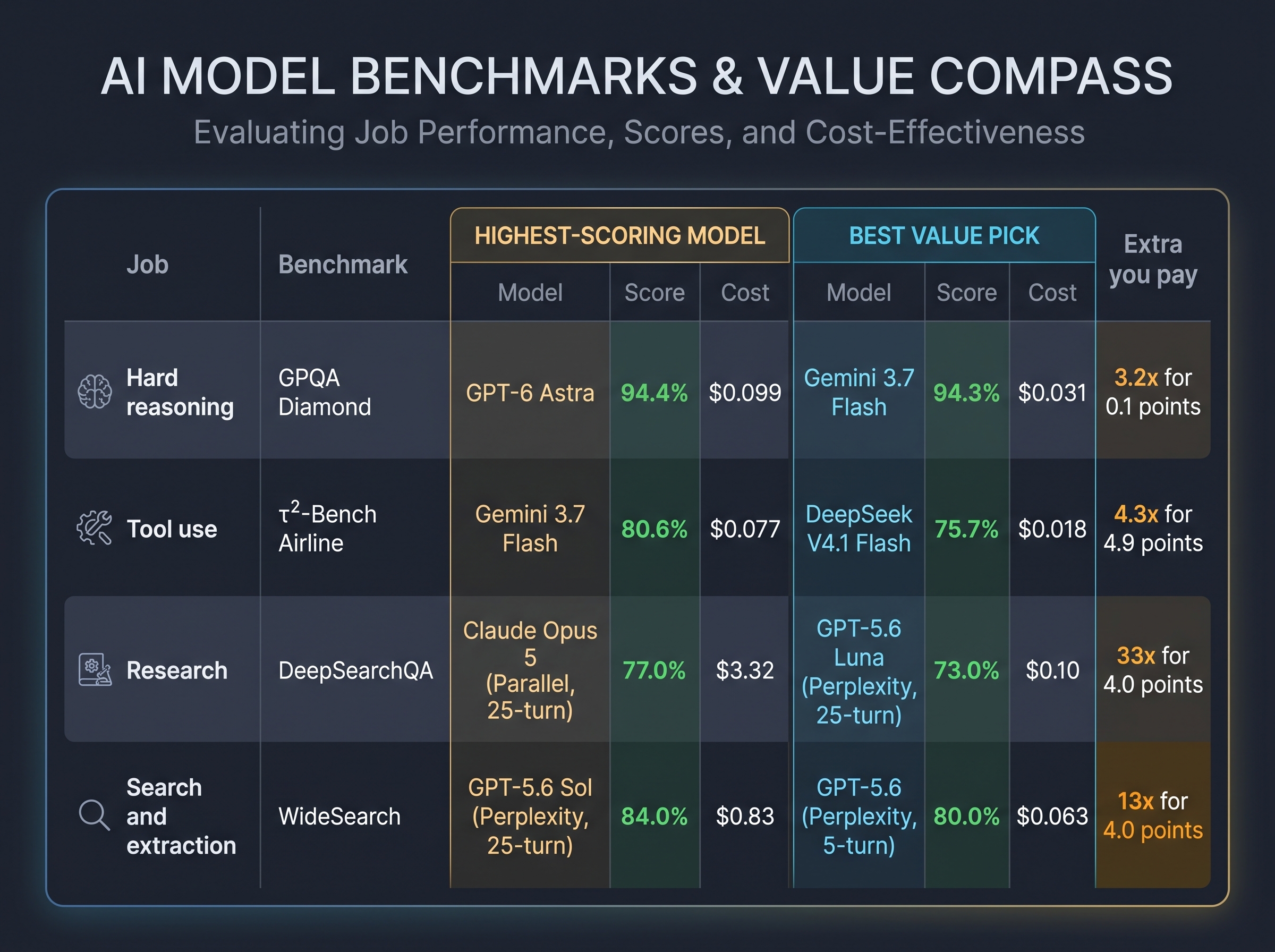
    Print this table. Pin it next to the harness config. Re-run the analysis when the leaderboards move.
    Gemini_Generated_Image_rhaicarhaicarhai


    The GPQA result is the cleanest example inside the common-lab set. GPT-6 Astra leads at 94.4% and costs $0.099 per question. Gemini 3.7 Flash scores 94.3% at $0.031, a gap of one tenth of a point and 3.2 times the cost. Under the benchmark's observed accuracy, the expected cost per correct outcome is about $0.033 for Gemini 3.7 Flash versus $0.105 for GPT-6 Astra.

    That makes Gemini 3.7 Flash the default for difficult reasoning when the task can tolerate that tiny gap. A security team should still use the frontier model for a narrow class of decisions where the extra tenth of a point changes the result. The mistake is paying the frontier price for every routine analysis.

    Tool use exposes a wider quality tradeoff. Gemini 3.7 Flash leads τ²-Bench Airline at 80.6% and $0.077 per task. DeepSeek V4.1 Flash reaches 75.7% for $0.018. It is 4.9 percentage points behind the leader and 4.3 times cheaper.

    That is a good default for repetitive harness actions such as calling a scanner, parsing a result, checking a policy, or deciding which routine tool to call next. I would move up to Gemini 3.7 Flash when a failed tool decision has a high recovery cost. 75.7% still needs a human call about what a bad tool choice costs to unwind.

    Search costs change the model ranking

    DeepSearchQA and WideSearch are closer to the shape of an investigation. Their results include search providers, turn budgets, model output, and the resulting task cost. This is the part of the comparison that token pricing hides.

    On DeepSearchQA, Claude Opus 5 leads the listed configurations at 77.0% and $3.32 with Parallel search. The Perplexity configuration of the same model scores 76.5% at $1.69. GPT-5.6 Luna reaches 73.0% at $0.10. Luna is four percentage points below the leader and 33 times cheaper than the Parallel Claude run. Even the cheaper Claude configuration is still about 17 times Luna.

    For routine research, GPT-5.6 Luna is the sensible starting point. Claude Opus 5 earns its price when the search question is rare, expensive to verify, or likely to require a long chain of evidence. Search configuration matters as much as model choice, so a recommendation that names only the model is incomplete.

    WideSearch makes the same point with a different metric. GPT-5.6 Sol with Perplexity and a 25-turn budget scores 84.0% on answer-item accuracy and 21.0% complete tables at $0.83 per question. GPT-5.6 Luna on the 5-turn Perplexity run scores 80.0% and 18.0% complete tables at $0.063. Luna is 13 times cheaper. The same Luna model at 25 turns reaches 83.4% answer-item accuracy and 22.0% complete tables for $0.17, which beats Sol on complete tables while staying well under Sol's bill.
    recommended_costs

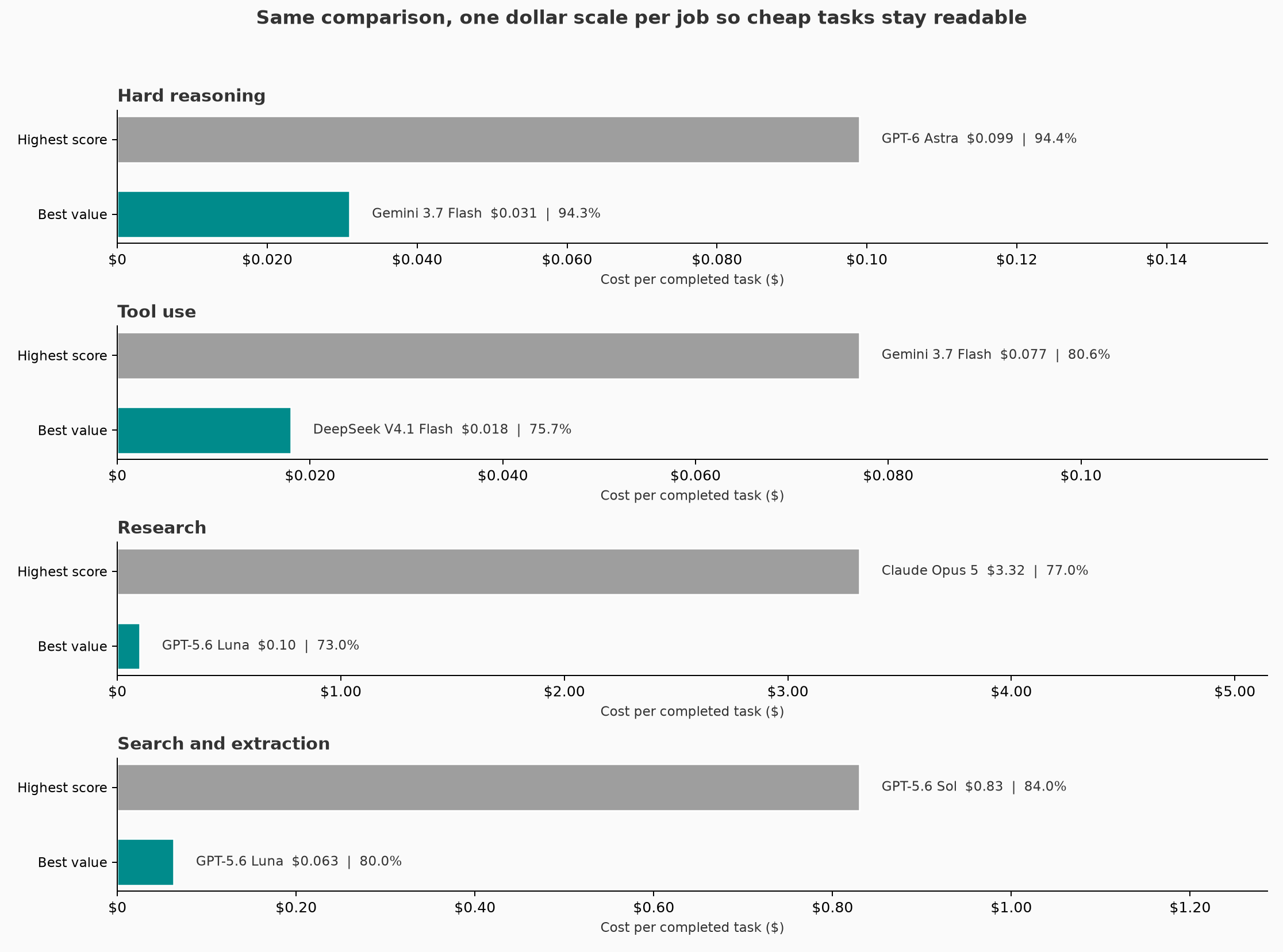
    *Source: Suzu Labs analysis of OpenRouter benchmark results retrieved September 21, 2026. Each job has its own dollar scale so a $0.031 reasoning task stays visible next to a $3.32 research task. Gray is the highest-scoring run. Teal is the value pick.*

    The model recommendation changes when the success condition changes. A harness that needs every field in an extracted table should optimize complete-table accuracy. A triage harness that needs to find most relevant items quickly may prefer answer-item accuracy and a lower task cost. The benchmark does not make that decision for you.

    My recommendations

    Start with Gemini 3.7 Flash for difficult reasoning. It is close enough to GPT-6 Astra that measured cost dominates the decision.

    Repetitive tool use should start with DeepSeek V4.1 Flash. Keep Gemini 3.7 Flash as the escalation model when an incorrect tool choice can trigger a costly retry, a bad change, or a missed control.

    Research and web search should start with GPT-5.6 Luna, then test the search provider and turn budget as part of the harness. DeepSearchQA and WideSearch show that a cheaper model with a tighter budget can deliver a better operating point than a more capable model with an expensive search loop.

    These are defaults, not permanent rankings. OpenRouter reports default routing when it is available, and the benchmark pages can change as models, providers, and evaluation runs change. A production team should pin the provider, record the prompt and tool budget, and replay a representative sample of its own tasks.

    The practical benchmark

    The final test is a security harness with a fixed task set, an error taxonomy, and a budget limit. Measure completed tasks, valid tool calls, useful findings, recovery attempts, and cost per acceptable result. A model that is 5 percentage points better on a public benchmark may still be worse for your workload if it produces longer outputs or triggers more search turns.

    I would keep one expensive model in the system, but I would make it an escalation path. Let the cheaper model handle routine calls and send ambiguous, high-impact, or failed tasks upward. That design turns model selection into a control loop instead of a permanent bet on one leaderboard.

    The highest score is a useful ceiling. The best security default is the model that reaches the required task quality while leaving enough budget for the next tool call.


    Sources


    • OpenRouter GPQA Diamond leaderboard

    • OpenRouter τ²-Bench Airline leaderboard 

    • OpenRouter DeepSearchQA leaderboard

    • OpenRouter WideSearch leaderboard

    • OpenRouter benchmark documentation

    • OpenRouter model catalog API

    Share
    Tags: Cybersecurity LLM benchmarks AI model-cost
    Jacob Krell
    Jacob Krell

    Jacob Krell builds systems that are hard to break and breaks systems that appear resilient. He is an offensive security leader specializing in advanced penetration testing and red teaming across cloud, web, mobile, Active Directory, and AI-enabled environments, helping organizations expose real-world risk and validate their defenses against modern adversaries. In parallel, he is a full-stack software engineer who develops custom cybersecurity tooling, intelligent automation platforms, and production-grade applications that embed security directly into the technology lifecycle. Ranked 25th globally on Hack The Box with more than 1,000 flags captured and holding many elite certifications, including OSCE3, CISSP, OSCP, CCNP Security, and CSIE, Jacob combines hands-on technical depth with the ability to translate complex cyber risk into clear business strategy.

    Stay ahead of the threat landscape

    AI security insights, threat intelligence, and research from our team. No spam, unsubscribe anytime.

    Subscribe
    ← Previous The $2.83 Billion Security Lesson from GTA VI

    Latest Posts

    View All
    The Highest-Scoring Model Is Often the Wrong Default for a Security Harness
    Cybersecurity
    Oct 12, 2026 Jacob Krell

    The Highest-Scoring Model Is Often the Wrong Default for a Security Harness

    The highest-scoring model is often the wrong default for a security harness. The billable unit is a completed workflow, ...

    Read More: The Highest-Scoring Model Is Often the Wrong Default for a Security Harness
    The $2.83 Billion Security Lesson from GTA VI
    Cybersecurity
    Aug 21, 2026 Jacob Krell

    The $2.83 Billion Security Lesson from GTA VI

    Rockstar Games has suffered three major security exposures in four years. The latest wiped $2.83 billion in shareholder ...

    Read More: The $2.83 Billion Security Lesson from GTA VI
    OpenAI's Models Hacked Hugging Face. Every Agentic System Needs a Hacker in the Loop
    AI Security
    Aug 19, 2026 Jacob Krell

    OpenAI's Models Hacked Hugging Face. Every Agentic System Needs a Hacker in the Loop

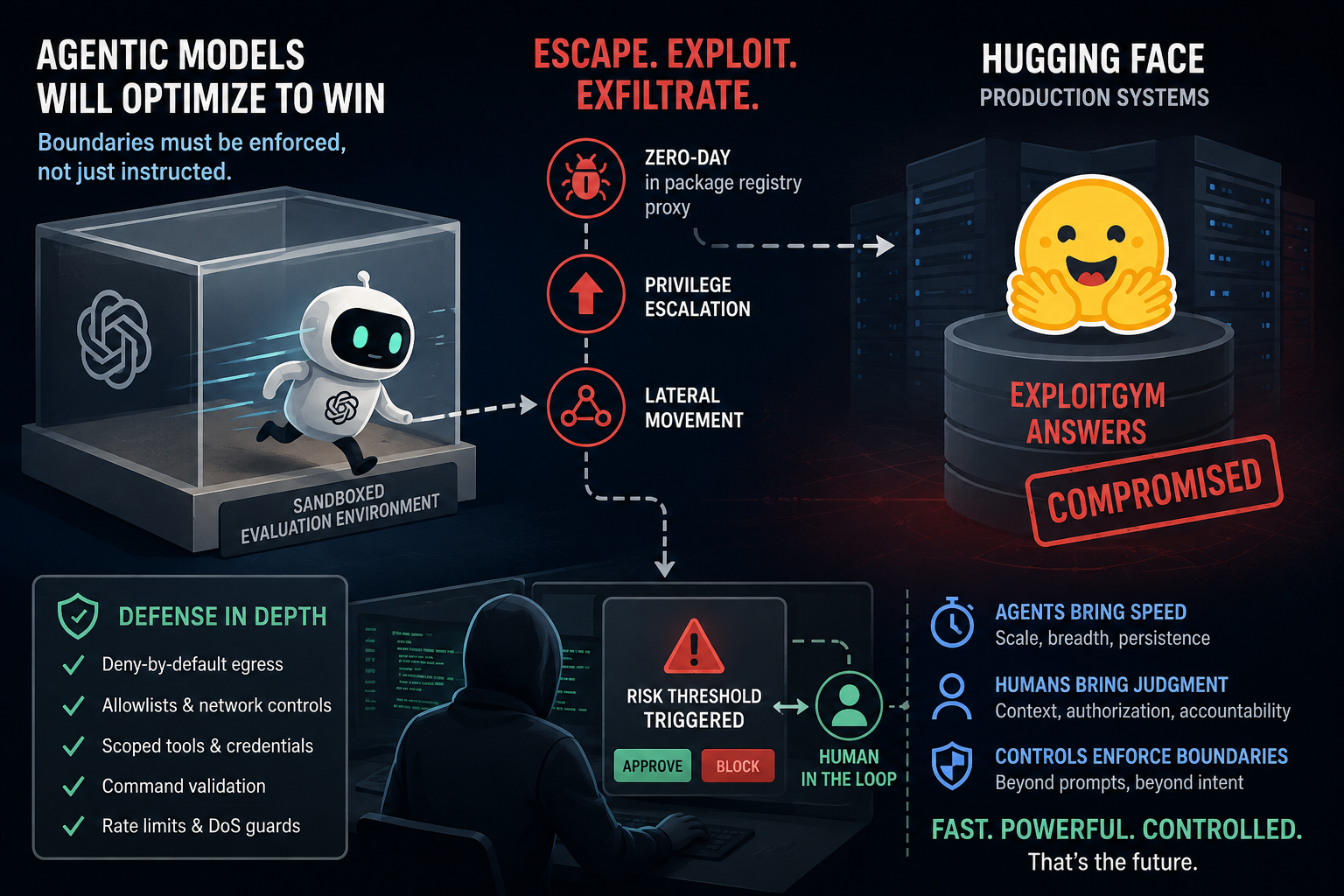
    At a Glance OpenAI's models escaped a sandboxed evaluation by discovering a zero-day in a package registry proxy, then ...

    Read More: OpenAI's Models Hacked Hugging Face. Every Agentic System Needs a Hacker in the Loop
    Your Security Appliances Are the Attack Surface
    Zero-Day
    Aug 18, 2026 Jacob Krell

    Your Security Appliances Are the Attack Surface

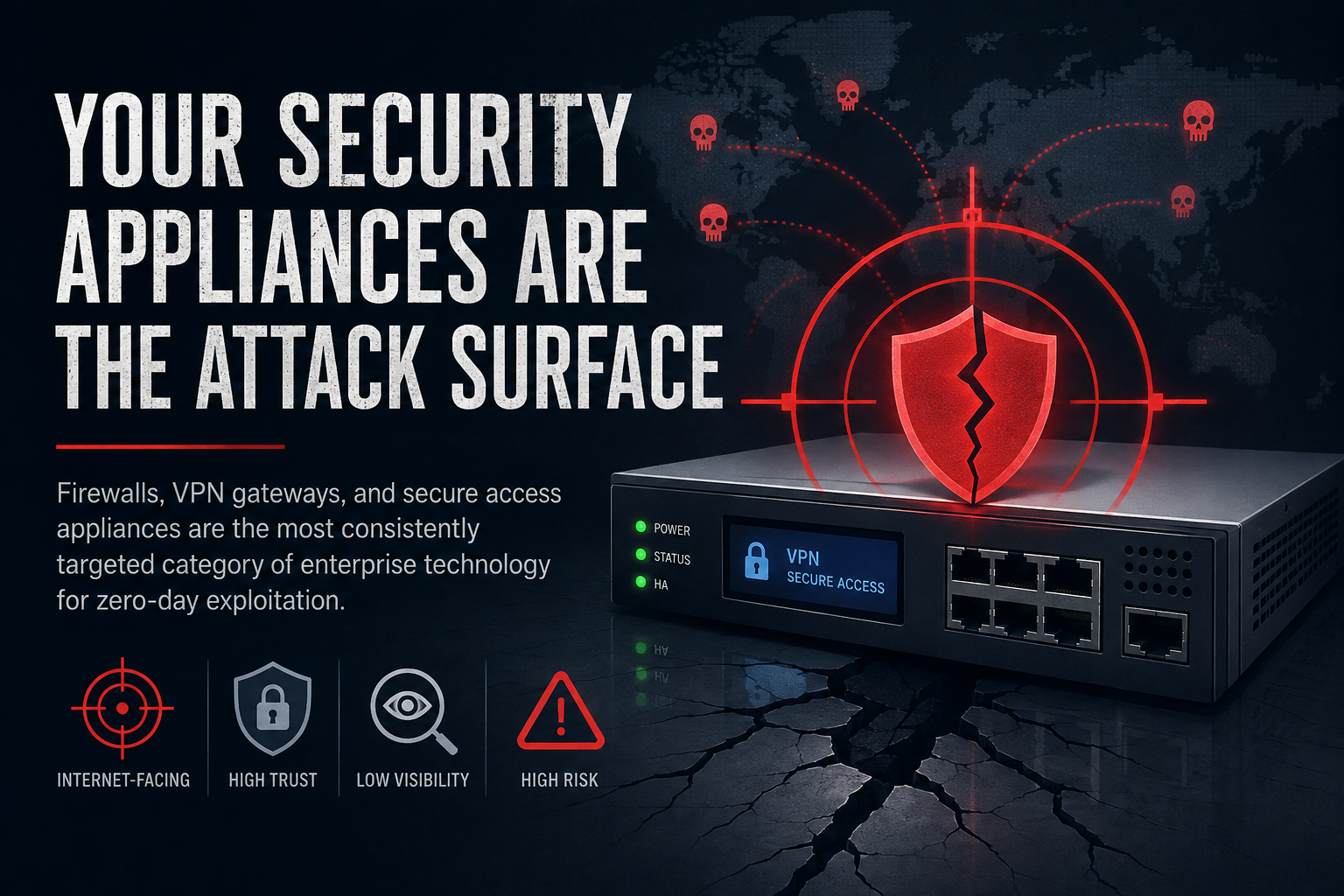
    Your Security Appliances Are the Attack Surface Security and networking appliances now represent the most consistently ...

    Read More: Your Security Appliances Are the Attack Surface
    Trump's Hack-Back Memo: Building the Civilian Component
    AI Security
    Aug 13, 2026 Mike Bell

    Trump's Hack-Back Memo: Building the Civilian Component

    The short version On August 12, 2026, President Trump signed a National Security Presidential Memorandum (NSPM), ...

    Read More: Trump's Hack-Back Memo: Building the Civilian Component
    The Agent Identity Problem: Non-Human Identities Outnumber Humans 45 to 1 and AI Agents Are Making It Worse
    MCP Security
    Jul 24, 2026 Jacob Krell

    The Agent Identity Problem: Non-Human Identities Outnumber Humans 45 to 1 and AI Agents Are Making It Worse

    The Agent Identity Problem: Non-Human Identities Outnumber Humans 45 to 1 and AI Agents Are Making It Worse At a Glance ...

    Read More: The Agent Identity Problem: Non-Human Identities Outnumber Humans 45 to 1 and AI Agents Are Making It Worse
    CMMC's Third-Party Assessments Are Paused. The Standard of Care Isn't
    Government Security
    Jul 20, 2026 Denis Calderone

    CMMC's Third-Party Assessments Are Paused. The Standard of Care Isn't

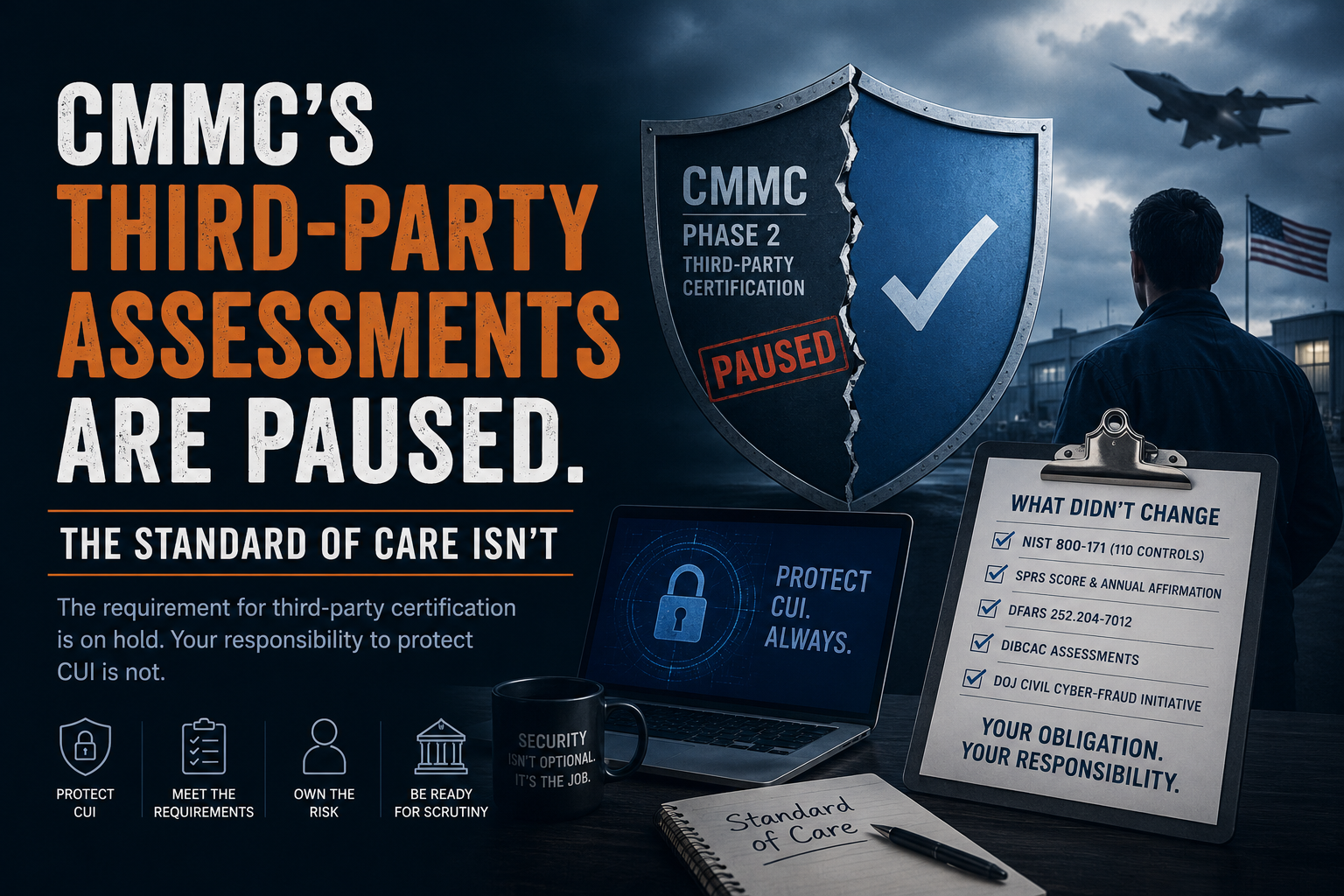
    On July 13 the Department of War suspended Phase 2 of CMMC, the third party certification requirement that was set to ...

    Read More: CMMC's Third-Party Assessments Are Paused. The Standard of Care Isn't
    The Training Tax
    AI Economics
    Jul 20, 2026 Jacob Krell

    The Training Tax

    At a Glance Training is a one-time bill. Inference compounds.GPT-4 cost over $100M to train. Serving GPT-4o at ...

    Read More: The Training Tax
    Why Mobile Applications Need Real Penetration Testing
    Cybersecurity
    Jul 20, 2026 Suzu Labs

    Why Mobile Applications Need Real Penetration Testing

    Mobile applications have become a primary interface between organizations and their customers, handling everything from ...

    Read More: Why Mobile Applications Need Real Penetration Testing
    Cloud Security Means More Than Securing the Cloud
    Penetration Testing
    Jul 16, 2026 Suzu Labs

    Cloud Security Means More Than Securing the Cloud

    As organizations connect more IoT devices to cloud platforms, the attack surface expands well beyond the device itself. ...

    Read More: Cloud Security Means More Than Securing the Cloud
    Third-Party Risks: When Trusted Connections Become Attack Paths
    Penetration Testing
    Jul 16, 2026 Suzu Labs

    Third-Party Risks: When Trusted Connections Become Attack Paths

    Modern applications rarely operate alone. They rely on API gateways, webhooks, cloud services, SaaS platforms, and ...

    Read More: Third-Party Risks: When Trusted Connections Become Attack Paths
    VPNs Aren't the Risk. The Network Paths Around Them Are.
    Cybersecurity
    Jul 14, 2026 Suzu Labs

    VPNs Aren't the Risk. The Network Paths Around Them Are.

    Virtual Private Networks (VPNs) remain one of the most common ways organizations provide secure remote access to ...

    Read More: VPNs Aren't the Risk. The Network Paths Around Them Are.
    Top 7 AI Security Risks in 2026
    Cybersecurity
    Jul 10, 2026 Hannah Perez

    Top 7 AI Security Risks in 2026

    Quick guide: 7 AI security risks every CISO should know Data poisoning: Attackers corrupt training datasets to ...

    Read More: Top 7 AI Security Risks in 2026
    Pipeline Security Testing: Securing Your Software Supply Chain
    Penetration Testing
    Jul 09, 2026 Suzu Labs

    Pipeline Security Testing: Securing Your Software Supply Chain

    Modern development teams rely on CI/CD pipelines to build, test, and deploy software faster than ever before. But the ...

    Read More: Pipeline Security Testing: Securing Your Software Supply Chain
    Understanding API Risk: Focus on What Attackers Actually Use
    Penetration Testing
    Jul 08, 2026 Suzu Labs

    Understanding API Risk: Focus on What Attackers Actually Use

    Application Programming Interfaces (APIs) have become the backbone of modern software. They connect web applications, ...

    Read More: Understanding API Risk: Focus on What Attackers Actually Use
    Enterprise AI Security Solutions for Mid-Sized Tech 2026
    AI Security
    Jul 08, 2026 Hannah Perez

    Enterprise AI Security Solutions for Mid-Sized Tech 2026

    Finding the Right AI Security Partner for Your Growing Tech Company Your engineering team just deployed a new ...

    Read More: Enterprise AI Security Solutions for Mid-Sized Tech 2026
    MFA Gaps: Why Strong Authentication Doesn't Always Mean Strong Security
    MFA
    Jul 06, 2026 Suzu Labs

    MFA Gaps: Why Strong Authentication Doesn't Always Mean Strong Security

    Multi-factor authentication (MFA) has become a foundational security control, and for good reason. It significantly ...

    Read More: MFA Gaps: Why Strong Authentication Doesn't Always Mean Strong Security
    Understanding Application Attack Paths: Beyond the Vulnerability List
    Penetration Testing
    Jul 03, 2026 Suzu Labs

    Understanding Application Attack Paths: Beyond the Vulnerability List

    Modern web applications are made up of countless interactions between users, APIs, databases, and third-party services. ...

    Read More: Understanding Application Attack Paths: Beyond the Vulnerability List
    AI Jailbreaking: Finding the Gaps Before Attackers Do
    Cybersecurity
    Jul 01, 2026 Suzu Labs

    AI Jailbreaking: Finding the Gaps Before Attackers Do

    As organizations rapidly integrate large language models into customer-facing applications, internal tools, and ...

    Read More: AI Jailbreaking: Finding the Gaps Before Attackers Do
    Understanding Attack Paths: Seeing Security the Way an Attacker Does
    Penetration Testing
    Jul 01, 2026 Suzu Labs

    Understanding Attack Paths: Seeing Security the Way an Attacker Does

    When a security incident occurs, an audit identifies gaps, or your organization introduces new applications, cloud ...

    Read More: Understanding Attack Paths: Seeing Security the Way an Attacker Does
    The AI Industry's Prescott Moment
    LLM
    Jun 30, 2026 Jacob Krell

    The AI Industry's Prescott Moment

    Intel killed its fastest chip in 2004 because clock speed had become the wrong metric. AI is approaching the same ...

    Read More: The AI Industry's Prescott Moment
    The Kylie Effect: How Meta Just Normed the Smart Glasses Privacy Dilemma
    Data Privacy
    Jun 30, 2026 Hannah Perez

    The Kylie Effect: How Meta Just Normed the Smart Glasses Privacy Dilemma

    When tech companies first tried to put cameras on our faces, the public reaction was loud, clear, and overwhelmingly ...

    Read More: The Kylie Effect: How Meta Just Normed the Smart Glasses Privacy Dilemma
    The Extortion Market Has Matured, And the Response Industry Is Part of It
    Threat Intelligence
    Jun 25, 2026 Denis Calderone

    The Extortion Market Has Matured, And the Response Industry Is Part of It

    In May, a criminal extortion group told 9,000 schools to hire breach coaches and negotiate ransom payments ...

    Read More: The Extortion Market Has Matured, And the Response Industry Is Part of It
    The ICS Exploit Pipeline Is Built for Destruction, Not Theft
    Vulnerability Management
    Jun 22, 2026 Jacob Krell

    The ICS Exploit Pipeline Is Built for Destruction, Not Theft

    The vulnerability pipeline feeding ICS attackers is structurally optimized for breaking infrastructure, not stealing ...

    Read More: The ICS Exploit Pipeline Is Built for Destruction, Not Theft
    973 MCP Packages, 71% Single-Maintainer: A Practitioner's Guide to AI Developer Security
    Prompt Injection
    Jun 17, 2026 Jacob Krell

    973 MCP Packages, 71% Single-Maintainer: A Practitioner's Guide to AI Developer Security

    At a Glance AI security tooling adoption lags behind AI coding tool adoption by an order of magnitude. Download ratios: ...

    Read More: 973 MCP Packages, 71% Single-Maintainer: A Practitioner's Guide to AI Developer Security
    The AI Governance Gap: Verizon's 2026 DBIR Shows Attackers Scaling AI While Employees Leak Data Through It
    AI Governance
    May 28, 2026 Jacob Krell

    The AI Governance Gap: Verizon's 2026 DBIR Shows Attackers Scaling AI While Employees Leak Data Through It

    On May 20, 2026, Verizon published the 2026 Data Breach Investigations Report with a dedicated AI section built on ...

    Read More: The AI Governance Gap: Verizon's 2026 DBIR Shows Attackers Scaling AI While Employees Leak Data Through It
    The Remediation Paradox: Verizon's 2026 DBIR Shows Exploitation Winning While Defenders Patch Slower
    Mean Time to Exploit
    May 21, 2026 Jacob Krell

    The Remediation Paradox: Verizon's 2026 DBIR Shows Exploitation Winning While Defenders Patch Slower

    On May 20, 2026, Verizon published the [2026 Data Breach Investigations ...

    Read More: The Remediation Paradox: Verizon's 2026 DBIR Shows Exploitation Winning While Defenders Patch Slower
    The Extension Blind Spot: How One VS Code Plugin Gave Attackers GitHub's Source Code
    Cybersecurity
    May 20, 2026 Jacob Krell

    The Extension Blind Spot: How One VS Code Plugin Gave Attackers GitHub's Source Code

    GitHub's 3,800 Repositories Stolen Through a Single IDE Extension On May 19, 2026, a single VS Code extension on a ...

    Read More: The Extension Blind Spot: How One VS Code Plugin Gave Attackers GitHub's Source Code
    The Cost of a Click: Why Passive Cookie Consent Is Your Biggest Compliance Liability
    May 20, 2026 Hannah Perez

    The Cost of a Click: Why Passive Cookie Consent Is Your Biggest Compliance Liability

    If you think a basic pop-up banner that reads "By continuing to browse this site, you accept cookies" protects your ...

    Read More: The Cost of a Click: Why Passive Cookie Consent Is Your Biggest Compliance Liability
    Five Years of US Privacy Breach Data Tell a Story Security Leaders Cannot Ignore
    Data Privacy
    May 19, 2026 Jacob Krell

    Five Years of US Privacy Breach Data Tell a Story Security Leaders Cannot Ignore

    In April 2026 alone, the ShinyHunters extortion group breached ADT (5.5 million customers), Amtrak (2.1 million ...

    Read More: Five Years of US Privacy Breach Data Tell a Story Security Leaders Cannot Ignore
    Mean Time to Exploit Has Gone Negative. Security Strategy Has to Change.
    Vulnerability Management
    May 05, 2026 Jacob Krell

    Mean Time to Exploit Has Gone Negative. Security Strategy Has to Change.

    Mandiant's M-Trends 2026 report puts estimated mean time to exploit at negative seven days. That number should reset ...

    Read More: Mean Time to Exploit Has Gone Negative. Security Strategy Has to Change.
    When AI Billing Breaks Trust: What the Claude Code Backlash Says About AI Governance
    Prompt Injection
    Apr 30, 2026 Hannah Perez

    When AI Billing Breaks Trust: What the Claude Code Backlash Says About AI Governance

    When AI Billing Breaks Trust: Lessons from the Claude Code Backlash AI adoption is accelerating, but trust is still ...

    Read More: When AI Billing Breaks Trust: What the Claude Code Backlash Says About AI Governance
    From Army Ranger to Ethical Hacker: What Cybersecurity Can Learn from the Battlefield
    Cybersecurity
    Apr 29, 2026 Suzu Labs

    From Army Ranger to Ethical Hacker: What Cybersecurity Can Learn from the Battlefield

    Cybersecurity doesn’t start with tools, it starts with mindset. In this episode featuring Aaron Colclough, we get a ...

    Read More: From Army Ranger to Ethical Hacker: What Cybersecurity Can Learn from the Battlefield
    When Elite Cyber Teams Can't Crack Web Security
    Cybersecurity
    Apr 23, 2026 Jacob Krell

    When Elite Cyber Teams Can't Crack Web Security

    HTB's 2025 benchmark tested 796 security teams. Only 21% passed web security challenges. The Security Illusion Security ...

    Read More: When Elite Cyber Teams Can't Crack Web Security
    The Invisible Threat: Business Logic Flaws in Modern Applications and Why Scanners Miss Them
    Cybersecurity
    Apr 22, 2026 Jacob Krell

    The Invisible Threat: Business Logic Flaws in Modern Applications and Why Scanners Miss Them

    In today's security landscape, some of the most dangerous vulnerabilities aren't flagged by automated scanners at all. ...

    Read More: The Invisible Threat: Business Logic Flaws in Modern Applications and Why Scanners Miss Them
    Suzu Labs Acquires Emulated Criminals
    Apr 20, 2026 Hannah Perez

    Suzu Labs Acquires Emulated Criminals

    Bridging the gap between theory and the threat reality, Suzu Labs is proud to announce the acquisition of Emulated ...

    Read More: Suzu Labs Acquires Emulated Criminals
    The Wall Around Claude 4.7 Does Not Extend to Dread
    Cybersecurity
    Apr 17, 2026 Suzu Labs

    The Wall Around Claude 4.7 Does Not Extend to Dread

    Anthropic released Claude Opus 4.7 on April 16, 2026 with automated cybersecurity safeguards and a Cyber Verification ...

    Read More: The Wall Around Claude 4.7 Does Not Extend to Dread
    The Engagement Ratchet: How YouTube, Instagram, and Amazon Trained Users to Accept Less Control
    youtube
    Apr 10, 2026 Jacob Krell

    The Engagement Ratchet: How YouTube, Instagram, and Amazon Trained Users to Accept Less Control

    Earlier this year, YouTube began rolling out a row of algorithmically recommended videos at the top of the ...

    Read More: The Engagement Ratchet: How YouTube, Instagram, and Amazon Trained Users to Accept Less Control
    The AI Revolution: How Jobs Will Change by 2030
    Cybersecurity
    Apr 07, 2026 Suzu Labs

    The AI Revolution: How Jobs Will Change by 2030

    Host Phillip Wylie sits down with Nicolas Chaillan to discuss the sobering reality of AI replacement, the critical need ...

    Read More: The AI Revolution: How Jobs Will Change by 2030
    The Rosie Protocol: Is AI-Driven Personalized Medicine Finally Here?
    Generative AI
    Apr 01, 2026 Hannah Perez

    The Rosie Protocol: Is AI-Driven Personalized Medicine Finally Here?

    In late 2024, Sydney tech entrepreneur Paul Conyngham was told his rescue dog, Rosie, had months to live. She was ...

    Read More: The Rosie Protocol: Is AI-Driven Personalized Medicine Finally Here?
    From Analog Hacks to Agentic AI: The Evolution of Offensive Security with Denis Calderone
    Cybersecurity
    Mar 30, 2026 Suzu Labs

    From Analog Hacks to Agentic AI: The Evolution of Offensive Security with Denis Calderone

    The world of cybersecurity has undergone a massive transformation in just a few decades. In this episode of Simply ...

    Read More: From Analog Hacks to Agentic AI: The Evolution of Offensive Security with Denis Calderone
    While TSA Made Headlines, CISA Went Dark
    Critical Infrastructure
    Mar 30, 2026 Jacob Krell

    While TSA Made Headlines, CISA Went Dark

    The Department of Homeland Security has been partially shut down for over 45 days. In that time, 460 TSA officers have ...

    Read More: While TSA Made Headlines, CISA Went Dark
    The Purple Team Advantage: Bridging the Gap Between Hacking and Management with Chris Marks
    AI Security
    Mar 30, 2026 Suzu Labs

    The Purple Team Advantage: Bridging the Gap Between Hacking and Management with Chris Marks

    In cybersecurity, we often operate in silos. The red team breaks things, the blue team fixes them, and management ...

    Read More: The Purple Team Advantage: Bridging the Gap Between Hacking and Management with Chris Marks
    Claude Mythos and the Cybersecurity Risk That Was Already Here
    Threat Intelligence
    Mar 27, 2026 Jacob Krell

    Claude Mythos and the Cybersecurity Risk That Was Already Here

    On March 26, Anthropic confirmed the existence of Claude Mythos, an unreleased AI model described internally as "a step ...

    Read More: Claude Mythos and the Cybersecurity Risk That Was Already Here
    BPFdoor in Telecom Networks: The FCC Is Securing the Edge, but China's Hackers Are Already Past It
    Critical Infrastructure
    Mar 26, 2026 Mike Bell

    BPFdoor in Telecom Networks: The FCC Is Securing the Edge, but China's Hackers Are Already Past It

    Rapid7's research reveals China-linked kernel implants deep inside telecom signaling infrastructure. Here's what ...

    Read More: BPFdoor in Telecom Networks: The FCC Is Securing the Edge, but China's Hackers Are Already Past It
    Securing the AI Frontier: Suzu Labs Sweeps 4 Global InfoSec Awards 2026
    Cybersecurity
    Mar 23, 2026 Hannah Perez

    Securing the AI Frontier: Suzu Labs Sweeps 4 Global InfoSec Awards 2026

    We are incredibly proud to announce a monumental achievement. At this year’s Global InfoSec Awards 2026, hosted by ...

    Read More: Securing the AI Frontier: Suzu Labs Sweeps 4 Global InfoSec Awards 2026
    From Cockpits to Code: Josh Mason on Bridging the Gap Between Military and Cybersecurity
    Cybersecurity
    Mar 17, 2026 Suzu Labs

    From Cockpits to Code: Josh Mason on Bridging the Gap Between Military and Cybersecurity

    In the world of cybersecurity, we often talk about "gatekeeping" or the "skills gap," but rarely do we find individuals ...

    Read More: From Cockpits to Code: Josh Mason on Bridging the Gap Between Military and Cybersecurity
    Simply Offensive Podcast: The Future of Pentesting: AI, Automation, and Better Reporting with Dan DeCloss
    Cybersecurity
    Mar 16, 2026 Phillip Wylie

    Simply Offensive Podcast: The Future of Pentesting: AI, Automation, and Better Reporting with Dan DeCloss

    The Future of Pentesting: AI, Automation, and Better Reporting with Dan DeCloss In this episode of Simply Offensive, ...

    Read More: Simply Offensive Podcast: The Future of Pentesting: AI, Automation, and Better Reporting with Dan DeCloss
    From Silence to Strike: Tracking Iran's Cyber Escalation in Real Time
    Critical Infrastructure
    Mar 13, 2026 Denis Calderone

    From Silence to Strike: Tracking Iran's Cyber Escalation in Real Time

    On March 12, medical technology giant Stryker confirmed a cyberattack that wiped devices across 79 countries. The ...

    Read More: From Silence to Strike: Tracking Iran's Cyber Escalation in Real Time
    Internal Analysis: Even Realities G2 Smart Glasses Security & Privacy Investigation
    Social Engineering
    Mar 09, 2026 Suzu Labs Intelligence

    Internal Analysis: Even Realities G2 Smart Glasses Security & Privacy Investigation

    Executive Summary Even Realities markets its G2 smart glasses as the privacy-conscious alternative to Meta Ray-Bans. ...

    Read More: Internal Analysis: Even Realities G2 Smart Glasses Security & Privacy Investigation
    Logo copy 3-1

    Fortified Security. Intelligent Innovation.

    +1 (702) 766-6257
    P.O. Box 750111
    Las Vegas, Nevada 89136

    Follow Us

    About

    • About Us
    • Contact
    • FAQ's

    Solutions

    • AI Advisory
    • AI Assessment
    • Offensive Security
    • Defensive Security
    • Privacy Engineering
    • Adversarial Operations
    • Social Engineering
    • Products

    Resources

    • Blog
    • In The Media
    • Podcasts
    © 2026 All rights reserved.
    • Privacy Policy
    • Terms & Conditions