.png)

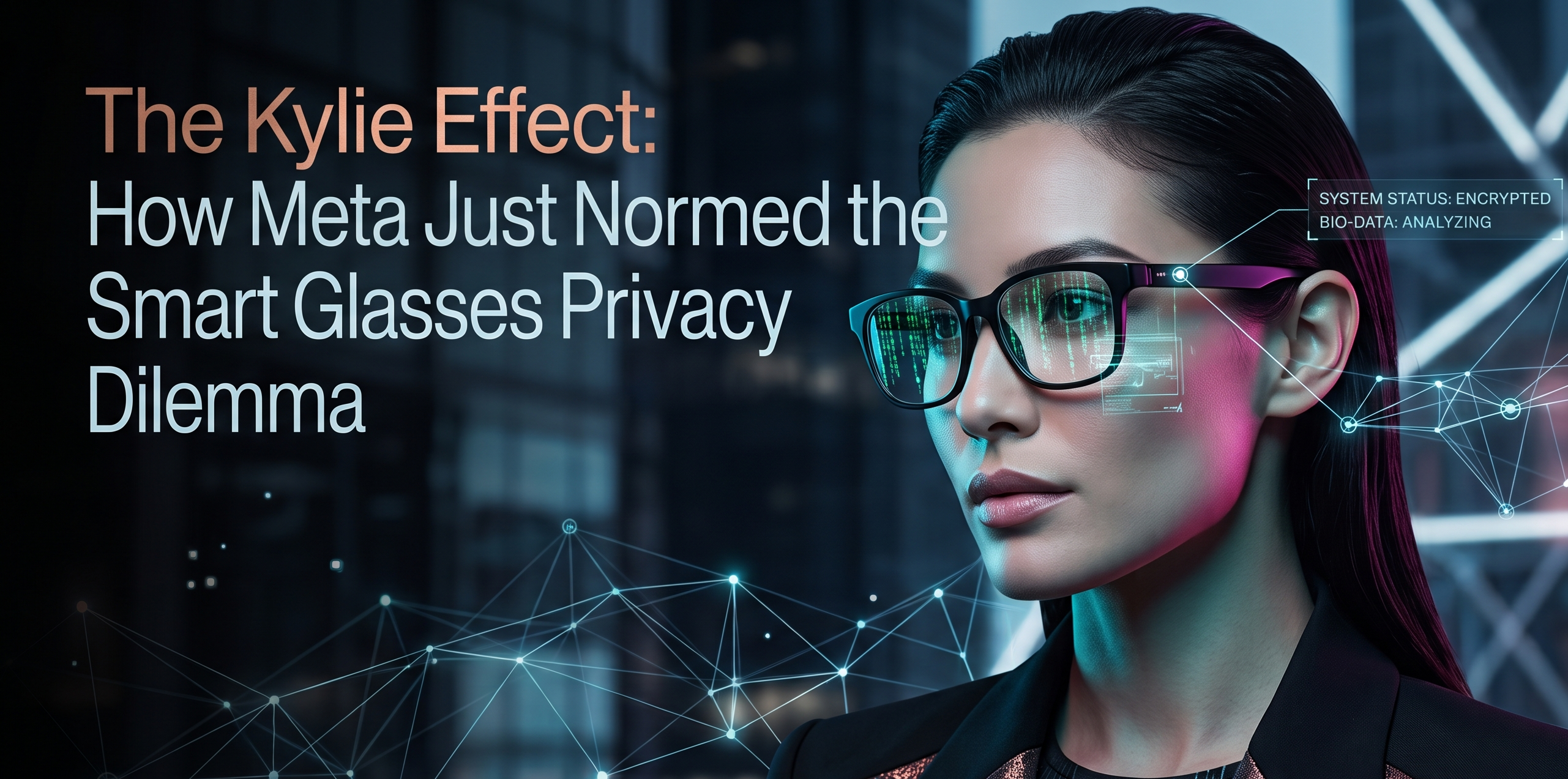
When tech companies first tried to put cameras on our faces, the public reaction was loud, clear, and overwhelmingly resistant. Early iterations of smart eyewear were bulky, inherently dorky, and visually aggressive. If someone wore a pair of camera-equipped glasses into a locker room, a public restroom, or a private dinner, it was immediately obvious. The wearer was easily singled out, and social friction naturally regulated where these devices could comfortably exist.
But Meta’s latest product launch has fundamentally shattered that social barrier. By stepping away from pure tech branding and introducing its new in-house line; anchored by the high-profile Meta Starfire Kylie Edition, the tech giant has pulled off a demographic shift the wearable industry has been attempting for years.
By leveraging Kylie Jenner’s massive influence over a style-conscious female demographic, Meta hasn't just upgraded a gadget; they have normalized a massive privacy blind spot. And they did it by making you want the product before you knew what it actually was.
From Tech Gadget to High-End Eyewear
The brilliance of the strategy lies in how the product has been reframed. The Starfire edition doesn’t look like a computer wrapped around your ears. Co-designed with Jenner, it features a slim, on-trend oval silhouette in classic black and tortoiseshell, a subtle gem on the lens rim, and a functional metal nose bridge optimized to easily wipe away makeup.
The physical evolution of the hardware is distinct:
- The Past: Early smart glasses were thick, heavy, and distinctively "tech." They were worn primarily by early adopters, creators, and tech enthusiasts. The camera lenses were pronounced, and the form factors screamed recording device.
- The Present: The Starfire frames look identical to high-end boutique sunglasses. The ultra-wide, 12-megapixel camera lenses are blended seamlessly into the frame design.
Because the aesthetic is entirely integrated into contemporary fashion trends, the organic warning system we used to rely on is gone. A woman wearing these in a gym locker room or a restaurant bathroom no longer looks like a tech enthusiast recording a vlog; she looks like someone who forgot to take off her sunglasses.
The Inadvertent Privacy Blind Spot
The real concern here isn't the hardware itself, but the consumer behavior driving its adoption. Women who previously had zero interest in wearable AI are buying the Starfire edition because it aligns with a specific style aesthetic and lifestyle brand, not because they researched what the device collects.
The gapo in context creates a gap in understanding:
The Human Review Policy: Disclosed in the product terms of service, documentation that the average beauty or fashion consumer rarely reads, is a clause most buyers have no idea exists: to train and refine the multimodal AI, snippets of footage and audio captured by the device are subject to review by human moderators.
When early adopters buy tech, they are generally aware of data policies, cloud storage, and privacy implications. But when a device crosses over into the mainstream mass market as a pure fashion accessory, the vast majority of users don’t know that their daily interactions, surrounding environments, and private conversations may be routed through an AI training pipeline reviewed by actual people.
Not algorithms. People.
When Suzu Labs investigated the human review pipeline for Meta glasses footage earlier this year, workers at Meta’s contract at the time described what they saw on screen; footage from inside people’s homes, bathrooms, bedrooms, and intimate situations. One worker said: “We see everything, from living rooms to naked bodies.” Another said: “I don’t think they know, because if they knew, they wouldn’t be recording.”
Meta points to face-blurring filters as a safeguard. Those workers said the filters fail regularly.
The contractor no longer holds the contract. Meta has not disclosed who replaced them. The footage pipeline likely continues.
The New Social Landscape
By the metrics of consumer adoption, Meta’s collaboration ability is an undeniable triumph. They have successfully bridged the gap between Silicon Valley and the beauty world, bringing smart wearables to an entirely new target audience.
However, as these sleeker, less obvious frames blend into daily life, the burden of privacy shifts entirely to the public. We are entering an era where we can no longer identify who is recording simply by looking for the "nerdy" pair of glasses in the room. The technology has become invisible, the marketing has made it highly desirable, and the true cost of that convenience remains quietly tucked away in the paperwork.
Product Features Re-Engineered as Marketing Content
Meta’s launch of the Starfire Kylie Edition marks a massive tactical pivot in the wearable tech space. Historically, smart hardware has struggled to attract female consumers because tech companies design for utility first and aesthetics second.
By bypassing the traditional gadget launch playbook and targeting women aged 18 to 35, Meta executed a sophisticated distribution and product design strategy.
Instead of just slapping a celebrity name on existing frames, Meta engineered the hardware specifically to remove friction points unique to female consumers. These features then became the primary talking points for organic, lifestyle-focused marketing:
- The Makeup-Friendly Nose Bridge: Traditional smart glasses use plastic molds that smudge foundation and trap sweat. Meta designed a three-way adjustable metal nose bridge specifically because it is easier to wipe clean of makeup, a practical detail that immediately resonated with beauty consumers.
- The Silhouette Shift: Early smart eyewear leaned on bulky, blocky shapes. The Starfire features a slim, rounded oval cat-eye designed to mimic the off-duty paparazzi style Jenner popularized. It repositions the object from a "face computer" to a boutique fashion accessory.
- The "Paparazzi" Gem: A small gem affixed near the 12-megapixel lens acts as a subtle design cue. It frames the camera not as a surveillance tool, but as a playful nod to celebrity culture catching the light.
Transitioning from "Endorsement" to "Product Integration"
The tech industry routinely fails at celebrity partnerships by treating them as superficial ad campaigns. Meta’s approach with Jenner was a structural distribution partnership:
The Intimacy Loop: Meta integrated Jenner's voice directly into the operating system. When a user turns on the glasses, they hear an AI-rendered version of Kylie saying phrases like "Rise and shine."
This transforms the marketing from a temporary billboard into an ongoing product feature. It offers her hyper-loyal fan base daily, pseudo-intimate access to her world, incentivizing a demographic that would typically ignore an AI wearable to purchase it for the brand experience.
Disruption of Traditional Tech Retail Channels
To reach women who do not browse tech blogs or electronics stores, Meta completely bypassed traditional tech-bro launch positioning:
|
Marketing Pillar |
The Old Tech Playbook |
The Starfire Strategy |
|
Primary Value Prop |
Multimodal AI, 3K video specs, processing power |
Daily lifestyle utility, premium style, personal connection |
|
Launch Visuals |
Tech reviewers in home studios, stark product renders |
High-fashion editorial photography, NYC lifestyle launch events |
|
Retail Placement |
Best Buy, Amazon, tech storefronts |
LensCrafters, Sunglass Hut, direct-to-consumer lifestyle channels |
Normalizing the Blind Spot through "Aesthetic Drift"
The most brilliant, and socially complex, part of Meta's marketing strategy is aesthetic drift. By making the technology completely invisible within a trendy, high-fashion frame, Meta successfully detached the device from the negative social stigma of early smart glasses.
Because the marketing successfully framed the Starfire as an item for the style-conscious woman, the consumer base views it through the lens of self-expression rather than data collection. The conversation shifted entirely from "Why are you recording me?" to "Where did you get those frames?" allowing Meta to quietly seed AI data-gathering hardware into spaces it could never previously enter.
Before You Hear It Again
The product is well-designed and the partnership is genuinely effective. None of that means you have to engage with it uninformed.
The glasses have a physical camera toggle on the frame. Use it the way you'd silence your phone in a meeting; in the locker room, in the bathroom, anywhere the answer to "would I want this recorded?" is no.
Know that "Hey Meta, look at this" is the moment footage enters the pipeline. And know that the face-blurring Meta describes as a safeguard is the same feature workers said failed regularly when they were watching.
The contractor who reviewed that footage has been replaced. Meta hasn't said by whom.
Every morning the glasses say "Rise and shine." Now you know what they were doing the rest of the day.
Sleep tight.
Sources and Reference Material
Primary Product Specifications & Brand Documentation
- Meta Platforms Inc. Official Announcement (June 23, 2026): "Introducing Meta Glasses: A Range of New Styles from Meta and EssilorLuxottica, Starting at $299."
- Details Verified: The shift away from the strict Ray-Ban/Oakley branding to the "Meta Glasses" line; introduction of the three styles (Adventurer, Fury, and Starfire); pricing ($299 base, $399 Kylie Edition); integration of the Muse Spark AI model from Meta Superintelligence Labs.
- Product Technical Specifications (Meta Store 2026): Meta x Kylie Starfire "Kylie Edition" Configuration Catalog.
- Details Verified: Ultrawide 12-megapixel camera, 3K Ultra HD video capture (up to 3-minute clips), 8-hour battery life (40 additional hours via the mirrored, foldable charging case), and IPX4 water resistance rating.
Retail Distribution & Marketing Strategy Data
- Engadget Hands-On Review & Launch Coverage (June 23, 2026): "Meta Glasses Hands-On: Ray-Ban Is Out, Kylie Jenner Is In." (Reporting by editorial staff live from the New York City launch event).
- Details Verified: Verification of physical hardware modifications requested during the collaboration with Jenner, specifically the transition to an adjustable metal nose bridge to prevent cosmetic smudging/residue. Confirmation of the physical aesthetic accents, including the sparkly lens gem meant to mimic a paparazzi flash.
- Hypebae Fashion and Culture Release (June 24, 2026): "Kylie Jenner Drops Meta Glasses With 'Rise and Shine' Greeting."
- Details Verified: Details surrounding the colorways (Classic Black, Dark Tortoise with chocolate lenses, Transitions Gray) and the integration of Jenner’s viral personal audio media ("Rise and shine") directly into the device onboarding and AI voice interface ecosystem.
Privacy Frameworks & Public Surveillance Regulations
- Northeastern Global News Policy Analysis (June 22, 2026): "Should There be More Privacy Regulation on Smart Glasses?" (Analysis on consumer biometric data and recording indicators).
- Details Verified: The societal friction of "invisible" face-worn cameras; public literacy gaps regarding active recording lights; and ongoing legislative pushes (such as the June 2026 Pennsylvania state proposal) requiring explicit, non-bypassable visual recording indicators on wearable consumer hardware.
- Meta Platforms Data Use Disclosures & Privacy Policy Updates (2025/2026): Meta Privacy Progress & Infrastructure Purpose Limitation Protocols.
- Details Verified: Meta’s systemic data-routing policies regarding multimodal AI training, where anonymized voice interactions, visual snippets, and environmental data processed through the cloud remain subject to manual verification and analysis by human QA moderators to train models like Muse Spark.





.png)
















.png)






-1.png)
.png)









.png)