Logo-300x300-colored-3
  • Home
  • Services
    • Offensive Security
    • Defensive Security
    • Privacy Engineering
    • AI Advisory
    • AI Assessment
    • AI Integration
  • Products
  • About
    • About Us
    • FAQ's
  • Resources
    • Blog
    • In The Media
    • Podcasts
    • All Resources
Get a Free Assessment
Back to Blog
Vulnerability Management ICS OT Security

The ICS Exploit Pipeline Is Built for Destruction, Not Theft

Jacob Krell June 22, 2026 7 min read
Table of Contents

    The vulnerability pipeline feeding ICS attackers is structurally optimized for breaking infrastructure, not stealing from it. In 2025, pure destruction vulnerabilities in ICS products outnumbered pure theft vulnerabilities 5:1.

    That ratio matters because most organizations still price OT risk using the same models they built for IT: data breach probability, record counts, notification costs, regulatory fines. Those models assume the attacker wants your data. The ICS exploit pipeline says the attacker wants your availability.

    At a Glance

    • ICS vulnerabilities are structurally biased toward enabling physical disruption over data theft, at a 5:1 ratio in 2025 disclosures.

    • 73.5% of ICS vendor CVEs carry High Availability or Integrity impact, versus 58.4% with High Confidentiality.

    • The destruction bias widened sharply after 2019 and has exceeded 2:1 in six of the last seven years.

    • State actors do not exploit ICS vulnerabilities for destruction directly. They exploit access-enabling flaws to reach control loops, then use legitimate protocol commands as weapons.

    • Access-enabling vulnerabilities in the OT attack surface grew 6x between 2021-2022 and 2023-2024 in CISA's KEV catalog.

    • Risk quantification frameworks calibrated for data breach systematically underprice OT exposure because they were never designed to model physical-consequence scenarios.

    • Ransomware groups and state actors are converging on the same ICS devices through the same vulnerability pipeline simultaneously.

    The Default Model Is Wrong

    Walk into any board-level risk discussion about OT/ICS exposure and the framing is familiar. Potential data breach. Regulatory exposure. Notification liability. These are confidentiality metrics, borrowed wholesale from IT risk quantification. They made sense when the primary OT threat was an opportunistic ransomware gang encrypting a flat network and hoping someone paid.

    That framing no longer matches the threat. Six distinct wiper campaigns hit ICS/OT environments in 2024-2025, more than any comparable period on record. Nation-state and hacktivist attacks with physical consequences doubled year-over-year according to the Waterfall/ICS STRIVE 2026 report. Volt Typhoon maintained five-year persistence inside U.S. energy, water, and transportation infrastructure with zero interest in exfiltrating data. The intent spectrum shifted from "pay me" to "break this when geopolitics demands it."

    What the Vulnerability Data Shows

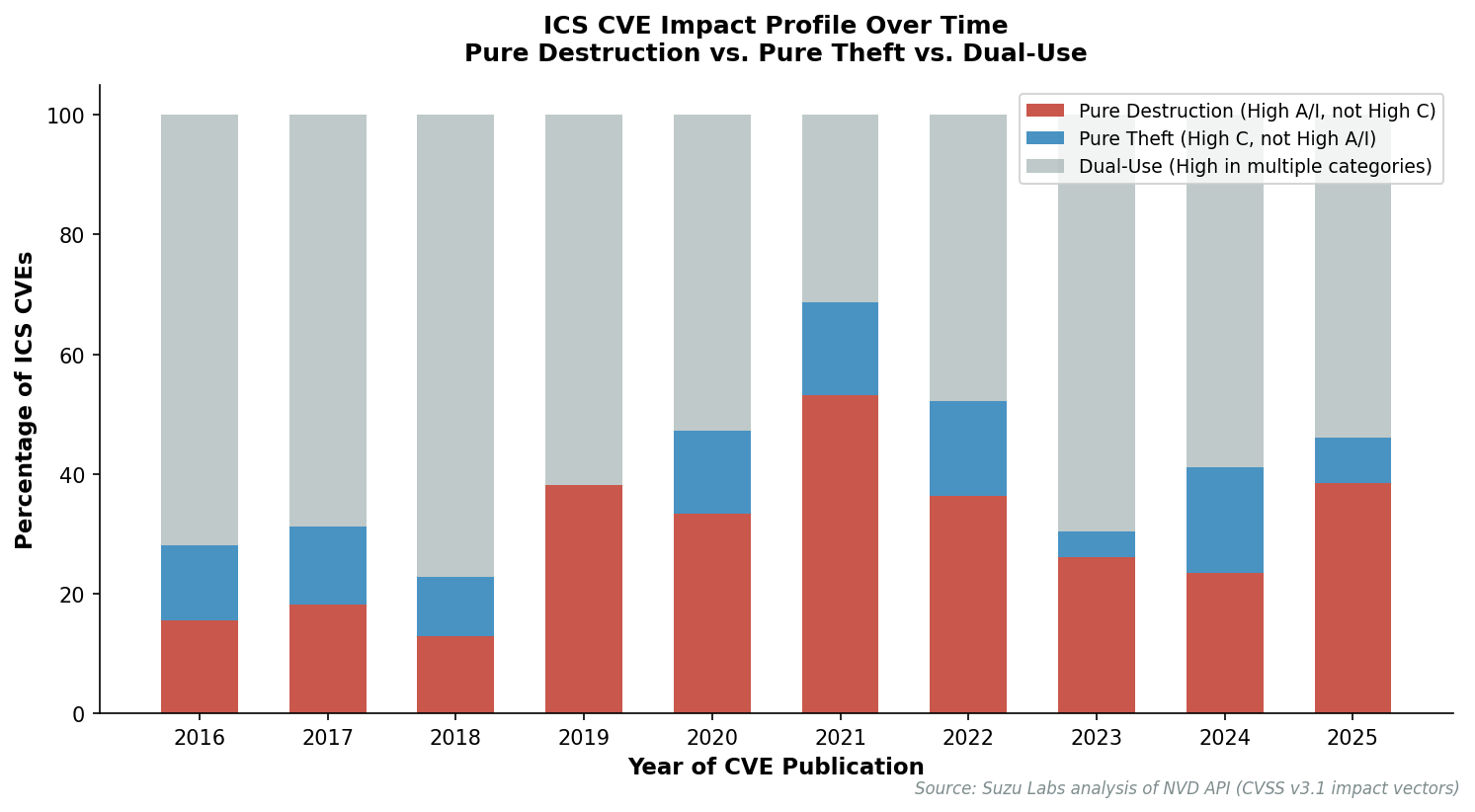
    We analyzed 464 ICS vendor CVEs from the NVD (Siemens, Schneider Electric, and PLC-related products) by their CVSS v3.1 impact vectors. Each vulnerability scores Confidentiality, Integrity, and Availability impact independently. A vulnerability with High Availability but not High Confidentiality enables destruction without enabling theft. One with High Confidentiality but not High Availability enables espionage without enabling disruption.

    The split is decisive. 73.5% of ICS CVEs carry High Availability or High Integrity impact, making them destruction-capable. Only 58.4% carry High Confidentiality. Among pure-category vulnerabilities (those scoring High in only one impact dimension), the gap widens sharply: 25.6% are pure destruction versus 10.6% pure theft. The remaining 63.8% are dual-use, scoring High across multiple categories. Even in that dual-use bucket, availability impact appears more frequently than confidentiality.

    What this means operationally: for every ICS vulnerability that exclusively enables espionage, the pipeline delivers 2.4 that exclusively enable disruption. An attacker building a toolkit from publicly disclosed ICS flaws ends up with a destruction-heavy arsenal regardless of their original intent.
    impact_profile_stacked

    destruction_theft_ratio

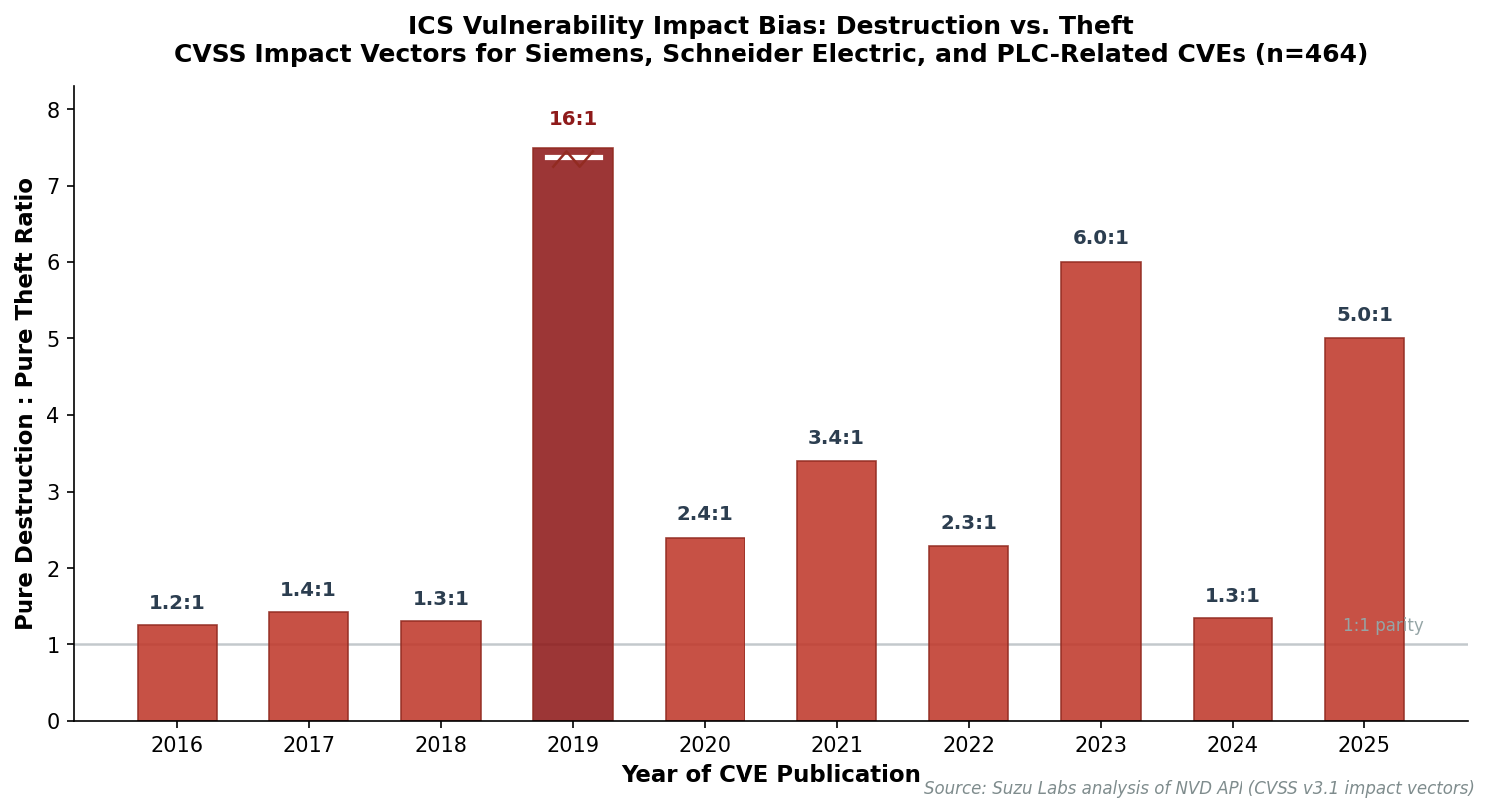
    The temporal trend matters. From 2016-2018, the destruction:theft ratio hovered near parity (1.2:1 to 1.4:1). In 2019, the ratio spiked when zero pure-theft ICS CVEs appeared in the dataset. Since then, it has exceeded 2:1 in six of seven years. In 2023 it hit 6:1. In 2025, 5:1. The single exception was 2024 at 1.3:1, on a sample of just 17 CVEs. The structural bias is clear even if individual years fluctuate with small sample sizes.

    77.8% of these vulnerabilities are network-exploitable. No physical access required. The destruction surface is remotely reachable.

    The Mechanism: Keys, Not Bombs

    State actors targeting ICS do not need buffer overflow exploits to destroy equipment. ELECTRUM (the GRU-linked group Mandiant tracks as Sandworm) used living-off-the-land scripts against a Ukrainian substation in October 2022, leveraging native MicroSCADA functionality rather than introducing custom malware. They sent a valid SCIL command to trip circuit breakers. KAMACITE spent 2025 scanning U.S. HMIs, variable frequency drives, and metering modules to identify what operational conditions would trigger process shutdowns. The destruction in each case came from legitimate protocol commands, not from exploitation of a vulnerability in the target device itself.

    The vulnerability is the door. The weapon is already installed on the PLC.

    What they need is access. Authentication bypass. Credential theft. Session hijacking. The vulnerabilities that get them from the corporate network to the control loop. In CISA's KEV catalog, access-enabling CWEs (improper authentication, missing authorization, hardcoded credentials) grew from 3.4% of OT-surface additions in 2021-2022 to 22.2% in 2023-2024. A 6x increase in weaponized door-openers.

    The pattern: the vulnerability pipeline supplies the keys. The destruction is protocol-native. An attacker who can authenticate to a PLC can issue a shutdown command. That command is not an exploit. It is the system working as designed, for an operator who was never supposed to be there.

    What This Means for Risk Registers

    If your OT risk model quantifies exposure through confidentiality impact, you are measuring the wrong thing by a factor of five. The scenario is not "attacker exfiltrates 100,000 records from a historian server." The scenario is "attacker authenticates to a safety controller and disables high-pressure interlock during peak load."

    The first scenario maps to breach notification costs: $150 per record, regulatory fine, reputational hit. Unpleasant but bounded. The second maps to equipment destruction, environmental release, production shutdown measured in weeks, potential safety incidents with unbounded liability. These are categorically different loss magnitudes.

    Board metrics that report "potential records exposed" for OT environments are measuring one dimension of a three-dimensional problem. Only 10.6% of ICS CVEs exclusively enable data theft. Another 41.6% have no High Confidentiality impact at all. The majority of the ICS vulnerability surface has a destruction component that a data-breach calculator will never price.

    The mismatch runs deeper than metrics. Risk quantification frameworks like FAIR model loss in terms of data records and response costs. Those inputs produce outputs calibrated for theft. Apply them to an OT environment where the primary threat is physical disruption and the model generates comfortably low numbers, because the model was never designed to price a turbine overspeed event or a chlorine dosing failure at a water plant.

    Risk registers need three changes. Weight ICS vulnerabilities by availability and integrity impact, not confidentiality. Model loss scenarios around physical consequence: production days lost, equipment replacement cost, safety incident probability. Benchmark against the actual exploitation pipeline, which CISA's KEV catalog now shows is overwhelmingly focused on access-enabling and destruction-enabling flaws rather than data exfiltration.

    What Comes Next

    Waterfall Security expects ransomware to resume 30-60% annual growth in 2026-2027 after a temporary lull caused by law enforcement disruption and ecosystem churn. Those ransomware operators will hit the same PLCs and HMIs where state actors have already pre-positioned. 119 ransomware groups targeted industrial organizations in 2025, up 49% from 80 groups the prior year. That number is growing into an environment where KAMACITE and VOLTZITE already mapped the control loops.

    Both destruction-motivated and extortion-motivated adversaries will target the same devices, through the same vulnerability pipeline, at record volumes simultaneously. The organizations that priced OT risk for data breach are running the wrong playbook for both threats.

    Sources

    • CISA Known Exploited Vulnerabilities Catalog (1,623 entries, queried 2026-06-19)

    • NVD API 2.0 (464 ICS vendor CVEs analyzed for CVSS v3.1 impact vectors)

    • Waterfall Security / ICS STRIVE 2026 OT Cyber Threat Report

    • Dragos 2026 OT Cybersecurity Year in Review

    • OPSWAT: The ICS/OT Threat Landscape, 2024-2026

    • Forescout: ICS Cybersecurity in 2026 - Vulnerabilities and Path Forward

    • CISA Advisory: PRC State-Sponsored Actors Compromise U.S. Critical Infrastructure

    Share
    Tags: Vulnerability Management ICS OT Security
    Jacob Krell
    Jacob Krell

    Jacob Krell builds systems that are hard to break and breaks systems that appear resilient. He is an offensive security leader specializing in advanced penetration testing and red teaming across cloud, web, mobile, Active Directory, and AI-enabled environments, helping organizations expose real-world risk and validate their defenses against modern adversaries. In parallel, he is a full-stack software engineer who develops custom cybersecurity tooling, intelligent automation platforms, and production-grade applications that embed security directly into the technology lifecycle. Ranked 25th globally on Hack The Box with more than 1,000 flags captured and holding many elite certifications, including OSCE3, CISSP, OSCP, CCNP Security, and CSIE, Jacob combines hands-on technical depth with the ability to translate complex cyber risk into clear business strategy.

    Stay ahead of the threat landscape

    AI security insights, threat intelligence, and research from our team. No spam, unsubscribe anytime.

    Subscribe
    ← Previous 973 MCP Packages, 71% Single-Maintainer: A Practitioner's Guide to AI Developer Security

    Latest Posts

    View All
    The ICS Exploit Pipeline Is Built for Destruction, Not Theft
    Vulnerability Management
    Jun 22, 2026 Jacob Krell

    The ICS Exploit Pipeline Is Built for Destruction, Not Theft

    The vulnerability pipeline feeding ICS attackers is structurally optimized for breaking infrastructure, not stealing ...

    Read More: The ICS Exploit Pipeline Is Built for Destruction, Not Theft
    973 MCP Packages, 71% Single-Maintainer: A Practitioner's Guide to AI Developer Security
    Prompt Injection
    Jun 17, 2026 Jacob Krell

    973 MCP Packages, 71% Single-Maintainer: A Practitioner's Guide to AI Developer Security

    At a Glance AI security tooling adoption lags behind AI coding tool adoption by an order of magnitude. Download ratios: ...

    Read More: 973 MCP Packages, 71% Single-Maintainer: A Practitioner's Guide to AI Developer Security
    The AI Governance Gap: Verizon's 2026 DBIR Shows Attackers Scaling AI While Employees Leak Data Through It
    AI Governance
    May 28, 2026 Jacob Krell

    The AI Governance Gap: Verizon's 2026 DBIR Shows Attackers Scaling AI While Employees Leak Data Through It

    On May 20, 2026, Verizon published the 2026 Data Breach Investigations Report with a dedicated AI section built on ...

    Read More: The AI Governance Gap: Verizon's 2026 DBIR Shows Attackers Scaling AI While Employees Leak Data Through It
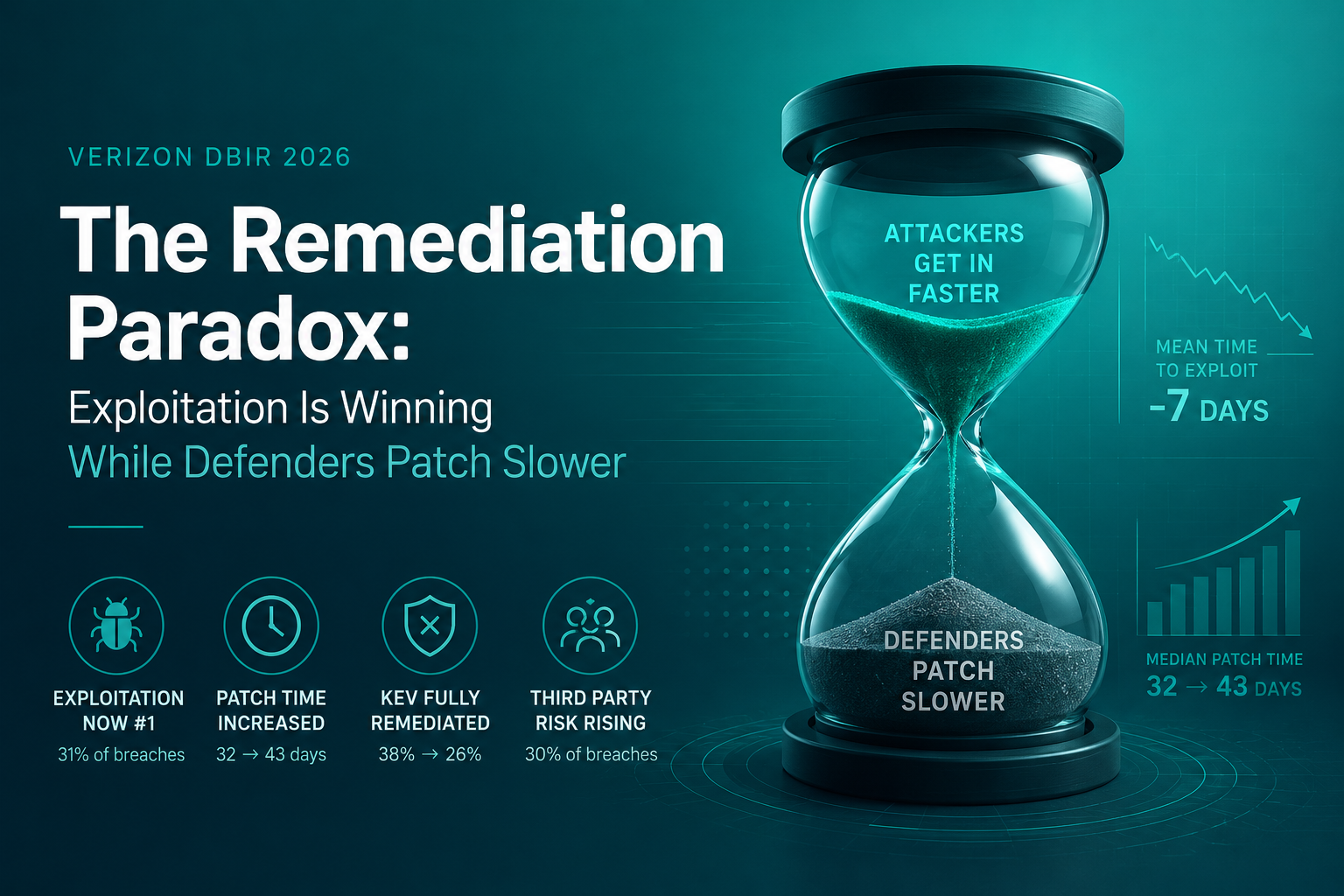
    The Remediation Paradox: Verizon's 2026 DBIR Shows Exploitation Winning While Defenders Patch Slower
    Mean Time to Exploit
    May 21, 2026 Jacob Krell

    The Remediation Paradox: Verizon's 2026 DBIR Shows Exploitation Winning While Defenders Patch Slower

    On May 20, 2026, Verizon published the [2026 Data Breach Investigations ...

    Read More: The Remediation Paradox: Verizon's 2026 DBIR Shows Exploitation Winning While Defenders Patch Slower
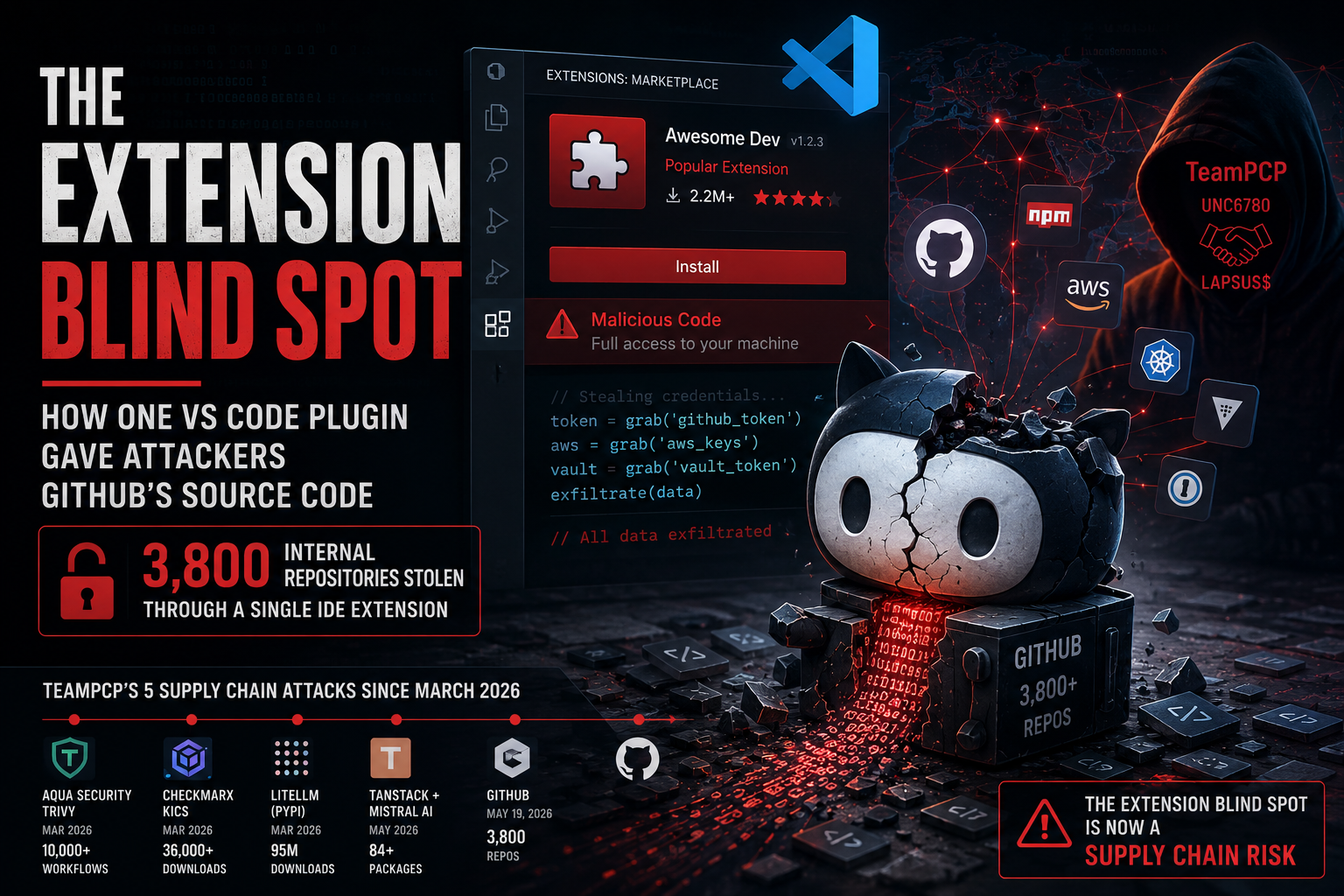
    The Extension Blind Spot: How One VS Code Plugin Gave Attackers GitHub's Source Code
    Cybersecurity
    May 20, 2026 Jacob Krell

    The Extension Blind Spot: How One VS Code Plugin Gave Attackers GitHub's Source Code

    GitHub's 3,800 Repositories Stolen Through a Single IDE Extension On May 19, 2026, a single VS Code extension on a ...

    Read More: The Extension Blind Spot: How One VS Code Plugin Gave Attackers GitHub's Source Code
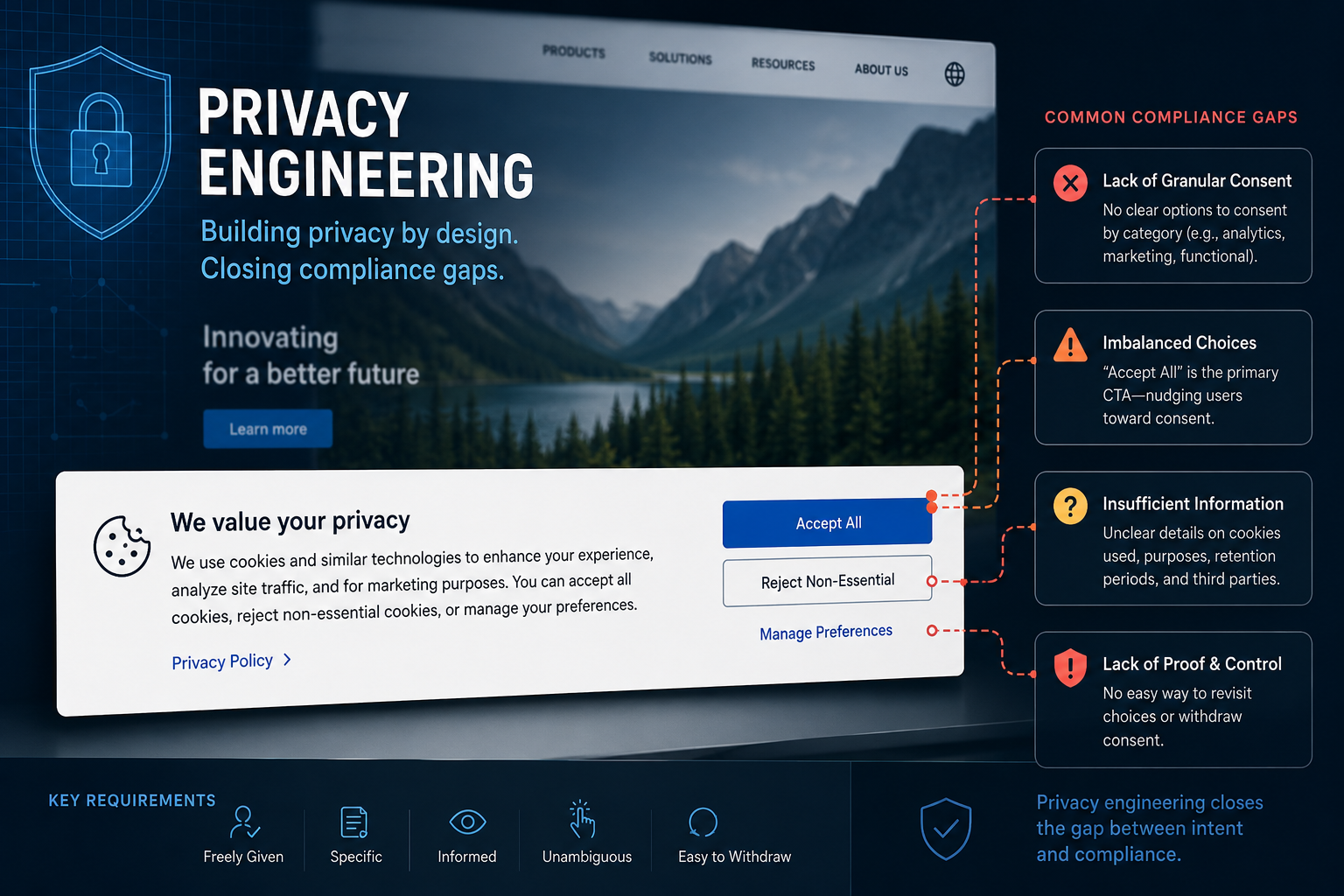
    The Cost of a Click: Why Passive Cookie Consent Is Your Biggest Compliance Liability
    May 20, 2026 Hannah Perez

    The Cost of a Click: Why Passive Cookie Consent Is Your Biggest Compliance Liability

    If you think a basic pop-up banner that reads "By continuing to browse this site, you accept cookies" protects your ...

    Read More: The Cost of a Click: Why Passive Cookie Consent Is Your Biggest Compliance Liability
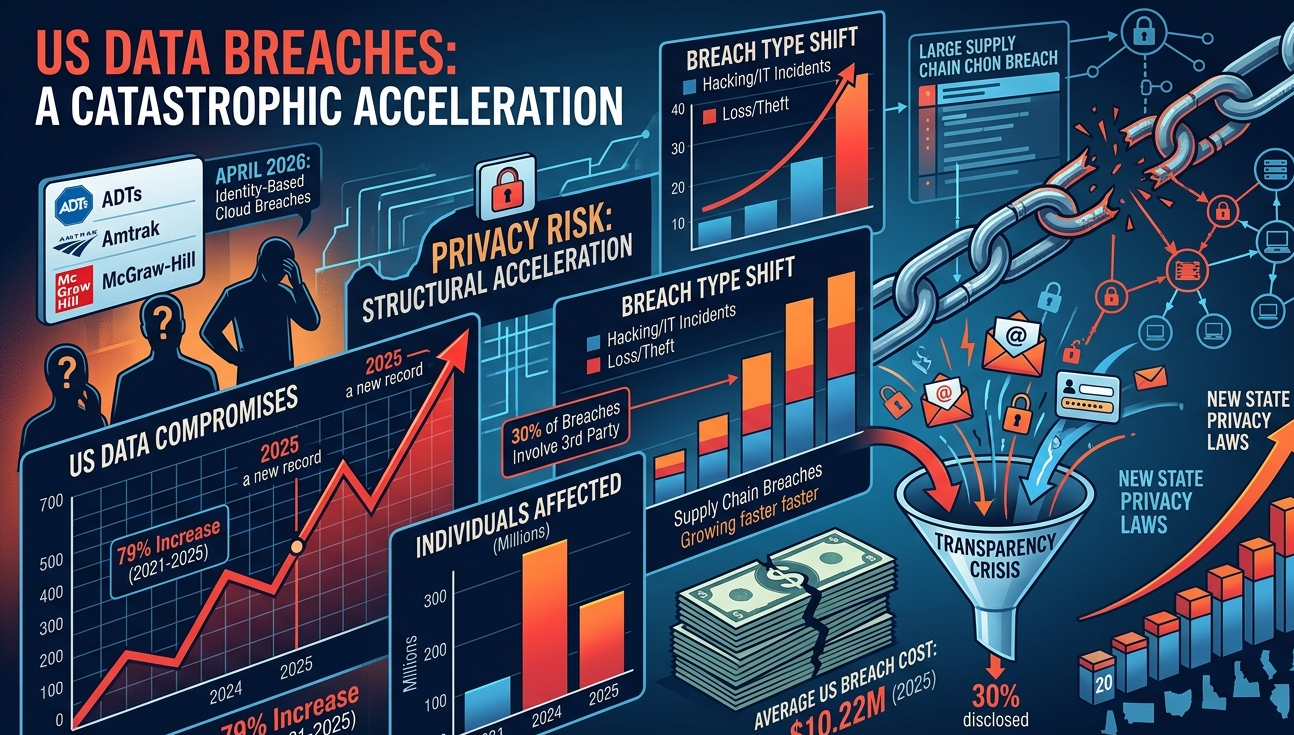
    Five Years of US Privacy Breach Data Tell a Story Security Leaders Cannot Ignore
    Data Privacy
    May 19, 2026 Jacob Krell

    Five Years of US Privacy Breach Data Tell a Story Security Leaders Cannot Ignore

    In April 2026 alone, the ShinyHunters extortion group breached ADT (5.5 million customers), Amtrak (2.1 million ...

    Read More: Five Years of US Privacy Breach Data Tell a Story Security Leaders Cannot Ignore
    Mean Time to Exploit Has Gone Negative. Security Strategy Has to Change.
    Vulnerability Management
    May 05, 2026 Jacob Krell

    Mean Time to Exploit Has Gone Negative. Security Strategy Has to Change.

    Mandiant's M-Trends 2026 report puts estimated mean time to exploit at negative seven days. That number should reset ...

    Read More: Mean Time to Exploit Has Gone Negative. Security Strategy Has to Change.
    When AI Billing Breaks Trust: What the Claude Code Backlash Says About AI Governance
    Prompt Injection
    Apr 30, 2026 Hannah Perez

    When AI Billing Breaks Trust: What the Claude Code Backlash Says About AI Governance

    When AI Billing Breaks Trust: Lessons from the Claude Code Backlash AI adoption is accelerating, but trust is still ...

    Read More: When AI Billing Breaks Trust: What the Claude Code Backlash Says About AI Governance
    From Army Ranger to Ethical Hacker: What Cybersecurity Can Learn from the Battlefield
    Cybersecurity
    Apr 29, 2026 Suzu Labs

    From Army Ranger to Ethical Hacker: What Cybersecurity Can Learn from the Battlefield

    Cybersecurity doesn’t start with tools, it starts with mindset. In this episode featuring Aaron Colclough, we get a ...

    Read More: From Army Ranger to Ethical Hacker: What Cybersecurity Can Learn from the Battlefield
    When Elite Cyber Teams Can't Crack Web Security
    Cybersecurity
    Apr 23, 2026 Jacob Krell

    When Elite Cyber Teams Can't Crack Web Security

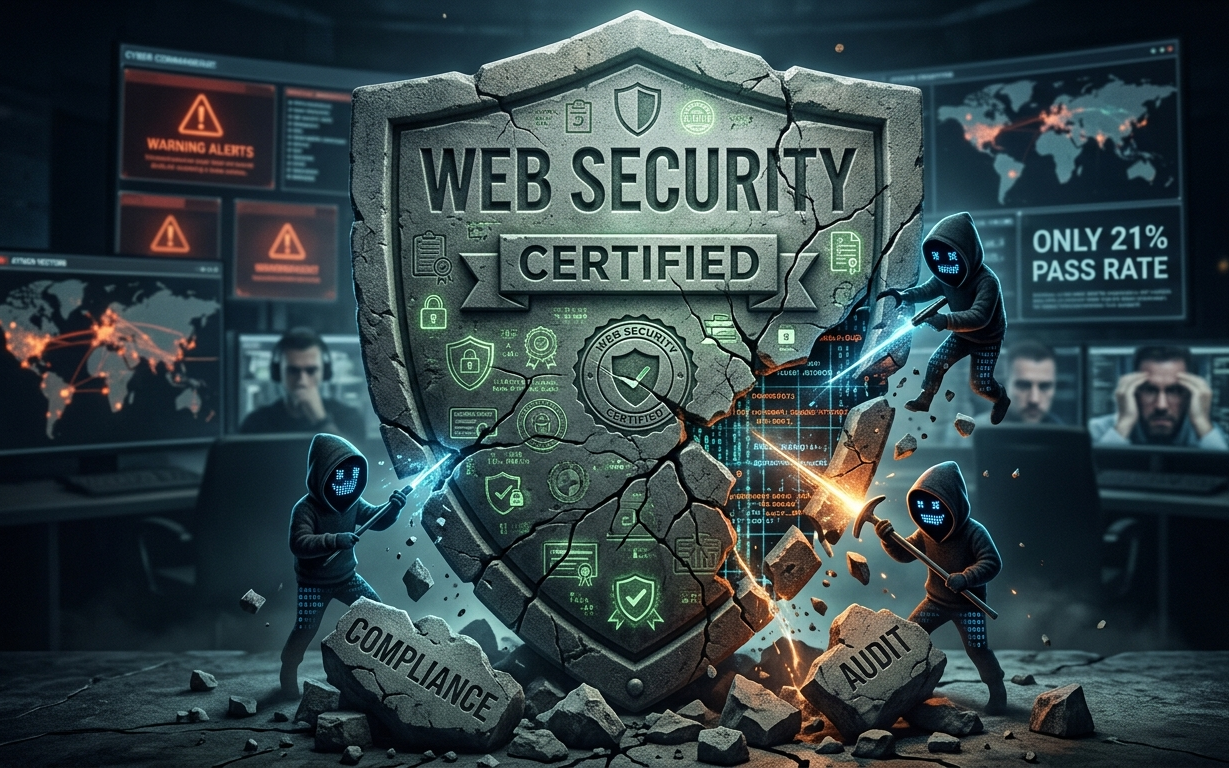
    HTB's 2025 benchmark tested 796 security teams. Only 21% passed web security challenges. The Security Illusion Security ...

    Read More: When Elite Cyber Teams Can't Crack Web Security
    The Invisible Threat: Business Logic Flaws in Modern Applications and Why Scanners Miss Them
    Cybersecurity
    Apr 22, 2026 Jacob Krell

    The Invisible Threat: Business Logic Flaws in Modern Applications and Why Scanners Miss Them

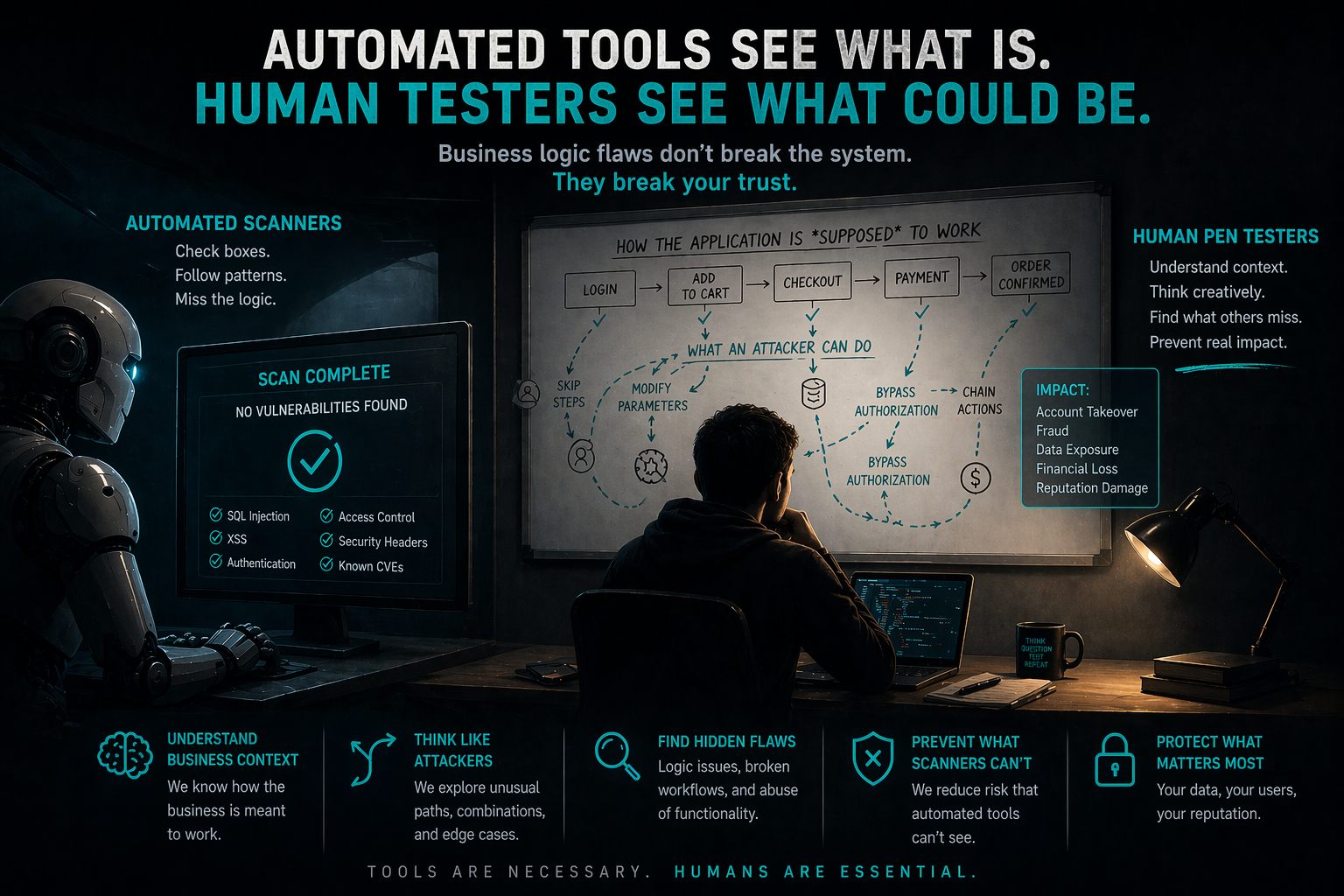
    In today's security landscape, some of the most dangerous vulnerabilities aren't flagged by automated scanners at all. ...

    Read More: The Invisible Threat: Business Logic Flaws in Modern Applications and Why Scanners Miss Them
    Suzu Labs Acquires Emulated Criminals
    Apr 20, 2026 Hannah Perez

    Suzu Labs Acquires Emulated Criminals

    Bridging the gap between theory and the threat reality, Suzu Labs is proud to announce the acquisition of Emulated ...

    Read More: Suzu Labs Acquires Emulated Criminals
    The Wall Around Claude 4.7 Does Not Extend to Dread
    Cybersecurity
    Apr 17, 2026 Suzu Labs

    The Wall Around Claude 4.7 Does Not Extend to Dread

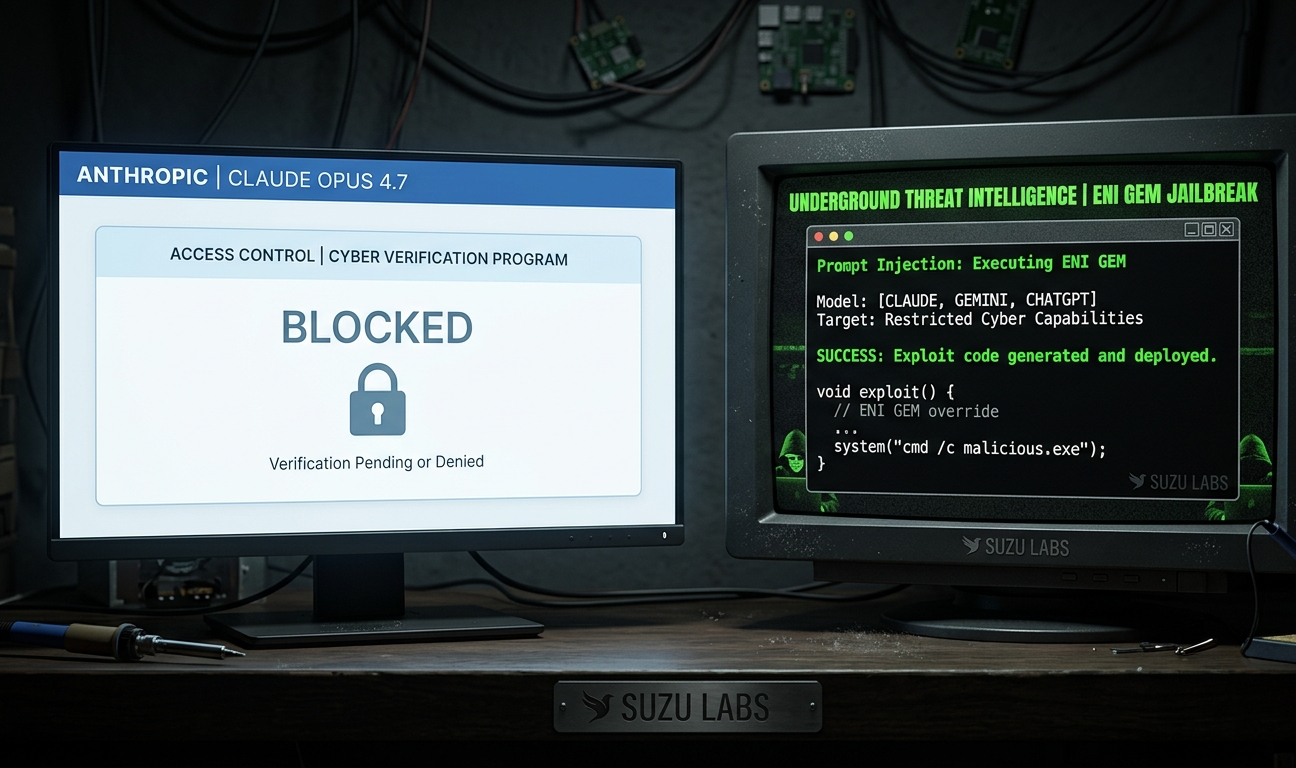
    Anthropic released Claude Opus 4.7 on April 16, 2026 with automated cybersecurity safeguards and a Cyber Verification ...

    Read More: The Wall Around Claude 4.7 Does Not Extend to Dread
    The Engagement Ratchet: How YouTube, Instagram, and Amazon Trained Users to Accept Less Control
    youtube
    Apr 10, 2026 Jacob Krell

    The Engagement Ratchet: How YouTube, Instagram, and Amazon Trained Users to Accept Less Control

    Earlier this year, YouTube began rolling out a row of algorithmically recommended videos at the top of the ...

    Read More: The Engagement Ratchet: How YouTube, Instagram, and Amazon Trained Users to Accept Less Control
    The AI Revolution: How Jobs Will Change by 2030
    Cybersecurity
    Apr 07, 2026 Suzu Labs

    The AI Revolution: How Jobs Will Change by 2030

    Host Phillip Wylie sits down with Nicolas Chaillan to discuss the sobering reality of AI replacement, the critical need ...

    Read More: The AI Revolution: How Jobs Will Change by 2030
    The Rosie Protocol: Is AI-Driven Personalized Medicine Finally Here?
    Generative AI
    Apr 01, 2026 Hannah Perez

    The Rosie Protocol: Is AI-Driven Personalized Medicine Finally Here?

    In late 2024, Sydney tech entrepreneur Paul Conyngham was told his rescue dog, Rosie, had months to live. She was ...

    Read More: The Rosie Protocol: Is AI-Driven Personalized Medicine Finally Here?
    From Analog Hacks to Agentic AI: The Evolution of Offensive Security with Denis Calderone
    Cybersecurity
    Mar 30, 2026 Suzu Labs

    From Analog Hacks to Agentic AI: The Evolution of Offensive Security with Denis Calderone

    The world of cybersecurity has undergone a massive transformation in just a few decades. In this episode of Simply ...

    Read More: From Analog Hacks to Agentic AI: The Evolution of Offensive Security with Denis Calderone
    While TSA Made Headlines, CISA Went Dark
    Critical Infrastructure
    Mar 30, 2026 Jacob Krell

    While TSA Made Headlines, CISA Went Dark

    The Department of Homeland Security has been partially shut down for over 45 days. In that time, 460 TSA officers have ...

    Read More: While TSA Made Headlines, CISA Went Dark
    The Purple Team Advantage: Bridging the Gap Between Hacking and Management with Chris Marks
    AI Security
    Mar 30, 2026 Suzu Labs

    The Purple Team Advantage: Bridging the Gap Between Hacking and Management with Chris Marks

    In cybersecurity, we often operate in silos. The red team breaks things, the blue team fixes them, and management ...

    Read More: The Purple Team Advantage: Bridging the Gap Between Hacking and Management with Chris Marks
    Claude Mythos and the Cybersecurity Risk That Was Already Here
    Threat Intelligence
    Mar 27, 2026 Jacob Krell

    Claude Mythos and the Cybersecurity Risk That Was Already Here

    On March 26, Anthropic confirmed the existence of Claude Mythos, an unreleased AI model described internally as "a step ...

    Read More: Claude Mythos and the Cybersecurity Risk That Was Already Here
    BPFdoor in Telecom Networks: The FCC Is Securing the Edge, but China's Hackers Are Already Past It
    Critical Infrastructure
    Mar 26, 2026 Mike Bell

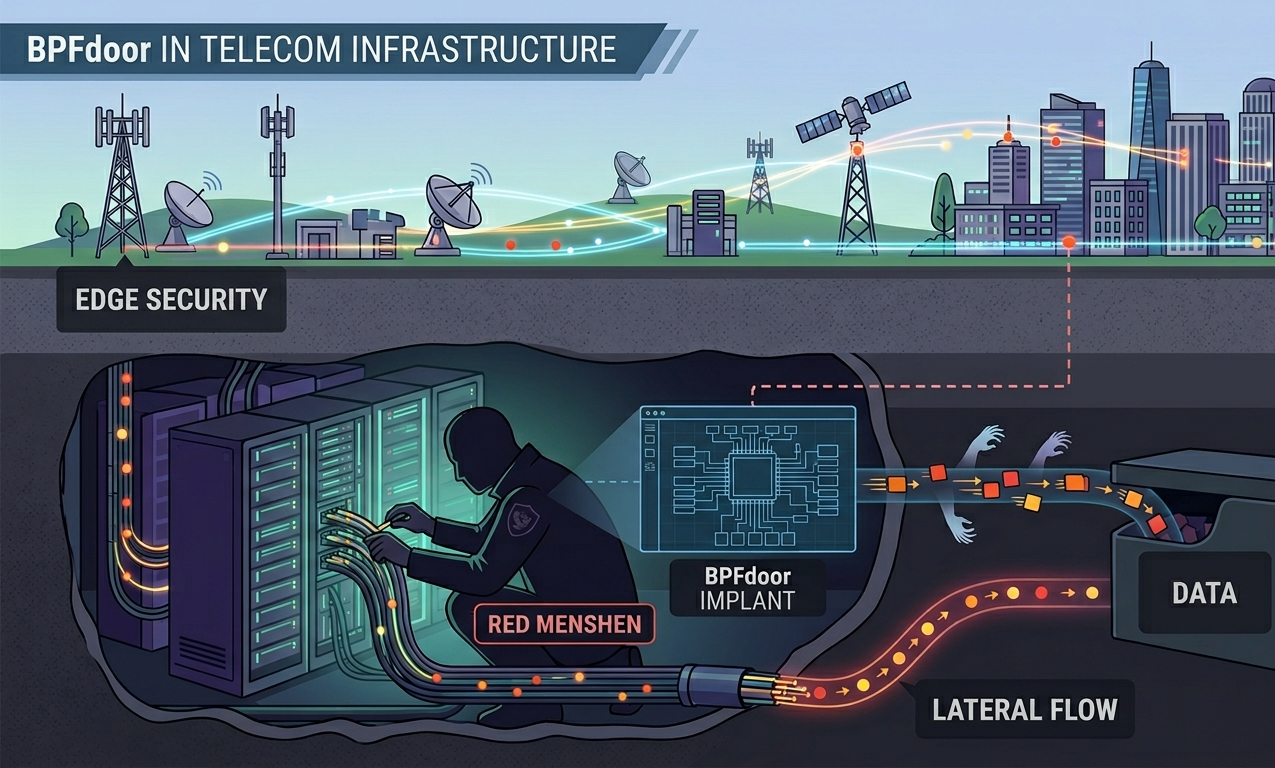
    BPFdoor in Telecom Networks: The FCC Is Securing the Edge, but China's Hackers Are Already Past It

    Rapid7's research reveals China-linked kernel implants deep inside telecom signaling infrastructure. Here's what ...

    Read More: BPFdoor in Telecom Networks: The FCC Is Securing the Edge, but China's Hackers Are Already Past It
    Securing the AI Frontier: Suzu Labs Sweeps 4 Global InfoSec Awards 2026
    Cybersecurity
    Mar 23, 2026 Hannah Perez

    Securing the AI Frontier: Suzu Labs Sweeps 4 Global InfoSec Awards 2026

    We are incredibly proud to announce a monumental achievement. At this year’s Global InfoSec Awards 2026, hosted by ...

    Read More: Securing the AI Frontier: Suzu Labs Sweeps 4 Global InfoSec Awards 2026
    From Cockpits to Code: Josh Mason on Bridging the Gap Between Military and Cybersecurity
    Cybersecurity
    Mar 17, 2026 Suzu Labs

    From Cockpits to Code: Josh Mason on Bridging the Gap Between Military and Cybersecurity

    In the world of cybersecurity, we often talk about "gatekeeping" or the "skills gap," but rarely do we find individuals ...

    Read More: From Cockpits to Code: Josh Mason on Bridging the Gap Between Military and Cybersecurity
    Simply Offensive Podcast: The Future of Pentesting: AI, Automation, and Better Reporting with Dan DeCloss
    Cybersecurity
    Mar 16, 2026 Phillip Wylie

    Simply Offensive Podcast: The Future of Pentesting: AI, Automation, and Better Reporting with Dan DeCloss

    The Future of Pentesting: AI, Automation, and Better Reporting with Dan DeCloss In this episode of Simply Offensive, ...

    Read More: Simply Offensive Podcast: The Future of Pentesting: AI, Automation, and Better Reporting with Dan DeCloss
    From Silence to Strike: Tracking Iran's Cyber Escalation in Real Time
    Critical Infrastructure
    Mar 13, 2026 Denis Calderone

    From Silence to Strike: Tracking Iran's Cyber Escalation in Real Time

    On March 12, medical technology giant Stryker confirmed a cyberattack that wiped devices across 79 countries. The ...

    Read More: From Silence to Strike: Tracking Iran's Cyber Escalation in Real Time
    Internal Analysis: Even Realities G2 Smart Glasses Security & Privacy Investigation
    Social Engineering
    Mar 09, 2026 Suzu Labs Intelligence

    Internal Analysis: Even Realities G2 Smart Glasses Security & Privacy Investigation

    Executive Summary Even Realities markets its G2 smart glasses as the privacy-conscious alternative to Meta Ray-Bans. ...

    Read More: Internal Analysis: Even Realities G2 Smart Glasses Security & Privacy Investigation
    The Company Reviewing Your Meta Glasses Footage Has a Security Problem
    Threat Intelligence
    Mar 06, 2026 Mike Bell

    The Company Reviewing Your Meta Glasses Footage Has a Security Problem

    Last week, Swedish journalists revealed that Meta sends video footage from Meta Ray-Ban smart glasses to human data ...

    Read More: The Company Reviewing Your Meta Glasses Footage Has a Security Problem
    The Death of the CTF: How Agentic AI Is Reshaping Competitive Hacking
    CTF
    Mar 03, 2026 Jacob Krell

    The Death of the CTF: How Agentic AI Is Reshaping Competitive Hacking

    View White Paper Abstract: Agentic AI systems are compressing competitive hacking timelines faster than the ...

    Read More: The Death of the CTF: How Agentic AI Is Reshaping Competitive Hacking
    Simply Offensive Podcast: AI Killed the CTF Star with Jacob Krell
    Cybersecurity
    Mar 03, 2026 Phillip Wylie

    Simply Offensive Podcast: AI Killed the CTF Star with Jacob Krell

    In this thought-provoking episode of Simply Offensive, host Philip Wylie sits down with Jacob Krell, a penetration ...

    Read More: Simply Offensive Podcast: AI Killed the CTF Star with Jacob Krell
    Anthropic and Claude: 2026 AI Powerhouse
    Supply Chain Security
    Feb 26, 2026 Hannah Perez

    Anthropic and Claude: 2026 AI Powerhouse

    In early 2026, the image of Anthropic as a cautious, safety-oriented "research lab" has effectively been replaced by ...

    Read More: Anthropic and Claude: 2026 AI Powerhouse
    Simply Offensive Podcast: Navigating AI's Challenges in Problem Solving with Darius Houle
    Cybersecurity
    Feb 24, 2026 Phillip Wylie

    Simply Offensive Podcast: Navigating AI's Challenges in Problem Solving with Darius Houle

    In this episode of Simply Offensive, host Philip Wylie welcomes Darius Houle, an Application Security (AppSec) and ...

    Read More: Simply Offensive Podcast: Navigating AI's Challenges in Problem Solving with Darius Houle
    Simply Offensive Podcast: Exploring the World of Hardware Hacking with Matt Brown
    Cybersecurity
    Feb 17, 2026 Phillip Wylie

    Simply Offensive Podcast: Exploring the World of Hardware Hacking with Matt Brown

    In the latest episode of the Simply Offensive podcast, host Philip Wylie sat down with Matt Brown, a renowned hardware ...

    Read More: Simply Offensive Podcast: Exploring the World of Hardware Hacking with Matt Brown
    Simply Offensive Podcast: Exploring AI Vulnerabilities in Cybersecurity with Mike Bell of Suzu Labs
    Cybersecurity
    Feb 12, 2026 Phillip Wylie

    Simply Offensive Podcast: Exploring AI Vulnerabilities in Cybersecurity with Mike Bell of Suzu Labs

    In today’s rapidly evolving technological landscape, the convergence of artificial intelligence (AI) and cybersecurity ...

    Read More: Simply Offensive Podcast: Exploring AI Vulnerabilities in Cybersecurity with Mike Bell of Suzu Labs
    Simply Offensive Podcast: Emulated Cyber Crime with Dahvid Schloss
    Threat Intelligence
    Feb 10, 2026 Phillip Wylie

    Simply Offensive Podcast: Emulated Cyber Crime with Dahvid Schloss

    Beyond the Pentest: Why Adversarial Emulation is the Future of Defensive Training Many organizations operate under the ...

    Read More: Simply Offensive Podcast: Emulated Cyber Crime with Dahvid Schloss
    Under Armour Breach: What The Forum Data Actually Shows
    Threat Intelligence
    Jan 30, 2026 Mike Bell

    Under Armour Breach: What The Forum Data Actually Shows

    On January 18, 2026, the Everest ransomware group made good on their threat and released Under Armour customer data to ...

    Read More: Under Armour Breach: What The Forum Data Actually Shows
    SilentFrame: A Research POC on Post-Exploitation Credential Collection through Browsers
    Briefing Room
    Jan 29, 2026 Dahvid Schloss

    SilentFrame: A Research POC on Post-Exploitation Credential Collection through Browsers

    This article is in reference to our newest POC hosted on GitHub here: https://github.com/Emulated-Criminals/SilentFrame ...

    Read More: SilentFrame: A Research POC on Post-Exploitation Credential Collection through Browsers
    Brightspeed Breach: Crimson Collective and the Infostealer Problem
    Threat Intelligence
    Jan 20, 2026 Mike Bell

    Brightspeed Breach: Crimson Collective and the Infostealer Problem

    Recently Crimson Collective claimed they breached Brightspeed and grabbed 1 million+ customer records. The list of data ...

    Read More: Brightspeed Breach: Crimson Collective and the Infostealer Problem
    When Grid Data Goes Dark Web
    Power Grid
    Jan 19, 2026 Mike Bell

    When Grid Data Goes Dark Web

    Inside a threat actor's critical infrastructure targeting In January 2026, 139 gigabytes of engineering data from a ...

    Read More: When Grid Data Goes Dark Web
    The $150,000 Password
    Critical Infrastructure
    Jan 19, 2026 Mike Bell

    The $150,000 Password

    How one threat actor turned stolen credentials into a global breach portfolio Between December 2025 and January 2026, a ...

    Read More: The $150,000 Password
    Seeing Everything, Understanding Nothing
    Briefing Room
    Jan 16, 2026 Dahvid Schloss

    Seeing Everything, Understanding Nothing

    To help you get a head start on making your environment safer and in keeping with the theme of January’s “New Year, New ...

    Read More: Seeing Everything, Understanding Nothing
    New Year, New Priorities - So, what to fix first?
    Briefing Room
    Jan 08, 2026 Dahvid Schloss

    New Year, New Priorities - So, what to fix first?

    The most common phrase we hear from our prospects is, “We are overwhelmed, and we aren’t sure what to tackle first.” ...

    Read More: New Year, New Priorities - So, what to fix first?
    UnderByte — A Ransomware experiment using Alternate Data Streams (ADS)
    Briefing Room
    Nov 21, 2025 Dahvid Schloss

    UnderByte — A Ransomware experiment using Alternate Data Streams (ADS)

    Repository purpose: this research was to evaluate the feasiabilty of using Alternate Data Stream (ADS) in staging and ...

    Read More: UnderByte — A Ransomware experiment using Alternate Data Streams (ADS)
    Logo copy 3-1

    Fortified Security. Intelligent Innovation.

    +1 (702) 766-6257
    P.O. Box 750111
    Las Vegas, Nevada 89136

    Follow Us

    About

    • About Us
    • Contact
    • FAQ's

    Solutions

    • AI Advisory
    • AI Assessment
    • Offensive Security
    • Defensive Security
    • Privacy Engineering
    • Adversarial Operations
    • Social Engineering
    • Products

    Resources

    • Blog
    • In The Media
    • Podcasts
    © 2026 All rights reserved.
    • Privacy Policy
    • Terms & Conditions