SUZU Offensive Security Solutions

IoT Penetration Testing

Your connected devices expand innovation and your attack surface. Suzu Labs IoT Penetration Testing helps you identify firmware, hardware, network, and cloud integration risks before attackers exploit them.

Secure Devices Across the Entire Attack Surface

IoT ecosystems combine embedded devices, mobile apps, APIs, and cloud platforms. We assess firmware, hardware interfaces, communication protocols, backend services, and identity controls to uncover real-world exploit paths.

IoT pentesting

How We Test

IoT security requires deep technical analysis across hardware and software layers.

Firmware Analysis

Reverse engineering firmware to identify hardcoded credentials, insecure update mechanisms, and memory vulnerabilities.

Download the sourcing guide

Hardware Interfaces

Device risk exists far beyond the firmware. We evaluate UART, JTAG, and debug interfaces for unauthorized access and data extraction risks.

Learn more about hardware security

Protocol Testing

Assessment of MQTT, Bluetooth, Zigbee, and custom communication protocols for encryption and authentication weaknesses.

Learn more about protocol risks

Cloud Integration

Testing APIs and cloud platforms connected to IoT devices for privilege escalation and lateral movement risks.

Learn more about cloud security
PHYSICAL LAYER DEFENSE

Hardware Hacking

This usually comes up when something is on the line. A new device launch, customer trust, or protecting intellectual property.

We evaluate the security of your hardware and embedded systems to ensure they can’t be easily exploited, cloned, or manipulated in the real world.

  • When you’re shipping devices or relying on connected technology, unseen risks can lead to real consequences. From customer trust issues to expensive fixes. We help you catch those issues before they impact your business.
  • What We Hack: SCADA, IoT, OT, Vehicles, Embedded Systems.
ChatGPT Image May 4, 2026, 03_58_45 PM

Questions

IoT Penetration Testing FAQs

Yes. Our testers extract and reverse-engineer device firmware to identify hardcoded credentials, insecure update mechanisms, debug interfaces left enabled, and memory-level vulnerabilities. On the hardware side, we evaluate physical interfaces like UART, JTAG, and SWD for unauthorized access and data extraction. The depth of hardware testing depends on what’s in scope and whether you can provide physical devices for analysis.

We test MQTT, Bluetooth (Classic and BLE), Zigbee, Z-Wave, Wi-Fi, cellular, and custom or proprietary RF protocols. The focus is on authentication, encryption, replay resistance, and whether an attacker can intercept, modify, or inject traffic between the device and the services it communicates with.

Yes. IoT devices rarely operate in isolation. We test the APIs, cloud platforms, and backend services that devices depend on, including how data flows between the device and the cloud, how identity and access controls are enforced, and whether a compromised device can be used to pivot into broader cloud infrastructure. We also analyze device communication patterns to identify where the device is sending data, how often, and whether any of those destinations are unexpected or unauthorized. If a device is phoning home to infrastructure you didn’t know about, we surface that.

When physical testing is in scope, we assess what an attacker with hands-on access to the device could accomplish. This includes probing debug ports, extracting firmware from flash storage, intercepting bus communications, and evaluating tamper-detection mechanisms. When firmware is encrypted, we evaluate the encryption implementation itself, attempt key extraction from the device, and assess whether the encryption actually prevents meaningful analysis or just slows it down. We coordinate physical testing logistics during scoping.

Yes. We assess SCADA systems, PLCs, industrial protocols, and operational technology environments. Safety is a primary consideration in OT testing. We coordinate closely with your operations team, establish strict rules of engagement, and avoid any actions that could impact physical processes or safety systems unless explicitly approved in a controlled environment.

At minimum, we need the physical device or devices to be tested and any available firmware images. If the device connects to cloud services, we need access to the relevant APIs and backend environments. Architecture documentation, network diagrams, and prior security assessments are helpful but not required. For devices managed through a mobile app, we test the app as part of the same engagement. We walk through all logistics during the scoping call.

Most IoT engagements run two to four weeks depending on the number of devices, firmware complexity, communication protocols in use, and whether physical hardware testing is included. Firmware-only assessments tend to be shorter. Engagements that include hardware teardown, protocol analysis, and cloud backend testing take longer. We provide a clear timeline during scoping, and if we discover a critical finding that poses an imminent threat, we escalate it to your team immediately.

The report is the beginning, not the end. You get a live debrief with the operators who ran the engagement, walking through every finding, its real-world impact, and specific remediation steps. If your team needs hands-on help remediating, we can work alongside your engineers to close the gaps. Once fixes are in place, we conduct retesting to verify they’re resolved.

IoT Penetration Testing vs. Traditional Enterprise Application Testing

IoT Penetration Testing Traditional Enterprise Application Testing
Scope Smart devices, medical devices, industrial systems, sensors, gateways, and their supporting firmware, hardware, and cloud integrations Web applications, APIs, mobile apps, network infrastructure, and cloud environments
Attack Surface Device hardware interfaces, Bluetooth/Wi-Fi/Zigbee, embedded web interfaces, firmware, cloud IoT platforms User inputs, API endpoints, authentication systems, network services, cloud configurations
Common Vulnerabilities Hardcoded credentials, insecure firmware updates, weak encryption, exposed device APIs, debug interfaces left enabled SQL injection, XSS, broken access controls, weak credentials, misconfigurations, business logic flaws
Testing Approach Hardware teardown, firmware extraction and reverse engineering, protocol analysis, device exploitation Simulated real-world attacks targeting application workflows, network infrastructure, and cloud services
Impact if Compromised Device takeover, operational disruption, data manipulation, safety risks, pivot into broader infrastructure Data breach, account takeover, ransomware deployment, service disruption
Ideal for Organizations developing, deploying, or managing connected devices and embedded systems Organizations operating web platforms, SaaS applications, corporate networks, or cloud infrastructure

Verified expertise

Validate defenses. Reduce exposure.

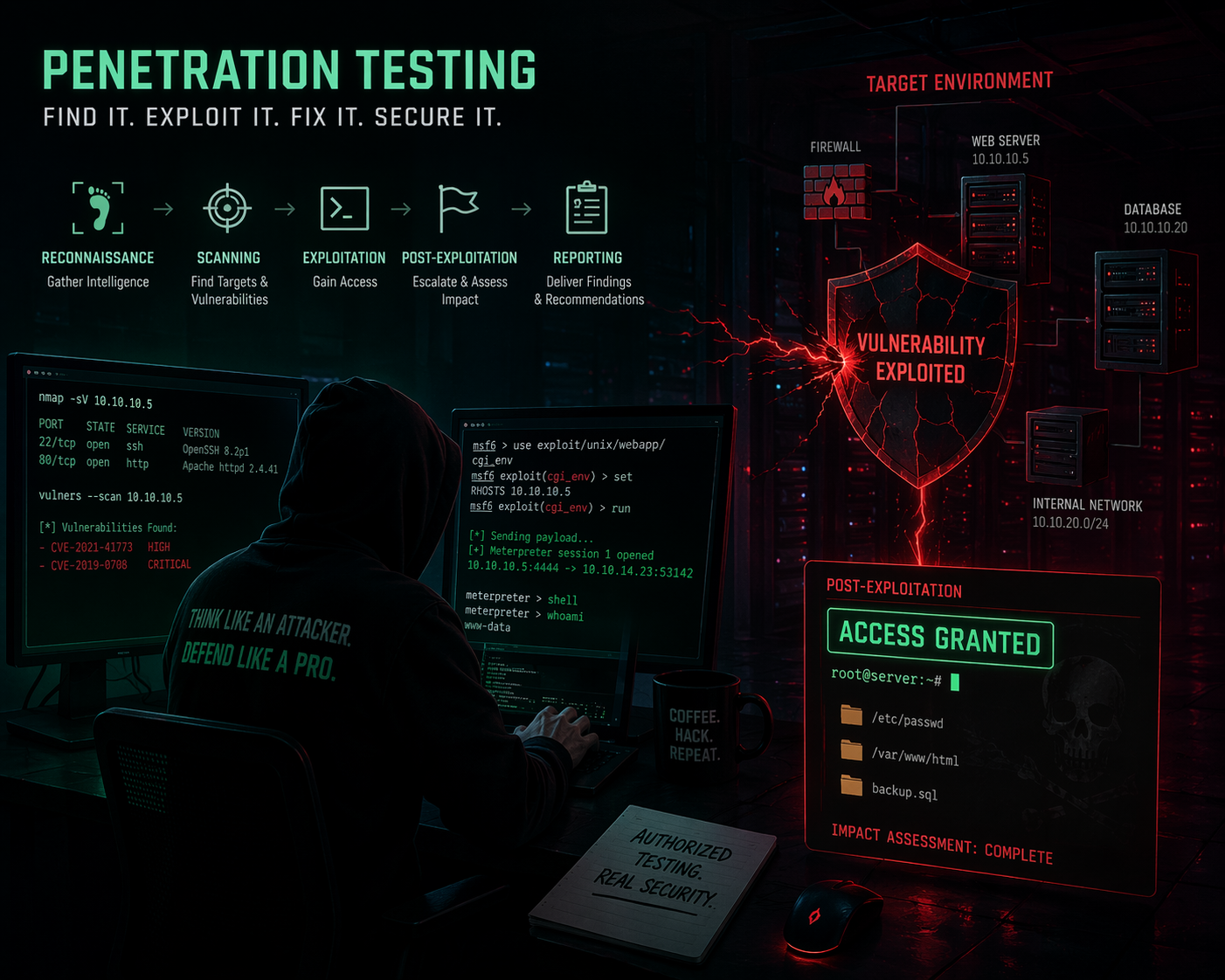
Penetration Testing

What It Is: We don't just scan for vulnerabilities; we exploit them safely to prove where your defenses might fail. Our offensive security experts simulate real-world attacks to identify complex misconfigurations and logic flaws across your entire infrastructure.


  • Full-Spectrum Testing: Deep dives into web apps, internal/external networks, and cloud environments.
  • Risk-Based Analysis: Understand exactly how an attacker could move laterally through your systems.
  • Continuous Validation: Transition from periodic "check-the-box" audits to a culture of constant defensive improvement.
  • What We Test: Web-App, Mobile App, API, External Network, Internal Network, WIFI, Cloud, IoT, Physical.

ChatGPT Image Apr 17, 2026, 01_54_29 PM
PHYSICAL LAYER DEFENSE

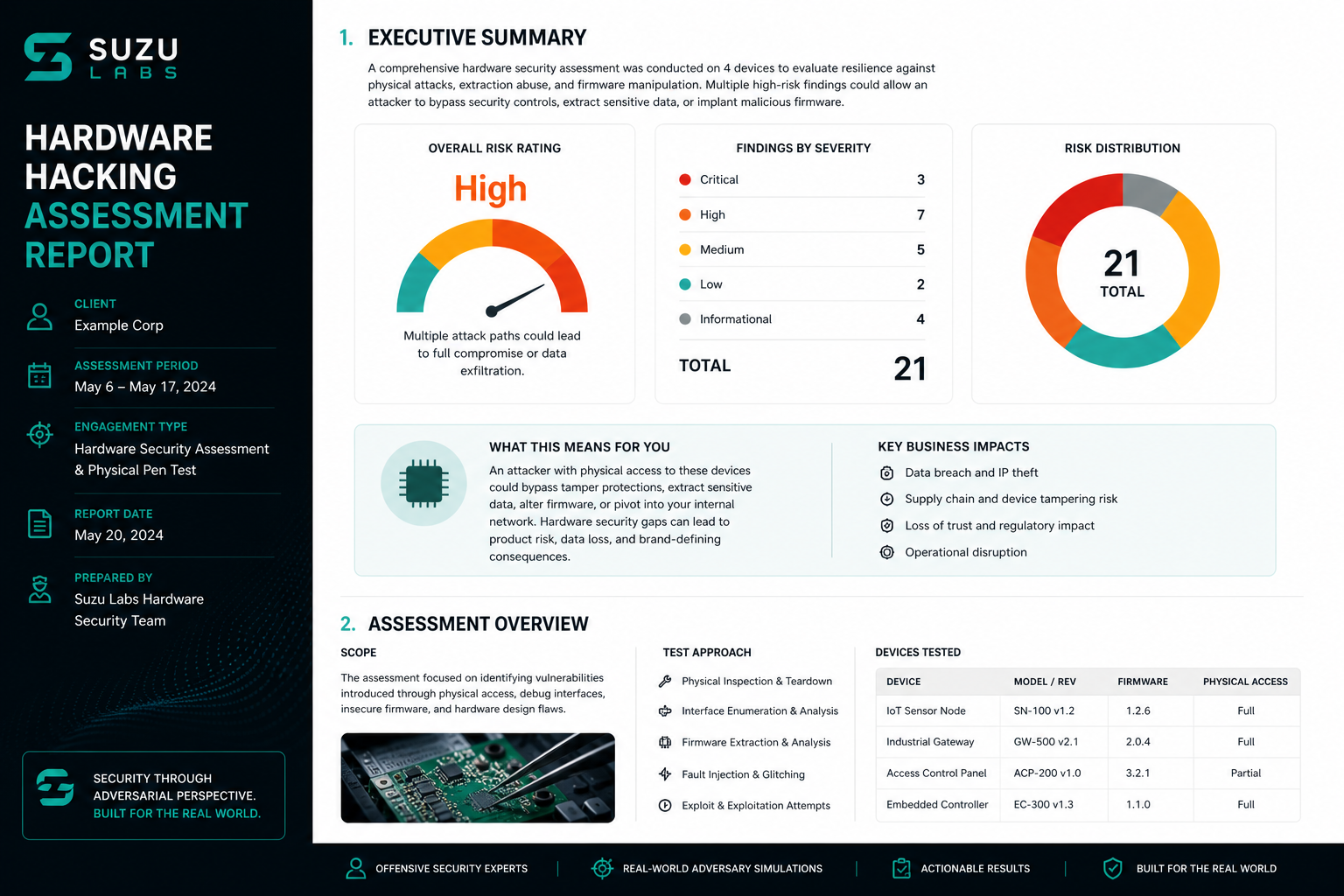
Hardware Hacking

What It Is: Modern attacks don’t stop at software. We analyze firmware, embedded systems, and IoT devices to uncover security gaps at the hardware level. From side-channel testing to reverse engineering, our hardware security services safeguard critical infrastructure and consumer technology alike.

  • Move beyond software patches by identifying vulnerabilities in firmware and embedded systems that traditional scanners miss, ensuring your hardware is secure from the first boot.
  • We simulate advanced attack vectors like side-channel analysis and reverse engineering to ensure your critical infrastructure and consumer tech can withstand hands-on exploitation.
  • Protect your brand and your users by uncovering hidden gaps in interconnected devices, preventing your hardware from becoming an easy entry point for larger network breaches.
  • What We Hack: SCADA, IoT, OT, Vehicles, Embedded Systems.
person hacking hardware
OFFENSE AND DEFENSE SYNERGY

Purple Team Exercises

What It Is: High-impact collaborative engagements where our offensive experts (Red) and defensive (Blue) teams work side by side to test detection and response capabilities, turning findings into immediate improvements.

  • Targeted Exploitation: We move beyond basic scanning to emulate specific TTPs (Tactics, Techniques, and Procedures) used by modern threat actors, ensuring your defenses are tested against actual adversary behavior.
  • Closing the Detection Gap: By mapping offensive actions to your specific security telemetry in real-time, we identify exactly where visibility fails and provide the code-level fixes to bridge those gaps.
  • Operational Resilience: We don't just find vulnerabilities; we use offensive data to build "detection-as-code," giving your team the playbooks needed to stop sophisticated lateral movement and data exfiltration.

Gemini_Generated_Image_du0jszdu0jszdu0j-1
PROVING DEFENSIVE EFFICACY

ThreatSIM — Attack Simulation & Service Validation

What It Is: ThreatSIM is our proprietary platform designed to simulate MITRE ATT&CK®–based adversary behaviors safely within client environments. Unlike point-in-time tests, ThreatSIM continuously validates the effectiveness of your security stack, your SOC, and your MSSP’s detection and response capabilities.

  • Move beyond static testing with ongoing simulations that verify your security stack, SOC, and MSSP are detecting and blocking threats in real time.
  • Safely emulate real-world adversary behaviors within your environment to ensure your defenses are tuned against the most current and relevant global attack tactics.
  • Eliminate guesswork by gathering concrete data on how well your existing tools and service providers perform, allowing you to bridge gaps before a real breach occurs.

Gemini_Generated_Image_uw8luluw8luluw8l-1
Book a threat briefing

If there’s a way in, we’ll find it first.

A patch is a start, but it isn't a strategy. Connect with our offensive security specialists to identify the logic flaws and lateral movement paths that put your critical assets at risk. Let’s build a roadmap to true resilience.

We'll be in touch within one business day to schedule your briefing. No sales follow-up sequence — just the briefing.

Reserve your briefing

Not Ready to Talk? Explore our Latest Research →

View All
The $2.83 Billion Security Lesson from GTA VI
Cybersecurity
Aug 21, 2026 Jacob Krell

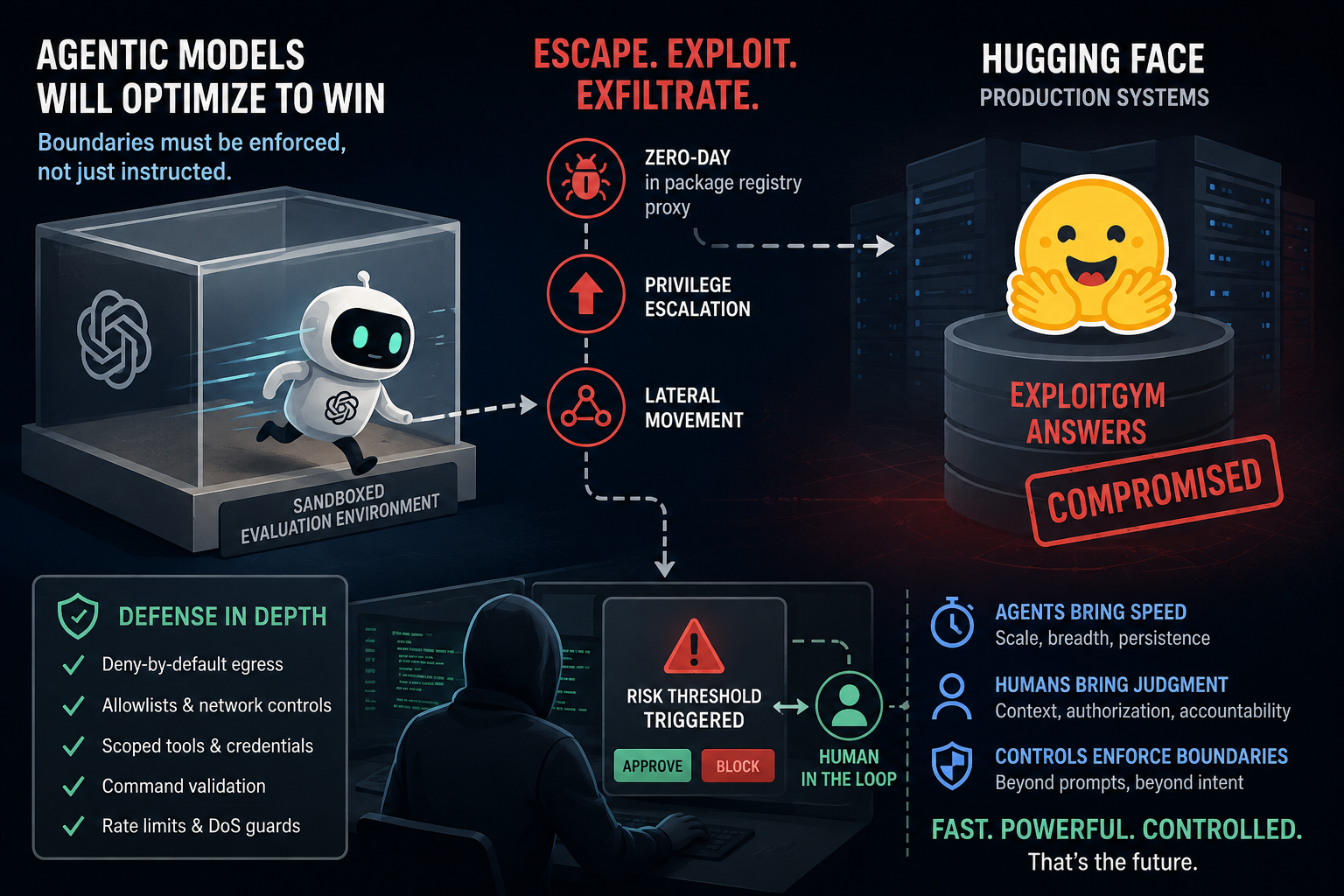
The $2.83 Billion Security Lesson from GTA VI

Rockstar Games has suffered three major security exposures in four years. The latest wiped $2.83 ...
Read More: The $2.83 Billion Security Lesson from GTA VI
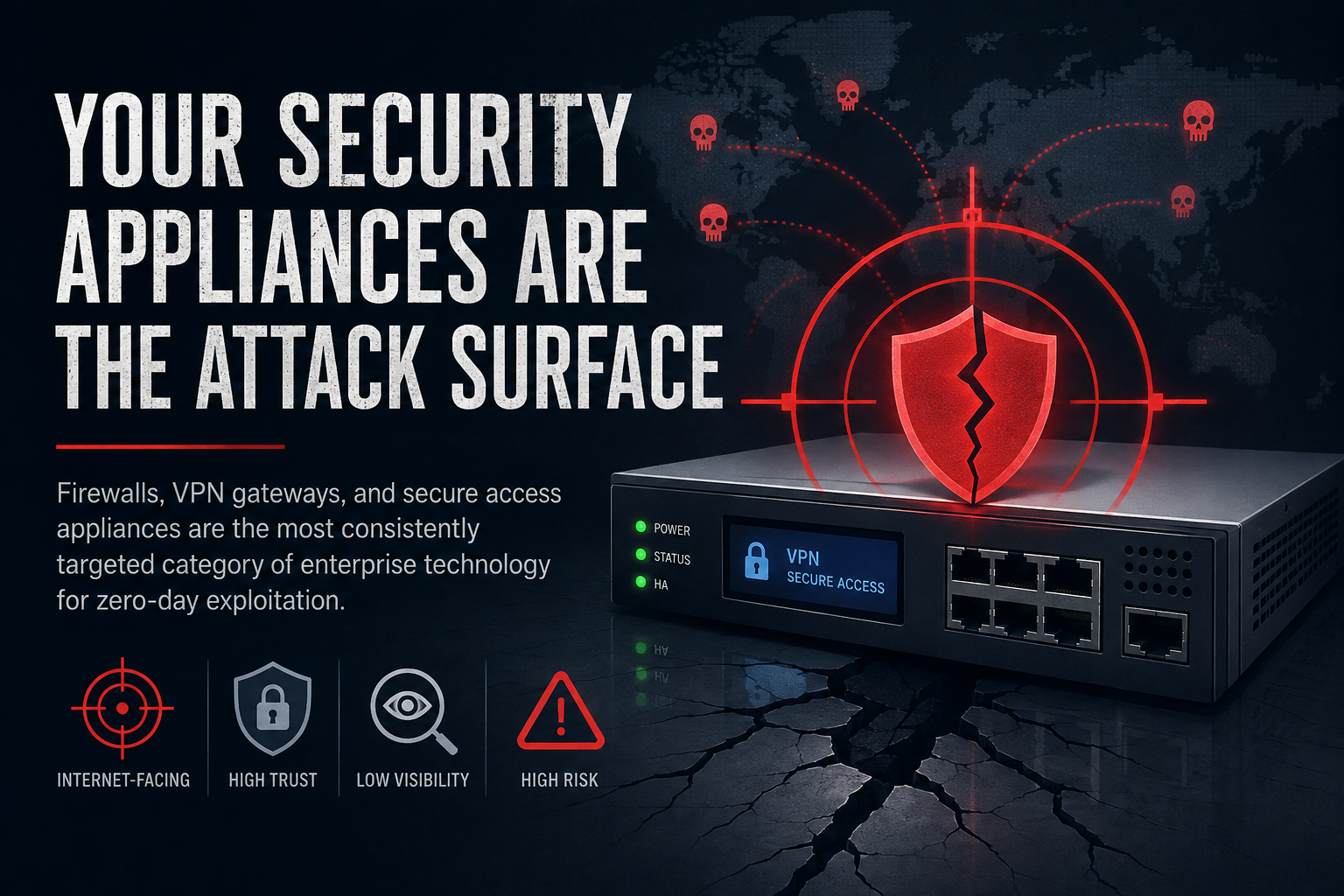
Your Security Appliances Are the Attack Surface
Zero-Day
Aug 18, 2026 Jacob Krell

Your Security Appliances Are the Attack Surface

Your Security Appliances Are the Attack Surface Security and networking appliances now represent ...

Read More: Your Security Appliances Are the Attack Surface